 Skagit County
 A One-Product Standard, and Why We Won't Bend on It
Most siding contractors will install whatever a homeowner picks off a sample board — vinyl, LP SmartSide, fiber cement, cedar, whatever moves. We don't work that way. This company installs James Hardie fiber cement siding exclusively. We don't quote vinyl, we don't quote LP SmartSide, we don't quote Cemplank or Allura, and we don't install primed spruce or cedar lap siding, even when a customer asks for it by name.
That's not a marketing gimmick. It's a standard we settled on after years of doing tear-offs and repair calls across Skagit County and seeing which products actually held up against this specific climate, and which ones created callbacks. This page explains the reasoning in plain terms — what each material class does well, where it struggles here specifically, and why Hardie is what we're willing to put our name behind.
What Skagit County Weather Actually Does to a Wall System
Skagit County sits in a tough spot for exterior cladding. You've got salt-laden air pushing in off Puget Sound and the Skagit River delta, long stretches of driving, wind-blown rain, and a moss and algae season that can run eight or nine months a year in shaded, north-facing exposures. None of that is exotic — it's just relentless.
Three things matter most for siding in this environment:
- Moisture cycling — siding that absorbs water and dries slowly stays wet longer, which accelerates rot, delamination, and paint failure.
- Salt exposure — airborne salt corrodes fasteners and metal trim faster near the water, and it degrades some coatings over time.
- Sustained shade and moisture — the same conditions that make this county green also grow moss and mildew on any surface that doesn't shed water and dry out quickly.
A siding material's warranty language means little if the material doesn't actually perform under these conditions. That's the lens we use to evaluate every product, not just the spec sheet.
What James Hardie Fiber Cement Actually Is
James Hardie siding is made from a mix of Portland cement, sand, and cellulose fiber, cured under pressure and heat. The result is a rigid, dense board that is non-combustible, dimensionally stable, and resistant to the swelling, cupping, and rot that affect wood-based products. It doesn't feed termites or carpenter ants because there's no organic wood fiber for them to eat.
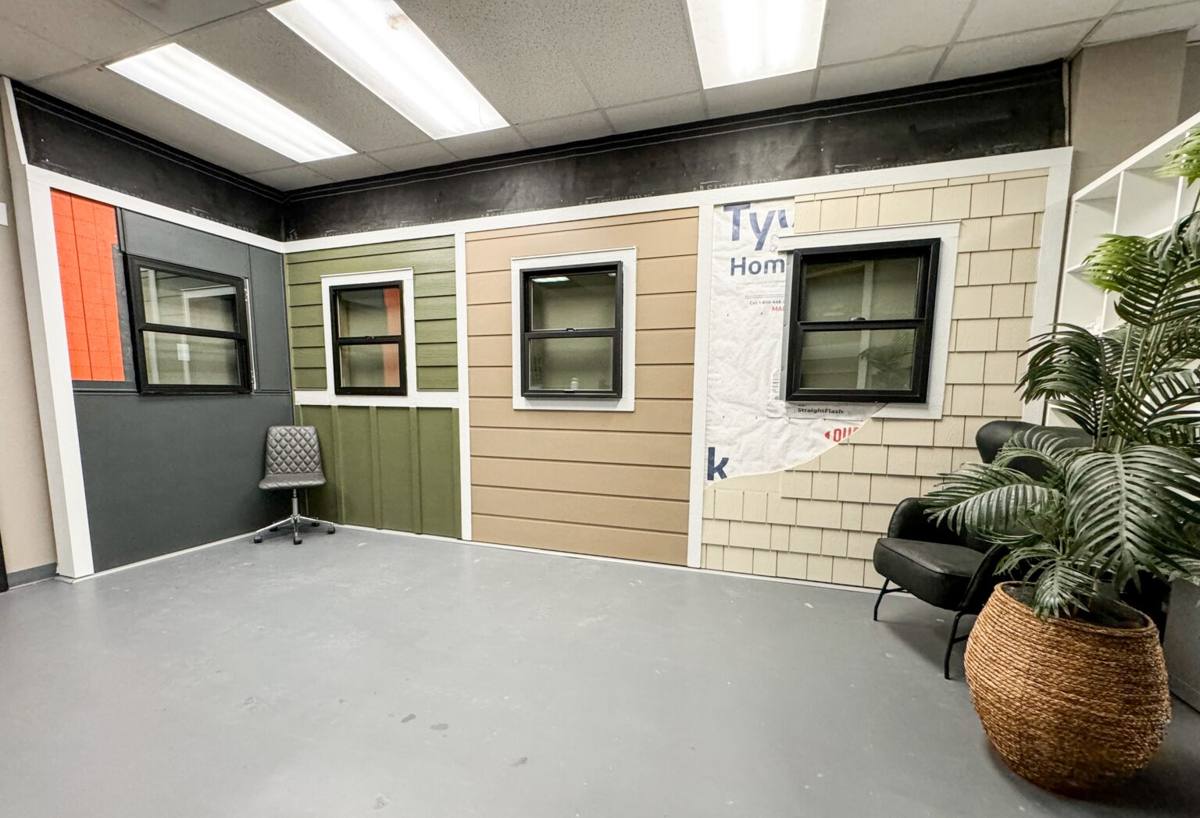
Hardie is available in several formats — lap siding, vertical panel, board-and-batten, and shingle-style — so it can match traditional Northwest home styles without looking like a departure from what's already on the street.
How It Compares to the Alternatives
| Material | Moisture behavior | Fire resistance | Maintenance | Typical lifespan claim |
|---|---|---|---|---|
| James Hardie fiber cement | Dimensionally stable, doesn't swell or rot | Non-combustible | Repaint every 10-15 yrs (or never, with ColorPlus) | 30+ years documented performance |
| LP SmartSide (engineered wood) | Treated wood strand — can swell/delaminate if seams or cuts aren't sealed correctly | Combustible, treated | Repaint every 7-10 yrs, edge sealing critical | Shorter track record than fiber cement |
| Vinyl siding | Sheds water on the surface but traps moisture behind it if house wrap fails | Combustible, can melt/warp near heat sources | Low, but cracks and fades in UV over time | 20-30 years, fades and becomes brittle |
| Cedar / primed spruce | Absorbs moisture, prone to cupping and rot without diligent upkeep | Combustible | Repaint/reseal every 3-7 yrs | Highly upkeep-dependent |
Every one of those alternatives has a legitimate place in the market, and we're not going to tell you LP SmartSide or vinyl are junk — plenty of them are installed correctly and perform fine for years. What we're saying is that after weighing moisture behavior, maintenance burden, and fire resistance against what this climate does to a house, fiber cement is the only category where we're comfortable standing behind a long-term result.
Why We Don't Install Vinyl
Vinyl is inexpensive and low-maintenance in mild climates, but it's a thin plastic product that expands and contracts significantly with temperature swings, and it relies entirely on the house wrap and flashing behind it to manage bulk water — the panel itself isn't a structural moisture barrier. In a wind-driven rain event, which Skagit County gets regularly off the Sound, water can work behind vinyl panels at seams and penetrations. It also becomes brittle with age and UV exposure, and it's not repairable in the way fiber cement is — a cracked panel usually means a full panel replacement, and matching faded color years later is often impossible.
Why We Don't Install LP SmartSide
LP SmartSide is engineered wood strand treated with a zinc borate coating for moisture and insect resistance, and it's a legitimate product when installed with strict attention to caulking every cut edge and seam. The problem is that it's wood at its core — if a fastener line, a butt joint, or a field cut isn't sealed exactly right, moisture gets into the strand board and it swells and delaminates from the inside, often before it's visible from outside. In a climate with this much sustained rain, that installation margin for error is thinner than we're willing to bet a homeowner's wall assembly on.
Why We Don't Install Cedar or Primed Spruce
Real wood siding has a look a lot of homeowners genuinely love, and there's nothing wrong with wanting it. But cedar and primed spruce require the most upkeep of anything on this list — repainting or resealing every few years, careful back-priming, and constant vigilance against moss, mildew, and moisture intrusion at end grain and joints. In Skagit County's extended wet season, that upkeep schedule compresses fast, and a missed repaint cycle can mean visible rot within a couple of years on shaded elevations.
HZ5 — Fiber Cement Engineered for This Exact Region
James Hardie makes climate-specific product lines called HZ (HardieZone) formulations. The Pacific Northwest, including Skagit County, falls into the HZ5 zone, engineered specifically for regions with significant moisture exposure and freeze-thaw cycling. The HZ5 formulation is optimized for moisture management in wet climates, which is a meaningful distinction — it's not the same board being sold in Arizona.
ColorPlus Technology and the Warranty Behind It
A major reason we don't install primed products that require field painting is James Hardie's ColorPlus finish — a factory-applied, baked-on finish that goes on before the board ever reaches a job site, under controlled conditions no field paint job can replicate. It resists fading and chipping far better than a site-applied coat, and it comes backed by its own finish warranty separate from the substrate warranty.
Hardie's fiber cement substrate itself carries a transferable limited warranty (30 years on most siding products at the time of writing — always confirm current terms directly with Hardie, since warranty terms can change), which matters if a home sells within that window. Warranty terms and coverage should always be confirmed with current Hardie documentation at time of installation, but the structure — factory finish warranty plus substrate warranty, both transferable — is part of why we consider it the strongest backing in the category.
Why Installation Quality Matters As Much As the Product
Even the best siding fails early if it's installed wrong. James Hardie publishes detailed installation specifications — fastener patterns, clearances, flashing details, joint treatment — and deviating from them can void warranty coverage and create the exact moisture problems fiber cement is supposed to prevent.
Things we hold to on every job:
- Correct fastener type, spacing, and embedment depth per Hardie's published specs
- Proper clearance between siding and grade, roofing, decks, and patios to keep the bottom edge out of standing water
- Rain screen or drainage plane behind the siding where the assembly calls for it
- Sealed and flashed penetrations at windows, doors, and utility penetrations
- Correct joint treatment at butt seams and inside/outside corners
- Factory-cut edges used wherever possible, with field cuts properly sealed
This is also why we don't subcontract installation out to whoever's available — a crew that doesn't install to spec turns a 30-year product into a 10-year problem.
What Affects the Cost of a Hardie Job
| Factor | Why it moves the price |
|---|---|
| Siding profile (lap, panel, shingle) | Labor time and material cost vary by format and detail level |
| Tear-off and disposal of existing siding | Removing old vinyl, wood, or damaged fiber cement adds labor and dump costs |
| House wrap and sheathing condition | Rot or moisture damage found underneath existing siding needs repair before new siding goes on |
| Trim and corner detail complexity | Multiple gables, dormers, and corner boards add cutting and fitting time |
| ColorPlus vs. primed-for-paint | Factory finish costs more upfront but eliminates the first repaint cycle |
We don't publish flat per-square-foot pricing because every one of those factors changes the number meaningfully — a straightforward single-story rambler and a multi-gable two-story home aren't the same job even at the same square footage.
What a Homeowner Can Actually Check Before Hiring Anyone
- Ask whether the contractor is a factory-certified Hardie installer, not just someone who's "installed it before"
- Ask to see the specific fastening and flashing plan for your home, not a generic answer
- Confirm in writing whether you're getting ColorPlus factory finish or field-primed boards
- Ask how existing sheathing and moisture damage will be handled if it's found during tear-off
- Get the warranty documentation — substrate and finish — in writing before work starts
If a contractor can't answer these clearly, that's worth knowing before a nail goes into your wall.
The Bottom Line
We didn't land on a Hardie-only policy because of a distributor relationship or a sales incentive. We landed on it because Skagit County's combination of salt air, driving rain, and a long moss season punishes the wrong material choice faster than most parts of the country, and fiber cement — installed to spec — is the product we've seen hold up. Vinyl, LP SmartSide, and wood siding all have legitimate uses elsewhere; we just won't put our name on installing them here.
If you're weighing a siding replacement or new construction project and want a straight answer about what it would take to do it right on your home, we're happy to walk the property and put together a free, no-pressure estimate.