 Skagit County
 Mount Vernon's Climate Is Harder on a House Than It Looks
Mount Vernon sits in the Skagit Valley, close enough to the water that salt-laden air is a regular visitor, and low enough in the floodplain that fog and standing moisture linger longer than they do up on higher ground. Add in a wet season that stretches across most of the year and you get a climate that's genuinely tough on the outside of a house, even though it rarely produces the dramatic storms that get attention elsewhere in the country. It's steady, grinding exposure rather than sudden damage, and that's exactly the kind of wear that catches homeowners off guard.
Driving rain is the big one. When wind pushes rain sideways against a wall for hours at a time, it finds every seam, every nail hole, and every spot where caulking has started to give up. Homes that face west or sit exposed toward open fields and waterways take the brunt of it. Over years, that kind of repeated wetting is what breaks down siding that wasn't built or installed to handle it.
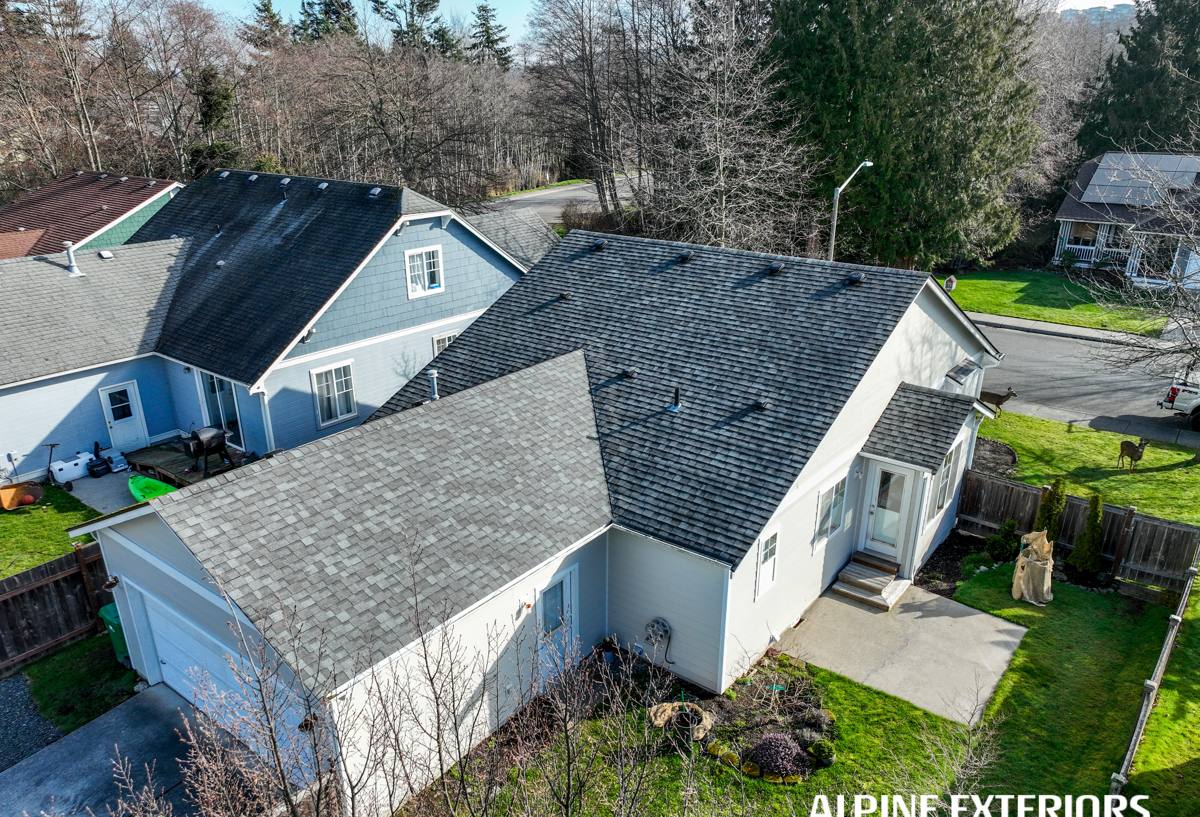
Then there's moss. Skagit County's combination of shade, moisture, and mild temperatures is close to ideal moss-growing weather for a good chunk of the year. Moss on a roof holds water against shingles and flashing. Moss and algae staining on siding hold moisture against the surface and telegraph through paint and finish over time, especially on the north- and west-facing walls that dry out slowest after a storm.
What This Means for Different Siding Materials
Every siding material handles constant moisture and salt air differently, and the differences show up over years, not months.
- Wood-based products (primed spruce, cedar, LP SmartSide): engineered wood is dimensionally stable, but it's still a wood product with an OSB or wood-strand core. Cut edges, fastener penetrations, and any place the factory coating gets compromised are entry points for moisture. In a climate with this much sustained wetness, that maintenance burden adds up.
- Vinyl siding: low maintenance in dry climates, but it moves with temperature and can loosen or warp over time. It also doesn't offer the same fire resistance or paint-ready finish flexibility homeowners often want when updating a home's look.
- Cemplank and Allura: both are fiber cement, in the same general family as what we install, but formulation, finish quality control, and warranty terms vary by manufacturer. We standardized on one product line so we can guarantee installation practices and long-term performance instead of managing several different systems.
We install James Hardie fiber cement exclusively — not because every other product is bad, but because after years in this trade, it's the one system we're willing to put our name and workmanship warranty behind for Skagit County's specific weather.
Why James Hardie Fiber Cement Holds Up Here
Fiber cement is made from cement, sand, and cellulose fibers, which means it doesn't rot, doesn't feed pests, and doesn't burn the way wood-based siding can. James Hardie backs that up with regionally engineered product lines — their HZ5 formulation, built for climates like ours, is designed around freeze-thaw cycling, moisture exposure, and the kind of sustained dampness the Pacific Northwest delivers most of the year.
The ColorPlus factory finish is worth explaining, because it's a real difference-maker in a place like Mount Vernon. Instead of paint applied on-site after installation, the color is baked on in a controlled factory process, in multiple coats, before the boards ever reach a job site. That finish resists fading and chipping far better than field-applied paint, which matters when a wall spends a large part of the year wet. It also means touch-up and repainting cycles stretch out much longer than they would on wood siding exposed to the same conditions.
James Hardie's warranty is transferable to a new owner if the home sells, which is a detail worth knowing if there's any chance you'll sell within the warranty period — it's a selling point buyers in this market notice.
A Local Crew Knows What Mount Vernon Homes Actually Face
Installation quality matters as much as the material itself, maybe more. Fiber cement siding has to be installed to manufacturer specification — correct fastener placement, proper clearances at grade and roofline, and flashing details at every window, door, and penetration — or it won't perform the way it's designed to, regardless of how good the product is.
A crew that works throughout Skagit County sees the same failure patterns repeatedly: caulking that gave out where two trades didn't coordinate flashing, siding installed too close to grade or a deck surface and wicking moisture, moss buildup on north-facing walls that never got addressed until it caused real damage underneath. That pattern recognition is what makes a repair or a full replacement job go right the first time instead of becoming a callback.
Local also means being reachable. If something needs a second look after a storm, or a warranty question comes up years down the road, you're calling a crew that's still working in the area, not chasing down a company that did one job and moved on.
Beyond Siding: Roofing, Windows, and Decks
Siding doesn't work in isolation — the roof, windows, and any attached deck structure all interact with how water moves around a house. We handle all four so the details that connect them (flashing where a roofline meets a wall, sealing around window frames, ledger board attachment for a deck) are coordinated instead of left to whichever contractor happens to touch that spot last.
Roofing
A roof that's shedding moss and holding moisture puts extra water load right where it drains onto your siding and gutters. Roof condition and siding condition are connected more often than homeowners expect.
Windows
Window flashing and siding termination around window openings are one of the most common leak points on any home. When we replace siding, we check this detail closely, and when we replace windows, we make sure the surrounding siding is properly integrated, not just caulked and left.
Decks
Decks attached to the house create a transition zone where wood, fasteners, and siding all meet. Done wrong, that's a moisture trap. Done right, it's a clean, dry connection that doesn't compromise either structure.
What the Process Looks Like
Every project starts with an honest look at the home, not a sales script.
- Assessment: we walk the exterior, check for moisture damage, moss buildup, failed caulking, and flashing issues, and look at what's actually causing wear versus what's cosmetic.
- Plan and product selection: we talk through James Hardie's board options — lap siding, panel systems, shingle-style — and color choices, matched to the home's style and your budget.
- Prep and installation: proper house wrap or weather-resistive barrier, correct fastening and clearances, and careful flashing at every window, door, and roofline intersection.
- Final walkthrough: we go over the finished work together before we call the job done.
Cost Factors to Expect
Every home is different, but these are the main factors that move a project's cost up or down. We'll give you specific numbers after seeing the house — broad ranges without an inspection aren't useful to you.
| Factor | Why It Matters |
|---|---|
| Home size and complexity | More corners, gables, and trim details mean more cutting, fitting, and labor time. |
| Existing siding removal | Tear-off and disposal of old material adds time versus installing over a prepped surface. |
| Underlying damage | Rot or moisture damage found once old siding comes off needs repair before new siding goes on. |
| Product line and profile | Lap width, textured versus smooth finish, and panel versus shingle-style siding carry different material costs. |
| Trim and accessory work | Corner boards, window trim, and fascia detailing add labor and material beyond the flat wall area. |
Living with Fiber Cement Siding in Skagit County
Once it's installed correctly, James Hardie siding is genuinely low-maintenance, but "low-maintenance" isn't "zero-maintenance." A yearly rinse to knock off pollen, moss spores, and grime keeps the ColorPlus finish looking sharp and prevents organic growth from getting a foothold, particularly on shaded, north-facing walls. Keep an eye on caulking around windows and trim joints, since sealant is the one part of the system that wears out well before the siding itself does.
Checklist for homeowners to watch for between inspections:
- Moss or algae staining building up on shaded or north-facing walls
- Cracked, peeling, or gapped caulking around windows, doors, and trim
- Soft or discolored siding near ground level or where a deck meets the house
- Water stains or streaking below roofline-to-wall transitions
- Fading or chalking on paint-grade siding that wasn't factory-finished
Catching these early is far cheaper than dealing with the water damage that follows if they go unaddressed through another Skagit Valley winter.
Get a Straight Answer for Your Home
If you're weighing a siding, roofing, window, or deck project on a Mount Vernon home, we're happy to come take a look and give you an honest read on what's going on and what it'll take to fix it right. Request a free, no-pressure estimate using the form below — no obligation, just a clear picture of your options.