 Skagit County
 Siding in Sedro-Woolley: Built for the Skagit Valley
Sedro-Woolley sits in the Skagit River valley, at the point where the flat farmland of the county starts giving way to the foothills of the North Cascades. That location shapes what a house here has to deal with year-round. Storm systems moving in off the Pacific and through the Salish Sea drop a lot of rain on this part of Washington, and by the time that weather reaches Sedro-Woolley it's often still carrying a fair amount of moisture-laden marine air, even though the town itself sits inland from the coastline. Add the tree cover and humidity typical of a river valley, and you get siding that stays damp longer than it would in a drier climate, and that's before you factor in the moss and algae growth that shaded, north-facing walls tend to collect for a good chunk of the year.
None of that means a home in Sedro-Woolley is doomed to premature siding failure. It means the material and the installation have to be matched to the conditions. That's the whole reason we built this company around one siding product instead of offering a menu of options.
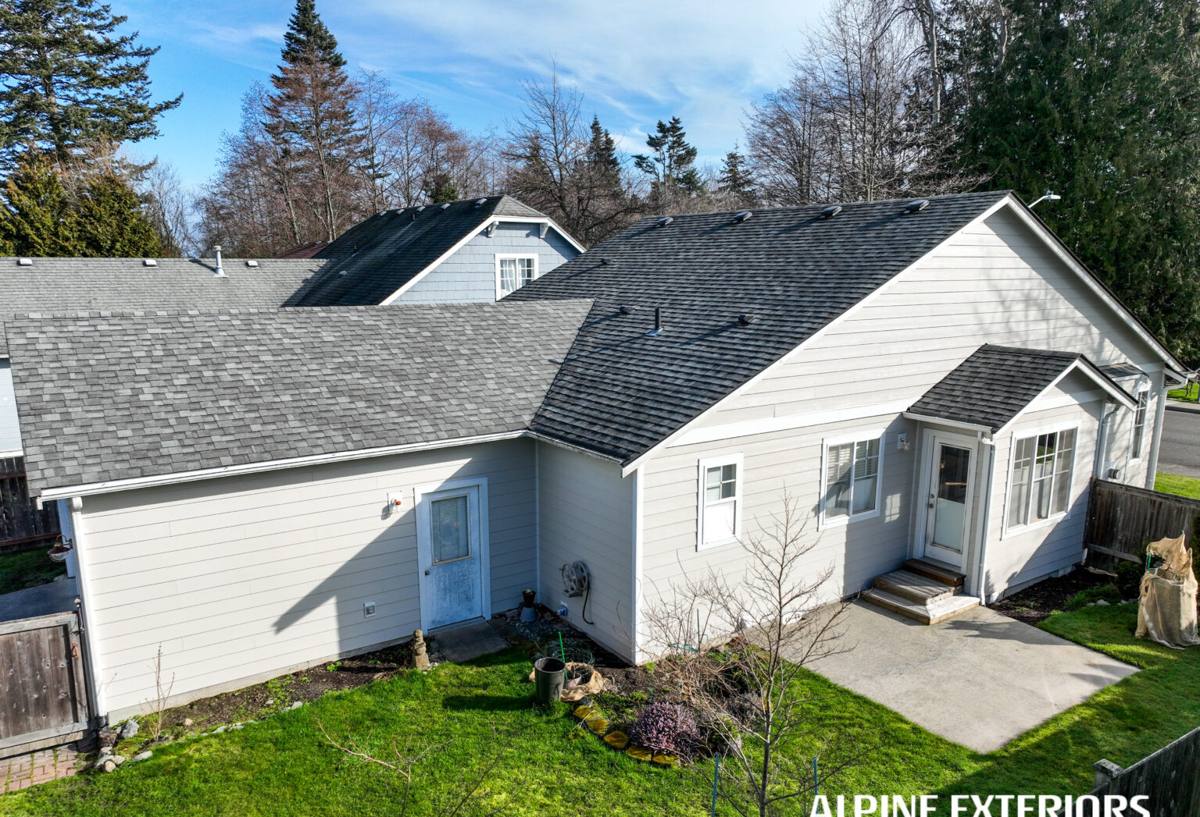
What Driving Rain and a Long Moss Season Actually Do to a House
Wind-driven moisture
Rain that falls straight down is manageable for almost any siding system. Rain that's pushed sideways by wind is a different problem — it gets forced up under laps, into seams, and around trim and penetrations. Over years, siding materials that swell, wick moisture, or aren't dimensionally stable start to show it: cupping, soft spots, paint that won't hold, or rot at the bottom edges and around window and door casings. Skagit County gets enough of this kind of weather that it's worth designing around from day one, not patching around later.
Moss, algae, and organic growth
Shaded siding in a valley setting like Sedro-Woolley's rarely dries out fully between storms for weeks at a time in the wetter months. That's ideal for moss and algae, which don't just look bad — they hold moisture against the siding surface and, on materials that aren't rot-resistant, that constant dampness is what eventually causes real damage underneath the discoloration.
Temperature swings
Sedro-Woolley also sees a wider temperature range than towns right on the water, with cooler valley mornings and warmer summer afternoons than you'd get closer to the Sound. Siding that expands and contracts a lot with temperature is more prone to nail popping, joint gapping, and finish cracking over time — another reason material stability matters as much as water resistance.
Why We Only Install James Hardie Fiber Cement
We get asked fairly often why we don't offer vinyl, LP SmartSide, cedar, primed spruce, or other fiber cement brands like Cemplank or Allura. The honest answer is that we used to see the long-term callbacks that come with some of those products in exactly this kind of climate, and we decided it wasn't worth continuing to install materials we didn't fully stand behind.
What those other products get right
To be fair to them: vinyl is inexpensive and low-maintenance in the sense that it never needs paint. Engineered wood products like LP SmartSide install quickly and have a warm, traditional look. Cedar is a genuinely beautiful natural material with a long history in this region. None of that is wrong information — those are real advantages, and they're why those products still sell.
Where the trade-offs show up in a wet valley climate
- Vinyl can warp or distort in temperature swings and doesn't stop moisture from getting behind it as effectively as a properly installed fiber cement system.
- Engineered wood siding is wood-based, which means edge and end-cut exposure to moisture is a real long-term risk if caulking and maintenance schedules slip, and in a climate that stays damp for long stretches, that maintenance margin is thinner.
- Cedar and primed spruce require ongoing refinishing to keep water out, and that upkeep is exactly what's easy to fall behind on when a house is shaded and slow to dry.
- Other fiber cement brands use the same base material as James Hardie but don't offer the same climate-specific engineering, factory finish warranty, or track record we've chosen to build our business on.
Why Hardie is what we put on homes instead
James Hardie fiber cement is non-combustible, dimensionally stable, and engineered specifically for climates like ours through its HZ10 product line, which is formulated for the Pacific Northwest's combination of moisture and moderate temperatures. Its ColorPlus factory finish is baked on under controlled conditions rather than field-applied, which matters a lot when the weather doesn't give you many dry installation windows. And it carries a strong, transferable warranty that reflects the manufacturer's confidence in the product when it's installed to spec — which is the other half of the equation.
Comparing the Options
| Material | Moisture/rot resistance | Maintenance | Typical lifespan factors |
|---|---|---|---|
| Vinyl | Sheds surface water but doesn't stop moisture intrusion at seams well | Low, but prone to warping/fading | Shorter in temperature-swing climates |
| Cedar / primed wood | Naturally attractive but moisture-sensitive without upkeep | High — regular refinishing required | Depends heavily on maintenance discipline |
| Engineered wood (LP SmartSide-type) | Treated, but still wood-based and edge-sensitive | Moderate — caulking/paint schedule matters | Shorter if maintenance lapses in wet climates |
| James Hardie fiber cement | Engineered for PNW moisture, non-combustible | Low — factory finish, occasional wash | Long lifespan when installed to manufacturer spec |
James Hardie Product Lines We Use Here
We spec James Hardie's HZ10 climate zone products for Skagit County installations, which is the line engineered for regions with more rain and moderate temperature swings, as opposed to the HZ5 line built for hotter, drier climates. Depending on the home, that usually means:
- HardiePlank lap siding — the most common choice, available in several exposure widths and textures.
- HardiePanel — vertical panel siding, often used for accent sections or more modern designs.
- HardieTrim — matched trim boards around windows, doors, and corners for a consistent, factory-finished look.
- ColorPlus finishes — a range of factory-baked colors chosen to hold up under UV exposure and the region's damp conditions without needing repainting on the same schedule as field-painted siding.
Siding Doesn't Work in Isolation
Siding is one part of a home's exterior envelope, and in a climate like Sedro-Woolley's, the pieces around it matter just as much. We also handle roofing, windows, and decks, and we bring that same climate-specific thinking to each:
Roofing
A roof in poor condition sends water down onto siding it was never designed to handle — proper flashing, underlayment, and moss-resistant roofing choices protect everything below.
Windows
Window flashing and integration with the siding plane is one of the most common places we find moisture problems on older homes. Replacing siding is a natural time to correct window flashing details that weren't done right the first time.
Decks
Decks attached to the house need the same attention to ledger flashing and water management as the siding itself, since a poorly flashed ledger board is a direct path for water into the structure.
Looking at all four together, rather than treating siding as an isolated project, is how you actually stop water problems instead of moving them somewhere else on the house.
What Local Actually Means for This Work
A crew that works across Skagit County regularly develops a feel for how different parts of it behave — where moss builds up faster, which orientations catch the worst of the wind-driven rain, and how a Skagit Valley winter treats a wall compared to a wall closer to the water. That local knowledge shows up in small decisions during a job: how flashing details are handled, where extra attention goes on the north and west-facing walls, and what maintenance advice actually applies to a specific property instead of generic guidance that doesn't account for the valley's particular conditions.
What to Expect From the Process
- A walk-around assessment of your current siding, trim, and any related roofing, window, or deck issues.
- An honest conversation about what's actually needed versus what can wait.
- A written estimate with clear scope — no vague allowances.
- Installation to James Hardie's specifications, including proper flashing, fastening, and clearances.
- A final walkthrough before we consider the job done.
Keeping Fiber Cement Siding Looking Right
James Hardie siding is low-maintenance, not no-maintenance. A little seasonal attention goes a long way in this climate:
- Rinse siding periodically to keep moss and algae from establishing, especially on shaded, north-facing walls.
- Keep gutters clear so overflow isn't running down the siding face.
- Trim back vegetation and tree branches that keep walls shaded and damp longer than they need to be.
- Check caulking at trim, windows, and penetrations every year or two and re-caulk as needed.
- Have flashing and roof-to-wall transitions inspected periodically, since these are the areas most likely to cause hidden problems.
If your Sedro-Woolley home is due for new siding, or you want a second opinion on a roofing, window, or deck issue, we're happy to take a look and give you a straightforward, no-pressure estimate. Use the form below to get started.