 Skagit County
 Anacortes Sits Where Weather Gets Tested
Anacortes occupies a peninsula surrounded by saltwater on nearly every side, with Fidalgo Bay, Guemes Channel, and the Strait of Juan de Fuca all within a few miles of any given home. That geography is part of what makes the town beautiful, and it's also what makes exterior materials work harder here than almost anywhere else in Skagit County. Homes closer to the water take on salt-laden air and wind-driven moisture almost year-round, while homes set back into the trees deal with heavy shade, slow-drying surfaces, and moss that never really goes dormant. Either way, siding in Anacortes is not a decorative choice — it's the first line of defense against a climate that doesn't let up.
We work throughout Skagit County, but Anacortes gets its own conversation because the combination of marine exposure and forested, damp lots is fairly specific. What holds up on a dry inland lot in Sedro-Woolley or Mount Vernon isn't necessarily what should go on a bluff-front or heavily wooded Anacortes property.
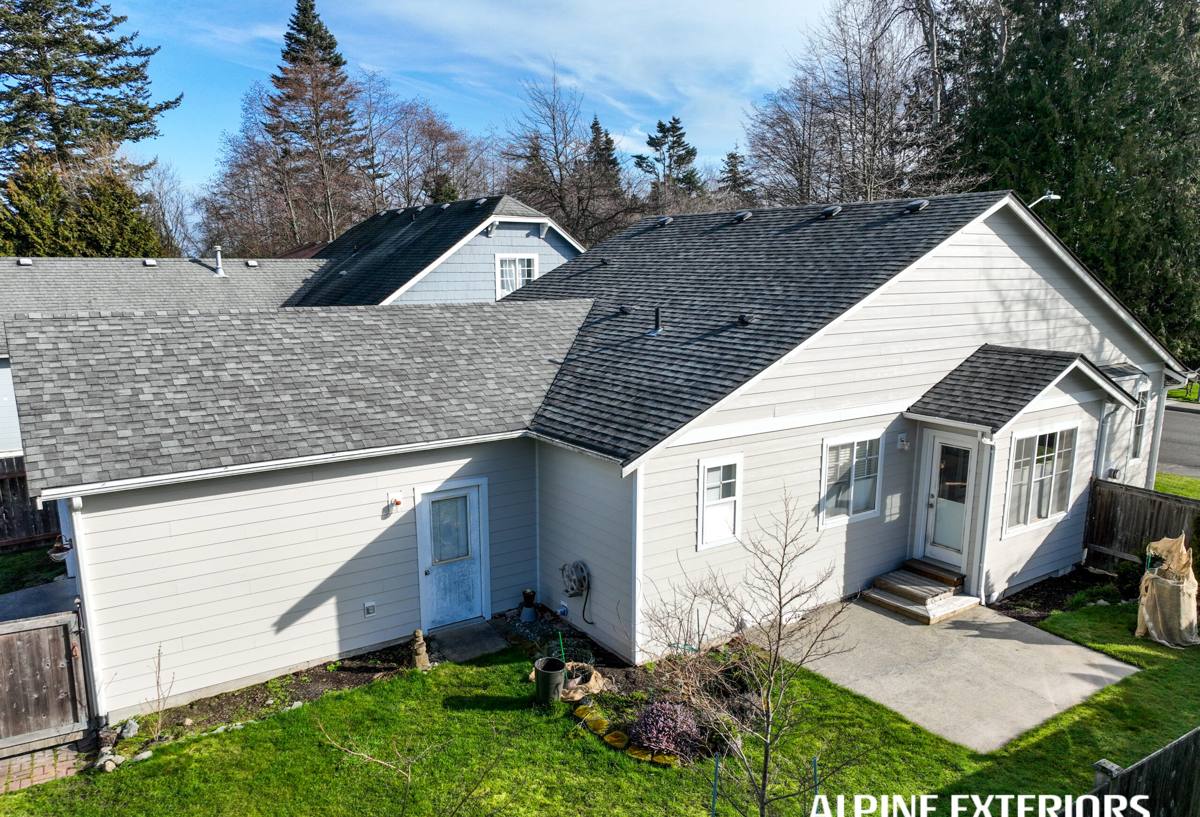
What Anacortes Homes Actually Deal With
Salt Air and Airborne Moisture
Salt air isn't just a coastal cliché — it's a real chemical stressor on exterior building materials. Airborne salt accelerates corrosion on fasteners and metal trim, and it interacts with paint and coatings in ways that inland products aren't always engineered to handle. Materials that rely on a factory finish or a protective coating need that finish to actually resist salt exposure, not just look good in a showroom.
Driving Rain
Wind off the water doesn't just bring rain straight down — it pushes it sideways into siding, trim, and window flashing. That means seams, laps, and joints see more direct wind-driven moisture than they would on a sheltered inland lot. Any siding material that's sensitive to water intrusion at the seams is going to show it faster in a location like this.
Moss and Shade
Between the marine layer and the tree cover common on many Anacortes lots, north-facing walls and shaded elevations can stay damp for extended stretches, especially through fall and winter. That's exactly the environment moss and mildew favor. Siding that absorbs moisture or has organic material (wood fiber, cellulose) in its makeup gives moss something to hold onto and feed off of over time.
Temperature Swings and Wood Movement
Skagit County doesn't see extreme heat, but the freeze-thaw cycle and the steady wet-to-dry swings across the seasons still matter. Wood-based products expand and contract with moisture content, which stresses paint film, fastener holes, and butt joints over years of cycling.
Why We Standardized on James Hardie Fiber Cement
We install James Hardie fiber cement siding exclusively — not vinyl, not LP SmartSide, not Cemplank or Allura, not primed spruce or cedar. That's a deliberate standard, not a sales preference, and it's rooted in how those other materials perform specifically in wet, coastal, shaded Pacific Northwest conditions.
Why Not Vinyl
Vinyl is inexpensive and low-maintenance in a general sense, but it's a thin plastic product that can warp or become brittle over time, and its seams and panels are less forgiving of wind-driven rain than a properly lapped fiber cement system. In a wind-exposed location like Anacortes, that matters more than it would somewhere sheltered.
Why Not Wood-Based Composites (LP SmartSide, Cemplank, Allura, Primed Spruce, Cedar)
Wood and wood-fiber composite products can look great when new, but they all share a common vulnerability: they're organic materials that absorb moisture, and moisture is exactly what an Anacortes lot has in abundance for much of the year. Cedar is a real, honest material with a long history — but it requires ongoing staining or sealing, and it's a food source for the moss and mildew that already thrive here. Engineered wood composites reduce some of those issues but don't eliminate the underlying moisture sensitivity, and their warranty structures are typically shorter and more exclusion-heavy than what fiber cement offers.
What James Hardie Gets Right for This Climate
James Hardie fiber cement is a cement-and-sand-based material, not a wood product, so it doesn't absorb water the way wood or wood-fiber siding does, and it isn't a food source for moss and mildew. It's non-combustible, which matters given how many Skagit County properties sit close to trees and brush. The ColorPlus factory finish is baked on under controlled conditions and engineered to hold up against UV and moisture exposure far longer than field-applied paint, which matters when a home is taking on salt air and driving rain most of the year. Hardie also engineers regional HZ5 product lines specifically for climates like ours, and backs the material with a strong transferable warranty — real coverage, not a marketing footnote.
How Fiber Cement Compares
| Factor | Vinyl | Wood / Wood Composite | James Hardie Fiber Cement |
|---|---|---|---|
| Moisture absorption | Low, but seams leak under wind-driven rain | High — primary failure point | Very low; cement-based |
| Moss/mildew resistance | Moderate | Poor without upkeep | Strong |
| Fire resistance | Poor — melts/ignites | Combustible | Non-combustible |
| Finish longevity | Fades, doesn't repaint well | Needs repainting/staining every few years | Factory ColorPlus finish, long repaint intervals |
| Typical warranty | Limited, prorated | Shorter, more exclusions | Strong transferable coverage |
What Correct Installation Looks Like Here
Fiber cement only performs as well as its installation. In a wind-driven-rain environment like Anacortes, the details matter more than the material spec sheet:
- Proper weather-resistive barrier and drainage plane behind the siding, not just a nailed-on panel
- Correct nailing pattern and fastener spacing per Hardie's engineering, not a generic install
- Stainless or coated fasteners appropriate for salt-air exposure to avoid corrosion staining
- Properly flashed and caulked butt joints, window and door openings, and penetrations
- Adequate clearance between siding and grade, decks, and roof lines to prevent wicking
- Factory-cut and factory-primed edges wherever field cuts expose raw material
A crew that's installed Hardie across wet, marine-exposed sites in Skagit County knows where water actually tries to get in on a home like this — around window heads, at deck ledgers, along roof-to-wall transitions — and details those spots accordingly. That local repetition is worth more than a generic install crew's general competence.
Beyond Siding: Roofing, Windows, and Decks
Siding doesn't work in isolation. On an Anacortes home, the roof, windows, and any deck or covered outdoor space all interact with the same wind and moisture the siding is fighting. A roof that's shedding water properly, windows that are flashed and sealed correctly, and a deck that isn't trapping moisture against the wall all protect the siding investment underneath them. We handle all four — siding, roofing, windows, and decks — because treating them as one connected exterior system, rather than four separate contractors working around each other, is how a home actually stays dry and lasts.
Why a Local Crew Matters
Anacortes isn't identical to Mount Vernon or Burlington, even though they're all in Skagit County. Wind exposure, salt air, tree cover, and elevation all vary block by block on the peninsula. A crew that works this area regularly has a feel for which walls take the brunt of the weather, which lots need extra attention to moss and shading, and how local permitting and inspection tends to go. That familiarity shows up in fewer surprises during the project and a better outcome once the siding is up.
Maintenance Realities for Anacortes Homes
Even with fiber cement siding, Anacortes homes benefit from a periodic rinse-down to keep salt residue and organic buildup from accumulating, especially on north-facing and shaded walls. Caulking at trim and penetrations should be checked every few years, since sealant is the one component that wears faster than the siding itself. Gutters and downspouts should stay clear so water isn't dumping down a wall face. None of this is heavy maintenance — it's a fraction of what a wood or wood-composite exterior demands — but it's worth doing on a schedule rather than waiting for a problem to show up.
Planning a Siding Project in Anacortes
Whether you're dealing with an aging cedar or vinyl exterior that's finally showing its age, addressing moisture damage found during a remodel, or simply want a exterior that's built for the specific weather this peninsula sees, it helps to start with an honest look at the home's exposure — which walls take the wind, where moss has been a recurring problem, and what the trim and flashing details currently look like. That assessment drives the right plan more than any generic siding recommendation would.
If you're weighing options for your Anacortes home, we're happy to come take a look and give you a straightforward, no-pressure estimate — no scare tactics, just an honest read on what your home needs and what it would take to do it right.