 Skagit County
 Siding Built for Burlington's Climate
Burlington sits in the heart of Skagit County, close enough to Puget Sound and the Skagit River delta that homes here deal with a specific combination of weather stress most siding materials were never designed to handle. Salt-tinged air moving in off the Sound, long stretches of driving rain through fall and winter, and a moss season that can run eight months or more all work on exterior siding at the same time, year after year. We've built our business around installing one product that holds up to that combination: James Hardie fiber cement.
This page is about what that means for a home in Burlington specifically — what the climate actually does to siding here, how our process works, and why we standardized on Hardie instead of offering the wider menu of products many contractors sell.
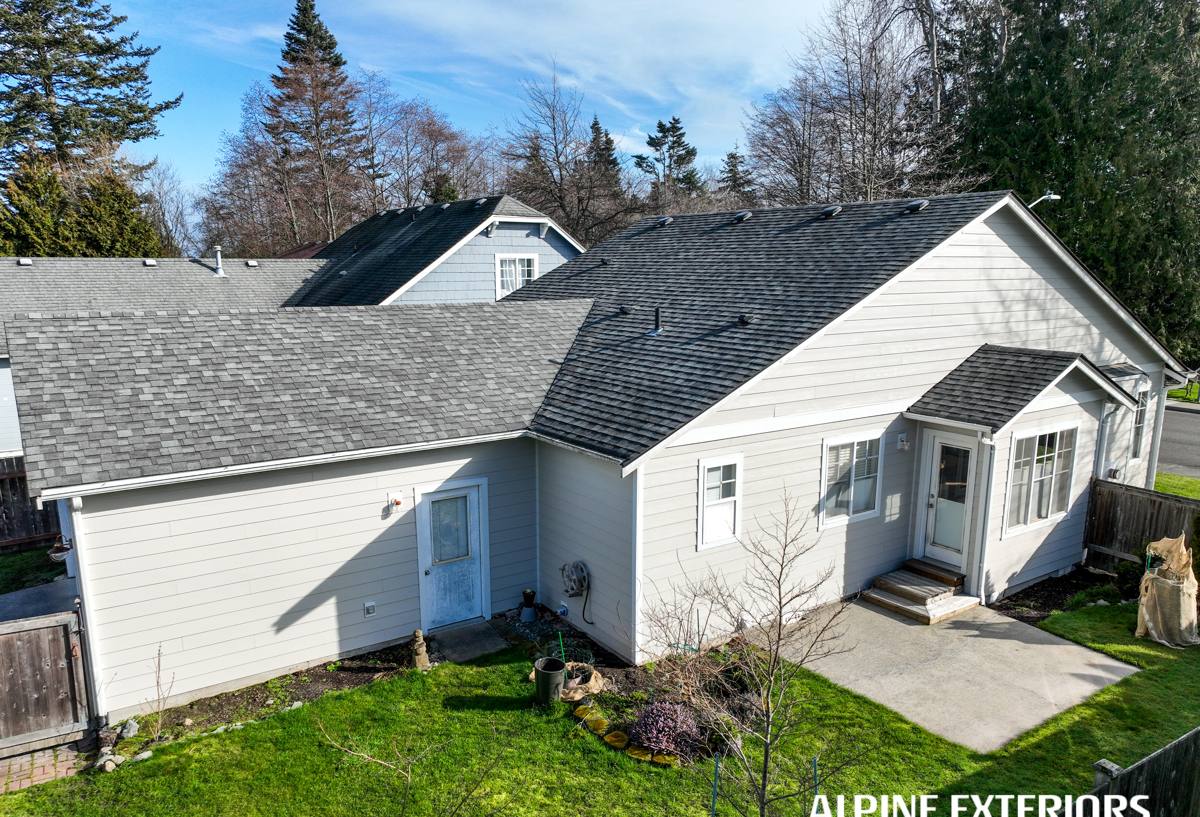
What Skagit County Weather Does to Exterior Siding
Salt Air and Moisture
Burlington isn't oceanfront, but the maritime air moving up the Skagit Valley still carries enough salt and moisture to accelerate corrosion on fasteners, trim, and any siding material that isn't dimensionally stable. Wood-based products swell and shrink with every wet-dry cycle. Over years, that movement opens seams, stresses paint film, and gives moisture a path behind the siding where it does the real damage.
Driving Rain
Western Washington rain isn't just frequent — it's often wind-driven, which means it hits siding at an angle instead of running straight down. That puts extra load on butt joints, corner boards, and anywhere two pieces of siding meet. Poorly sealed or poorly lapped siding in this kind of weather doesn't just get wet on the surface; it lets water track sideways and up, which is how rot starts in places you can't see from the ground.
Moss and Sustained Dampness
Skagit County's moss season is long because the conditions that grow moss — shade, moisture, and mild temperatures — are present most of the year here. Moss and algae don't just sit on top of siding; they hold moisture against the surface far longer than open air would, which is exactly the environment that lets organic-based siding materials break down from the back side out, even when the face still looks fine.
Why We Install Only James Hardie Fiber Cement
We get asked fairly often why we don't offer vinyl, LP SmartSide, cedar, primed spruce, or other fiber cement brands like Cemplank or Allura. It's not that these products have no place in the market — it's that after years of installing and repairing siding in this climate, we decided to standardize on the one product line that consistently holds up to Skagit County conditions without the maintenance burden or moisture risk the alternatives carry.
- Vinyl siding can warp and fade, and its seams and panel movement give wind-driven rain more opportunities to work behind the surface over time.
- LP SmartSide and other wood-strand products perform reasonably in drier climates, but they're an engineered wood product at heart — they depend on intact paint and caulking to keep moisture out, and any breach can lead to swelling at the edges.
- Cedar and primed spruce are real wood, and real wood in a climate this wet needs a maintenance schedule most homeowners underestimate — restaining, recaulking, and watching for rot at every joint.
- Other fiber cement brands use the same basic material science as Hardie, but we've standardized on one manufacturer so our crews install to one spec, warranty claims go through one company, and color-matched touch-up and trim are consistent across every job.
James Hardie fiber cement is non-combustible, doesn't swell or rot from moisture the way wood-based products can, and comes with a factory-applied ColorPlus finish that's baked on under controlled conditions rather than field-painted on site. That finish is a big part of why it holds color and resists the kind of moss staining and fading that shows up fast on painted wood siding here.
Hardie Product Lines for This Climate
Hardie builds region-specific product formulations, and the HZ5 line is engineered for climates with freeze-thaw cycles and sustained moisture exposure — which describes a Skagit County winter well. We work with homeowners to choose the right profile for their home, whether that's traditional lap siding, board-and-batten for a more modern or farmhouse look, or shingle-style siding for accent areas.
| Product | Best Use | Look |
|---|---|---|
| HardiePlank Lap Siding | Whole-home siding, most common choice | Traditional horizontal lap, smooth or cedar-textured |
| HardiePanel Vertical Siding | Modern builds, board-and-batten style | Clean vertical lines |
| HardieShingle Siding | Accent gables, dormers, feature walls | Staggered or straight-edge shingle profile |
| HardieTrim Boards | Corners, window and door trim, fascia | Crisp, paintable or ColorPlus-matched trim |
Our Installation Process
Fiber cement siding is only as good as the installation behind it, and this is where a lot of siding problems in older Skagit County homes actually originate — not from the material itself, but from shortcuts in flashing, gapping, and fastening.
- On-site assessment. We look at the existing siding, sheathing condition, and any signs of past moisture intrusion before quoting anything.
- Moisture barrier and flashing. Proper house wrap and flashing at every window, door, and penetration is non-negotiable — this is the layer that actually keeps water out, not the siding itself.
- Correct fastening and gapping. Hardie specifies exact nailing patterns and expansion gaps; installing outside that spec is one of the most common ways warranty coverage gets voided.
- Trim and joint detailing. Corner boards, butt joints, and caulking are done to shed wind-driven rain rather than trap it.
- Final walkthrough. We go over the finished work with the homeowner before calling the job done.
Beyond Siding: Roofing, Windows, and Decks
Siding doesn't work in isolation — a roof that's shedding water improperly, windows with failed flashing, or a deck ledger board that's trapping moisture against the house can all undermine even a perfect siding installation. We handle roofing, window replacement, and deck construction alongside siding work, which means when we're on a Burlington property we're looking at the whole exterior envelope, not just one component of it. That matters most at transition points — where roofline meets wall, where a deck attaches to the house, where a window sits in a wall opening — because those are the spots where water intrusion problems actually start.
What This Means for Your Project
- One crew, one point of contact, whether the project is siding alone or a fuller exterior remodel
- Flashing and moisture management coordinated across siding, windows, and roofline
- Consistent workmanship standards across every trade we touch
Cost Factors for Burlington Homes
Every home is different, so we don't quote pricing sight unseen, but a few factors consistently drive cost on siding projects in this area:
| Factor | Why It Matters |
|---|---|
| Home size and wall complexity | More corners, gables, and dormers mean more cutting, trim, and labor time |
| Condition of existing sheathing | Hidden rot or moisture damage found during tear-off adds repair scope |
| Siding profile chosen | Lap, panel, and shingle styles have different material and labor requirements |
| Trim and detail level | Extensive trim work and accent siding add finish time |
| Access and site conditions | Tight lots, slopes, or landscaping near the foundation affect setup and scaffolding |
Signs Your Burlington Home May Need New Siding
- Visible warping, buckling, or gaps between siding panels
- Persistent moss or algae growth that comes back soon after cleaning
- Soft spots or discoloration near the base of walls or below windows
- Paint that's peeling or blistering rather than just fading
- Rising heating bills that don't match any other change in the home
- Siding installed more than 20-25 years ago, especially wood-based products
Why a Local Crew Matters
Skagit County weather isn't generic Pacific Northwest weather — the valley's proximity to the Sound, the surrounding farmland, and the specific rain and wind patterns that move through Burlington and the rest of the county create conditions that a crew unfamiliar with the area can misjudge. A local crew that works this ground regularly knows which details actually matter here: where wind-driven rain tends to hit hardest, how much moss pressure to expect on north-facing walls, and how sheathing typically holds up on homes of different ages in this area. That local knowledge shows up in the small decisions made on every job, not just the big ones.
If you're weighing your siding options in Burlington or elsewhere in Skagit County, we're happy to take a look at your home and talk through what we'd recommend and why. Reach out for a free, no-pressure estimate using the form below.