 Skagit County
 Siding Built for La Conner's Waterfront Climate
La Conner sits right on the Swinomish Channel, tucked between Skagit Bay and the farmland of the Skagit Valley. That location is part of what makes the town beautiful — and part of what makes exterior maintenance here different from a house twenty miles inland. Homes close to the channel deal with a steady drift of salt-laden air, near-constant marine humidity, and a rain season that doesn't so much start and stop as settle in for months. Add in the shade from mature trees along the water and the north Puget Sound's long, gray stretches with little direct sun to dry things out, and you have an environment that is genuinely harder on exterior materials than most of the country ever experiences.
We work throughout Skagit County, and La Conner is one of the areas where we see the clearest evidence of climate-driven siding failure — not from bad luck, but from products and installations that weren't matched to what this specific stretch of coastline puts them through.
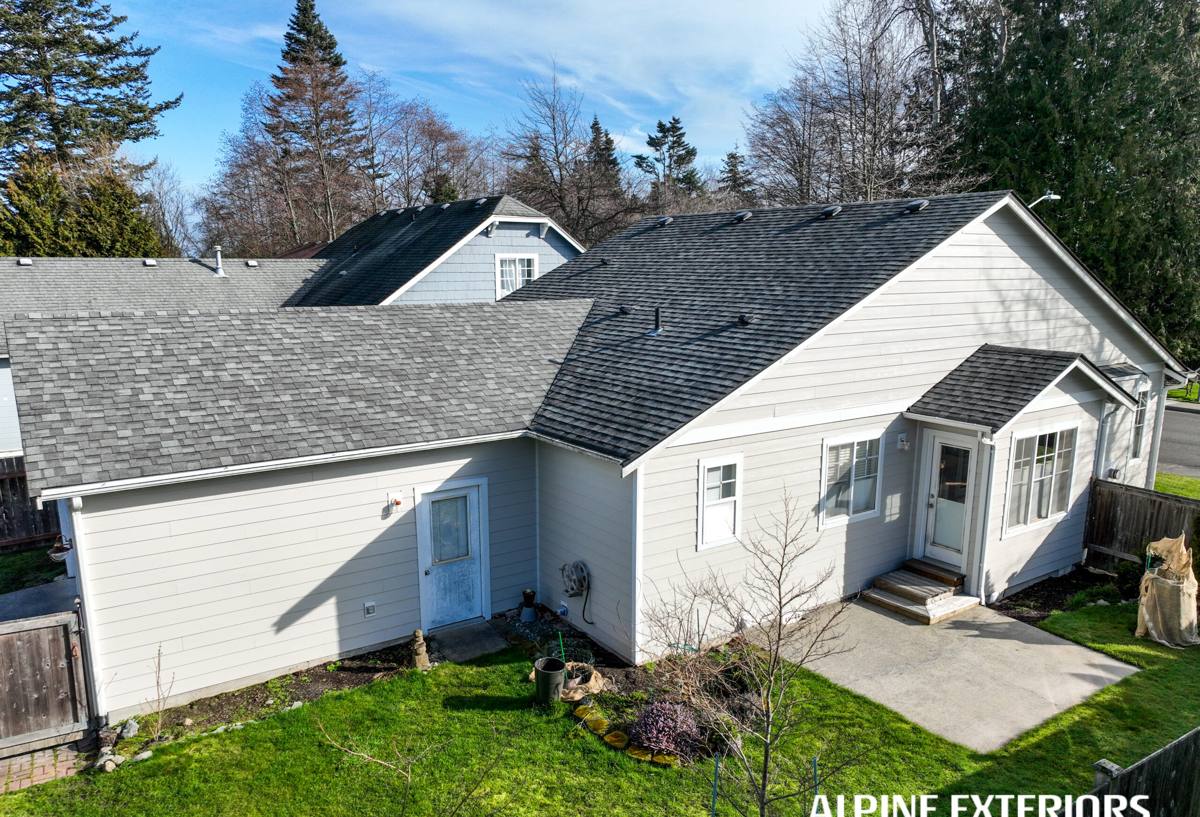
What Salt Air and Constant Moisture Actually Do
Salt air doesn't just corrode metal fasteners and flashing faster than it would inland — it also keeps wood-based and composite siding materials perpetually a little damp. Salt is hygroscopic, meaning it pulls moisture out of the air and holds it against the surface it's settled on. Combine that with La Conner's rainfall and channel humidity, and siding here rarely gets a long, dry stretch to fully release the moisture it's absorbed.
For siding that isn't engineered to handle sustained moisture exposure, that has real consequences:
- Paint and caulk fail earlier than their rated lifespan, especially on south and west-facing walls that see the most driving rain
- Wood-based composite products can swell, delaminate at panel edges, or take on soft spots where moisture wicks in around fasteners
- Fastener corrosion shows up as rust streaking well before the siding itself is due for replacement
- Moss and algae establish faster on shaded or north-facing walls, holding additional moisture against the surface
None of this means exterior work in La Conner is a losing battle — it means the material and installation details matter more here than they do in a drier climate.
The Long Moss Season
Skagit County's wet season runs long, and La Conner's proximity to the water extends it further. Shaded siding, especially on the north side of a house or under overhanging trees, can stay damp for weeks at a stretch during fall, winter, and early spring. That's exactly the environment moss and mildew need to take hold. Once moss establishes on a siding surface, it holds moisture against the material continuously, which accelerates whatever degradation was already happening underneath.
This is a maintenance issue as much as a material one. Gutters that aren't clear, vegetation growing close to the house, and siding with a rough or absorbent surface all make moss worse. Part of doing this work right in La Conner is thinking through drainage, clearance, and surface texture — not just picking a color and installing panels.
Why We Install James Hardie Fiber Cement — and Nothing Else
We standardized on James Hardie fiber cement siding for every home we side, including in La Conner, and we don't install vinyl, LP SmartSide, Cemplank, Allura, or primed wood products like spruce or cedar. That's not a marketing position — it's a decision built around exactly the conditions described above.
Fiber cement is non-combustible and dimensionally stable, meaning it doesn't swell, warp, or delaminate the way wood-based composites can when they take on repeated moisture. Hardie's ColorPlus factory finish is baked on and warranted separately from the siding itself, which matters in a climate where field-applied paint on other materials tends to fail early. And Hardie makes climate-engineered HZ product lines specifically for wetter regions like ours, with formulations designed to hold up to sustained moisture exposure rather than just resist an occasional rainstorm.
We're not going to tell you every other product on the market is worthless — vinyl and engineered wood sidings have their place, and plenty of houses wear them fine in milder climates. But for a channel-front, high-moisture, low-sun environment like La Conner, we've made the call that fiber cement is the material that holds up to spec, and that's what we put our name behind.
How Hardie Compares on the Factors That Matter Here
| Factor | James Hardie Fiber Cement | Wood-Based Composite (e.g. LP SmartSide) | Vinyl |
|---|---|---|---|
| Moisture/swelling resistance | Engineered for wet climates (HZ5 lines) | Vulnerable at cut edges and fastener points | Doesn't absorb moisture, but seams can trap it |
| Salt air / corrosion behavior | Fiber cement itself doesn't corrode | Similar; fastener corrosion still a factor | Doesn't corrode, but can chalk and fade near salt air |
| Finish durability | Factory-baked ColorPlus, separately warranted | Typically field-painted, shorter repaint cycle | Color molded in, but fades and chalks over time |
| Fire resistance | Non-combustible | Combustible (wood-based) | Can soften/melt under heat exposure |
| Typical repaint/recoat interval | 15+ years on ColorPlus finish | 7-10 years, sometimes sooner in wet climates | Doesn't repaint, but fades and becomes brittle |
Roofing, Windows, and Decks in the Same Climate
Siding doesn't work in isolation, and we don't treat it that way. The same conditions that stress siding in La Conner — driving rain, salt air, moss, sustained shade — hit the roof, windows, and any exterior deck just as hard, and a weak point in one system usually shows up as damage in another.
Roofing
Roof-to-wall flashing details are where a lot of moisture problems actually start. If flashing is undersized or the underlayment isn't matched to the amount of wind-driven rain a channel-front home sees, water finds its way behind the siding regardless of how good the siding itself is. We look at roofing and siding together, not as separate trades that happen to touch the same house.
Windows
Window flashing and the seal between window frame and siding is one of the most common failure points we find on older La Conner homes. Replacement windows installed without proper integration into the water-resistive barrier are a slow leak waiting to happen, even if the window unit itself is fine.
Decks
Decks facing the channel take the same driving rain and salt exposure as the siding above them, plus standing water and UV. Ledger board attachment and proper flashing where a deck meets the house are critical in this climate — that connection point is one of the most common sources of rot we see on waterfront and near-waterfront properties.
Why a Local Crew Matters Here
La Conner isn't a large town, and it's not architecturally uniform — you've got historic homes near the waterfront alongside newer construction further from the channel, each with different exposure levels depending on how close they sit to the water and how much tree cover surrounds them. A crew that works Skagit County regularly knows to ask where a specific house sits relative to the channel, how much afternoon sun it actually gets, and whether the north wall has a moss problem before the first panel goes up.
That local knowledge shapes real decisions: fastener spacing and type, how flashing gets detailed around windows and rooflines, and where extra attention to drainage and ventilation actually earns its keep. A crew that's never worked this close to saltwater is more likely to install to a generic spec instead of one built for what this specific stretch of coastline does to a house.
What to Look For When Choosing a Contractor
- Manufacturer training or certification specific to the siding product being installed, not just general carpentry experience
- A clear explanation of how they'll handle flashing at windows, doors, and roof lines — not just "we'll caulk it"
- Willingness to talk through moisture and moss issues specific to your home's exposure, rather than a one-size-fits-all pitch
- Proper licensing and insurance, verifiable through Washington State's contractor lookup
- A written scope that specifies fastener type, house wrap or weather-resistive barrier, and trim details — not just "siding replacement"
- References or completed work you can actually see, ideally in a similar coastal or high-moisture setting
What the Process Looks Like
A siding project starts with a walk-around of the house, not a pitch. We look at current siding condition, moisture staining, moss patterns, flashing at windows and rooflines, and how the home is oriented relative to sun and prevailing rain direction. From there we talk through what's actually needed — full replacement, targeted repair, or in some cases a roofing or window fix that's a bigger priority than the siding itself. Every estimate is written against a specific scope, so you know exactly what product, underlayment, and flashing details you're getting before any work starts.
If your La Conner home is showing early paint failure, moss buildup, soft spots, or you're just planning ahead for a home in this climate, we're happy to take a look. Estimates are free, there's no pressure, and you'll get a straight answer about what your house actually needs — use the form below to get started.