 Skagit County
 Cedar Siding Looks Great on Day One — This Page Is About Year Ten
Nobody argues with cedar's first impression. Fresh-cut western red cedar has a warmth and depth that engineered products spend a lot of marketing money trying to imitate. If you've ever stood in front of a newly sided cedar home, you understand the appeal immediately. That's not in dispute here.
What's in dispute is what that home looks like in year eight, or twelve, or twenty — and what it takes, in labor and money, to keep it looking anywhere close to its original condition. We don't install cedar siding on the homes we build here in Skagit County, and this page explains the maintenance reality behind that decision, not a knock on the wood itself.
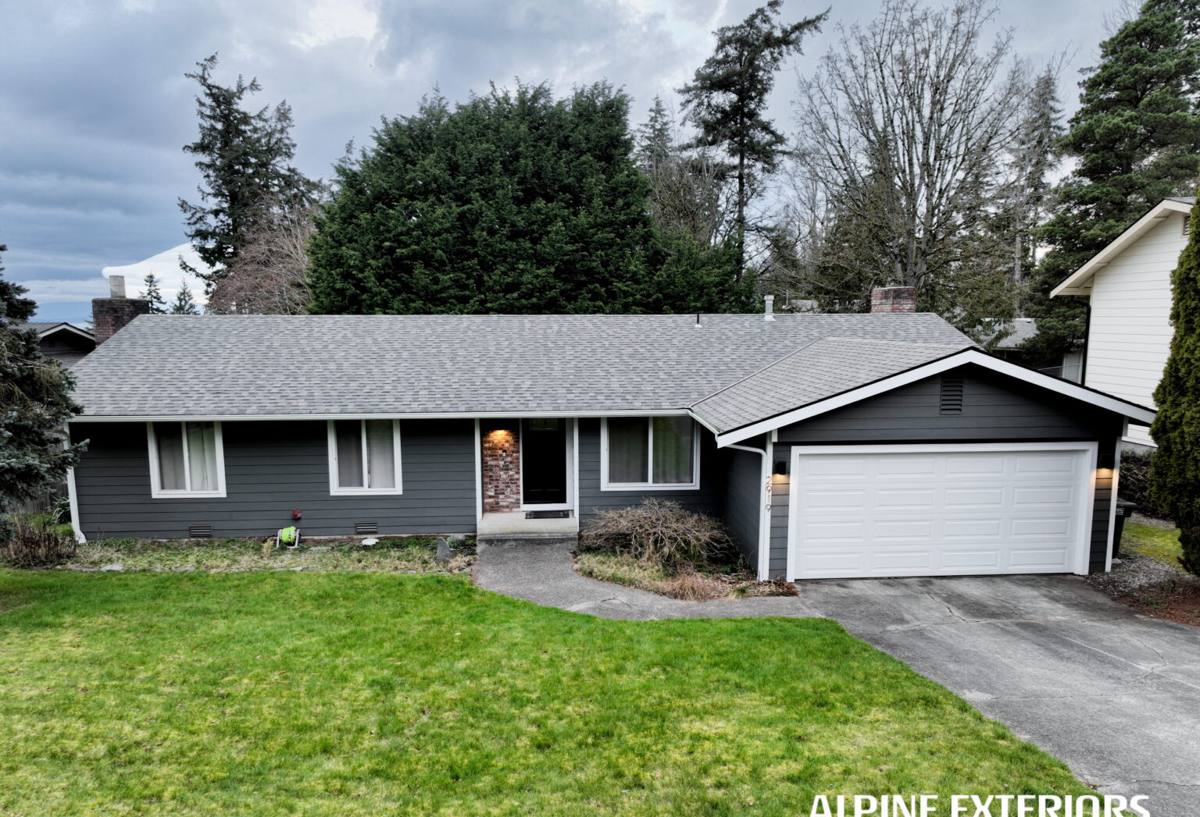
Wood Siding Is a Living Material, and That's the Whole Problem
Cedar is naturally rot-resistant compared to most softwoods, thanks to oils in the wood that discourage decay and insects. That's a genuine advantage. But "rot-resistant" is not the same as "rot-proof," and those natural oils fade over time, especially with repeated wetting and drying cycles — which is more or less the entire climate profile of the Skagit Valley.
Wood moves. It absorbs moisture, swells, dries, and shrinks, season after season, year after year. Every one of those cycles stresses the finish coating, the fasteners, and the joints between boards. A finish that looks perfect at installation is already on a countdown clock the day it goes up.
The Finish Is Doing All the Work
Whatever protects cedar from moisture — solid stain, semi-transparent stain, or paint — is a sacrificial layer. It is designed to wear out and be renewed. Skip that renewal and you're not looking at a cosmetic problem anymore; you're looking at moisture getting into the wood fiber itself, which is where the real damage starts.
What Skagit County's Climate Does to That Finish
This is the part of the equation that changes a lot depending on where you live, and it's not kind to cedar here. A few specific factors stack up against wood siding in this county:
Salt Air Near the Water
Homes closer to Skagit Bay, the Swinomish Channel, or the broader Puget Sound shoreline deal with salt-laden air that accelerates finish breakdown and corrodes fasteners faster than an inland home would ever experience. Salt air doesn't just fade a stain — it works into hairline checks in the wood and keeps them from ever fully drying out.
Driving Rain and Wind-Driven Wetting
Skagit County gets a lot of rain, and a fair amount of it doesn't fall straight down — it comes sideways off Pacific storm systems, which drives water into laps, joints, and end grain that a calmer climate would spare. Wind-driven rain is exactly the scenario cedar handles worst, because it forces water into the places where the finish is thinnest and hardest to maintain: butt joints, corner boards, and cut ends.
A Long Moss and Mildew Season
Between the marine humidity and the long stretches of overcast, mild weather, this area supports moss, algae, and mildew growth on siding for a much larger part of the year than drier climates do. Once organic growth establishes on a wood surface, it holds moisture against the board around the clock, which is precisely the condition that breaks down a finish and eventually the wood underneath it.
The Maintenance Schedule Cedar Actually Requires
Here's the honest version of what keeping cedar siding in good shape looks like in a climate like this one — not the version on the lumber yard brochure:
| Task | Typical Interval Here | Why It's Needed |
|---|---|---|
| Wash off moss, mildew, pollen buildup | Every 1–2 years | Organic growth traps moisture against the wood and accelerates finish failure |
| Re-stain or re-seal | Every 3–5 years (solid stain), 2–4 years (semi-transparent) | UV and moisture cycling break down the protective coating steadily |
| Full repaint (if painted instead of stained) | Every 6–10 years | Paint film cracks and fails faster on wood that moves seasonally |
| Caulk and seal joints, corners, butt ends | Ongoing, checked annually | Open joints are the entry point for the moisture that causes rot |
| Spot repair or replace damaged boards | As needed, more often near grade and roof lines | Splash-back and roof runoff concentrate moisture exposure in these zones |
None of that is exotic or unreasonable maintenance in isolation. The issue is that it never stops. Cedar siding is not a "finish it and forget it" product — it's an ongoing commitment for as long as you own the house, and falling behind on any one of those items compounds the damage before you know it's happening.
Where Cedar Actually Fails First
In our experience walking older homes in this area, cedar problems don't show up evenly across a wall. They concentrate in predictable spots:
- Cut ends and butt joints — the least-protected part of any board, and the first place water gets in
- South- and west-facing walls — the most UV exposure, which breaks down finish fastest
- Areas near grade or under decks — splash-back keeps these boards wet longer than the rest of the house
- Under gutters or downspout discharge points — concentrated water flow overwhelms the finish locally
- Knots — natural weak points where the finish cracks and moisture tracks into the board
Once moisture gets past the finish in one of these spots, it doesn't stay local. Wood wicks water along the grain, so a small failure at a butt joint can be feeding rot several inches into the board before it's visible from the ground.
The Real Cost Isn't the Siding — It's Everything After
Cedar siding material and installation is often price-competitive up front. The cost that changes the math is what happens over the following 15–20 years: the recurring washing, the recurring refinishing, the eventual board replacements, and — if maintenance lapses even for a few years, which is common with rental properties, aging homeowners, or busy families — the sheathing repair and rot remediation that follows.
We've been called to bid replacement siding jobs where the cedar itself wasn't the real problem; deferred maintenance let moisture get behind the siding and into the wall assembly, and that's a materially bigger job than a siding refresh. That risk is the core of why we don't install it: it puts a homeowner on the hook for a maintenance obligation that, if missed, doesn't just cost more paint — it can cost structural repair.
What We Install Instead, and Why
We install James Hardie fiber cement siding exclusively. It's not a wood product, so it doesn't move, swell, or absorb water the way cedar does, and it isn't a food source for the moss and mildew that thrive in this climate. Hardie's ColorPlus finish is baked on at the factory under controlled conditions, not brushed on at a jobsite, and it's backed by a real finish warranty — a meaningfully different proposition than a field-applied stain that starts degrading the day it's exposed to weather.
Hardie also builds specific product lines engineered for exactly the conditions found here — the HZ5 formulation is designed for cold, wet, moisture-heavy climates like the Pacific Northwest. It's also non-combustible, which matters for insurance and peace of mind regardless of climate. We're not saying cedar is a bad material in the abstract. We're saying that for the specific combination of salt air, driving rain, and a long moss season that Skagit County homeowners deal with, we'd rather put our name on a product that doesn't ask you to fight the climate every few years to keep it intact.
If You're Weighing Cedar Against the Alternatives
A few honest questions worth asking yourself before committing to cedar siding here:
- Am I willing to wash, inspect, and refinish this siding on a recurring schedule for as long as I own the home?
- Do I have a plan for who does that maintenance if I'm not able to, physically or financially, a decade from now?
- Is my home in a higher-exposure spot — near the water, heavily shaded, or with poor roof drainage — that would accelerate all of the above?
- Am I budgeting for the siding itself, or for the siding plus twenty years of upkeep?
If the answers to those questions make you hesitate, that hesitation is worth listening to. It's the same reasoning that led us to standardize on fiber cement in the first place.
Get a Straight Answer for Your House
Every home and every lot in this county sits a little differently with respect to sun exposure, wind, and moisture — a house tucked into trees a mile inland faces a different set of pressures than one exposed to the water. If you're deciding between cedar, another siding option, or a full replacement with James Hardie, we're glad to walk your property, look at your specific exposure, and give you a straightforward, no-pressure estimate and honest opinion — not a sales pitch. Use the form below to get started.