 Skagit County
 Why Two "Siding Quotes" Can Look Nothing Alike
If you've called around for siding quotes in Mount Vernon, Burlington, Anacortes, or anywhere else in Skagit County, you've probably noticed the numbers don't line up. One contractor quotes a number that seems reasonable, another comes in twice as high, and a third undercuts both by a wide margin. That spread isn't random. It almost always comes down to three things: what's actually being removed and repaired underneath, what material is going back up, and how much labor and detail work the installer is planning to put into the job. This page walks through those factors honestly so you can tell the difference between a fair price and a number that's been trimmed by skipping steps.
What Actually Drives the Price
Tear-off vs. overlay
Some contractors will install new siding directly over old siding to save time and money. It's cheaper up front, but it traps whatever moisture, rot, or pest damage already exists behind the old material, and it's not something we do. A full tear-off costs more because it exposes the sheathing and framing, but it's the only way to actually know what condition your walls are in before new siding goes up.
Wall complexity and home shape
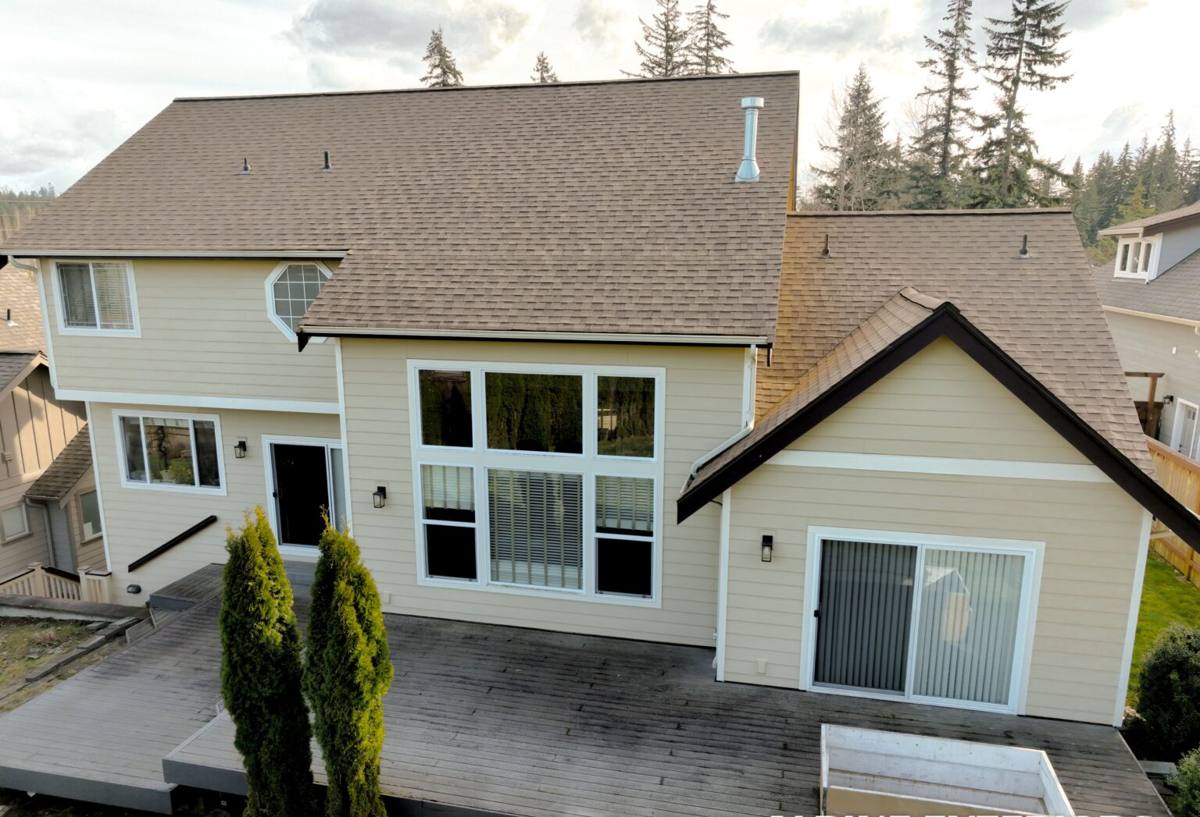
A simple rectangular one-story home with few corners costs less per square foot than a home with dormers, bump-outs, multiple gables, and a second story. More corners, more trim, more cutting, more scaffolding — all of that is labor time, and labor is usually the largest line item in any siding job, not the material itself.
What's found once the old siding comes off
This is the variable that catches homeowners off guard. Skagit County's wet winters and long moss season mean it's common to find soft or rotted sheathing, especially around old window flashing, roof-to-wall intersections, and lower wall sections that stayed damp for years under failing siding. Repairing or replacing damaged sheathing adds cost, but it's not optional — installing new siding over rotten wood just hides the problem for a few more years.
Material Costs Compared
Every siding material has a different price point, a different lifespan, and a different maintenance burden. The table below is a general, honest comparison — actual pricing depends on your home's size and complexity, and any contractor who gives you an exact number without seeing your house first is guessing.
| Material | Relative Material Cost | Typical Lifespan | Maintenance Burden |
|---|---|---|---|
| Vinyl | Lowest | 15-25 years | Low, but fades, cracks in cold, can warp near heat sources |
| Engineered wood (LP SmartSide) | Low-Mid | 20-30 years with upkeep | Moderate — seams and cut edges need consistent caulk/paint maintenance |
| Cedar | Mid-High | 20-40 years with diligent care | High — regular refinishing, vulnerable to moisture and pests if neglected |
| Fiber cement (James Hardie) | Mid | 30-50+ years | Low — factory-baked finish, no repainting cycle for 15+ years |
We install James Hardie fiber cement exclusively, and this table is a big part of why. It isn't the cheapest material on the shelf, but it's not the most expensive either — it sits in the middle while outperforming cheaper options on lifespan and outperforming higher-maintenance options on upkeep. Over the 20-30 year window most homeowners actually own their house, that math tends to work out in Hardie's favor.
Why We Don't Chase the Lowest Material Cost
Vinyl is inexpensive and easy to install fast, which is exactly why it's so common on budget rebuilds. Its weakness in our area is that it's a thin plastic product that expands, contracts, and can become brittle in freeze-thaw cycles, and it has no real fire resistance. Engineered wood products hold paint well when new but rely on keeping every seam, cut edge, and butt joint properly sealed for the life of the product — miss one spot during a maintenance cycle and moisture finds its way in. Cedar looks beautiful and many homeowners love it, but it demands a refinishing schedule most people underestimate when they first install it, especially somewhere as damp as Skagit County.
None of that means those products are bad products used correctly in the right setting. It means that as a company, we've chosen to stand behind one material system — non-combustible fiber cement with a factory-applied ColorPlus finish — rather than sell whatever is cheapest that week. That's a standard, not a sales pitch, and it's why our quotes will look different from a shop that installs everything.
Labor Quality Matters More Than the Brand on the Box
Even the best siding material fails early if it's installed wrong. Improper nailing patterns, missing rain-screen gaps, incorrect flashing at windows and rooflines, and wrong fastener spacing are the most common causes of early siding failure — not the material itself. A contractor quoting a lower price is sometimes just planning to spend less time on flashing details, trim work, and fastening than a contractor quoting a fair price. This is genuinely hard to catch by looking at a finished wall, which is why the contractor's actual experience and process matters as much as the product they're selling.
Hidden Costs Homeowners Often Forget to Ask About
- Permits — most jurisdictions in Skagit County require a permit for a full re-side; factor in the fee and inspection timeline
- Disposal — tear-off debris (old siding, housewrap, damaged sheathing) has to be hauled and disposed of properly
- Sheathing or framing repair — often not known until the old siding is off, but should be quoted as an allowance up front, not a surprise later
- Trim, corners, and fascia — matching trim details around windows, doors, and rooflines adds labor beyond the flat wall area
- Flashing and moisture barrier upgrades — window and door flashing often needs to be brought up to current standards during a re-side
- Paint or color selection — factory-finished products like Hardie ColorPlus avoid this cost entirely; site-painted materials do not
- Gutter and downspout adjustments — sometimes need minor modification to fit new siding thickness or trim lines
A quote that skips over these items isn't necessarily dishonest, but it is incomplete, and incomplete quotes are how "great deals" turn into change orders halfway through a project.
What Skagit County's Climate Adds to the Cost Equation
Local weather isn't just a backdrop here — it changes what a siding job actually needs to hold up long-term. Homes closer to Padilla Bay, Samish Bay, and the Anacortes waterfront deal with salt-laden air that accelerates corrosion on fasteners and trim, which is why fastener selection and flashing material matter more here than in drier inland climates. The steady driving rain common to the county puts real pressure on any gap in a moisture barrier, rewarding installers who take rain-screen gaps and proper lap sequencing seriously. And the long moss season that blankets roofs and north-facing walls for much of the year means siding low on the wall or shaded by trees needs a finish and substrate that won't soften or feed growth over time. None of these factors are dramatic on their own, but together they're why a siding system engineered for genuine climate exposure — which is exactly what Hardie's HZ5 product line is built for — tends to outperform generic products in this specific part of Washington.
Rough Cost Ranges, Realistically
Without seeing a specific home, no number is precise, but general ranges are worth knowing so you can sanity-check a quote. Full tear-off and re-side projects on an average single-family home typically land somewhere in the low-to-mid tens of thousands of dollars, with the final number shaped heavily by square footage, wall complexity, and how much sheathing repair is needed once old siding comes off. Material choice moves that number up or down within a range, but it rarely doubles the price on its own — labor, prep, and repair work usually account for more of the swing than the siding brand itself. Any contractor quoting a number dramatically lower than others bidding the same scope of work is worth asking pointed questions about what, exactly, is and isn't included.
How to Get an Estimate You Can Actually Compare
- Ask whether the quote includes full tear-off or overlay installation
- Ask what happens, cost-wise, if damaged sheathing is found
- Get the material brand and product line named specifically, not just "fiber cement" or "vinyl siding"
- Ask what warranty applies to labor separately from the manufacturer's material warranty
- Confirm whether permit fees and disposal are included or billed separately
- Ask how flashing and moisture barrier work at windows and rooflines will be handled
A contractor who answers these questions clearly and in writing, without hedging, is one worth trusting with a project this size.
If you'd like a straight, no-pressure look at what your specific home would actually cost to re-side, we're happy to walk the property, point out anything we find, and put together a written estimate you can compare against anyone else's. There's no obligation — just a clear answer.