 Skagit County
 Exterior Work Built for Conway's Climate
Conway sits low in the Skagit River delta, close to Puget Sound and surrounded by farmland, sloughs, and tidal flats. That geography is beautiful, but it's tough on a house. Homes here deal with a steady mix of salt-tinged air moving up from the Sound, driving rain off the water, morning fog that lingers in the low ground, and a moss season that can run most of the year on north-facing walls and rooflines. Any exterior product installed in Conway has to hold up to near-constant moisture cycling, not just occasional wet weather.
We work throughout Skagit County, and Conway is one of the areas where we see the clearest evidence of climate-driven siding failure — swollen trim, delaminating panels, paint that won't hold, and moss creeping up from grade. A lot of that damage traces back to product choice and installation details that didn't account for how wet this corner of the county actually stays.
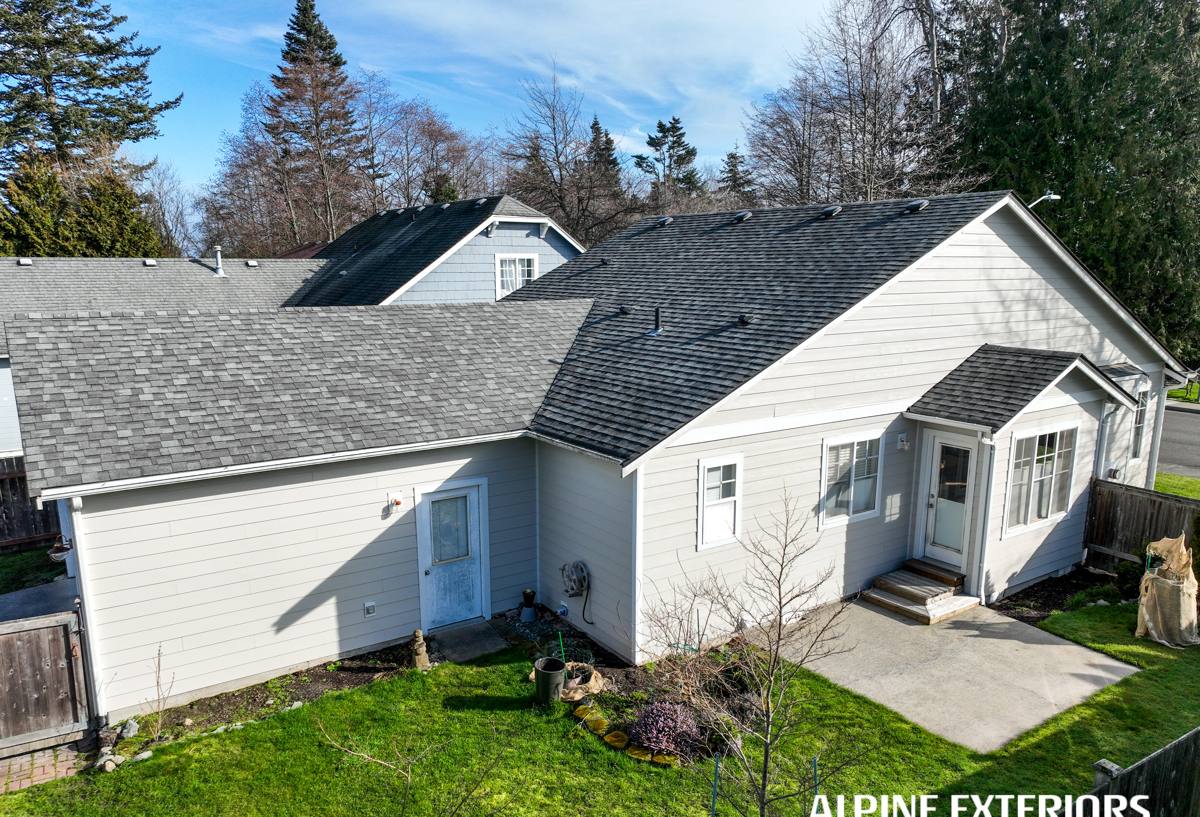
What Skagit County's Wet Climate Does to a House
Salt Air and Coastal Moisture
Conway's proximity to Skagit Bay and the Sound means airborne salt is part of the equation, even a few miles inland. Salt-laden moisture accelerates corrosion on fasteners, flashing, and hardware, and it can speed up the breakdown of coatings and finishes that aren't rated for coastal exposure. Over years, that adds up to fastener staining, premature paint failure, and softer spots in materials that absorb moisture rather than shed it.
Driving Rain and Wind-Driven Wetting
Storms coming off the water don't just fall straight down — wind pushes rain sideways into wall assemblies, especially on west- and south-facing elevations. That means siding, trim, and window flashing need to actually shed water, not just tolerate it. Gaps, poor caulk lines, and butt joints without proper flashing are where driving rain finds its way behind the cladding and into the wall sheathing.
Moss, Algae, and Shade
Between the tree cover common in this part of the county and the long stretches of overcast, damp weather, moss and algae growth is nearly constant on shaded or north-facing surfaces. Roofs are the most visible casualty, but moss and algae also colonize siding, trim, and deck boards, holding moisture against the surface and accelerating rot in anything that isn't moisture-resistant by design.
Why We Install James Hardie Fiber Cement — and Only James Hardie
We made a decision a while back to standardize on James Hardie fiber cement siding for every siding job we do, including in Conway. We don't install vinyl, LP SmartSide, Cemplank, Allura, primed spruce, or cedar. That's a deliberate call based on how those products actually perform over time in a climate like this one, not a sales preference.
The Trade-Offs We're Not Willing to Accept
- Vinyl siding is affordable and low-maintenance in dry climates, but it expands and contracts with temperature swings, can warp or crack in wind-driven storms, and its seams and J-channels give wind-blown rain more opportunities to get behind the panel.
- LP SmartSide and other engineered wood products perform reasonably well when installation is flawless, but they're wood at their core — if caulking, flashing, or field cuts aren't sealed exactly right, moisture intrusion leads to swelling and rot, and that's a hard standard to guarantee on every job, every year, in a climate this wet.
- Primed spruce and cedar require ongoing maintenance — repainting, sealing, and vigilant moisture management — that most homeowners don't keep up with, and in a delta climate like Conway's, gaps in that maintenance show up fast as rot and paint failure.
- Cemplank and Allura are also fiber cement products and share some of Hardie's core advantages, but we standardized on one manufacturer so our crews install one system to spec every time, with warranty coverage and a factory finish we know and trust.
What Hardie Gets Right for This Area
James Hardie fiber cement is non-combustible, dimensionally stable, and engineered specifically for climates like the Pacific Northwest's. The HZ5 product line is formulated for wetter, more variable climates — which describes Conway well. It resists moisture absorption far better than wood-based products, holds its shape instead of swelling or cupping, and doesn't feed mold or moss growth the way organic materials can. The ColorPlus factory finish is baked on under controlled conditions, so it holds color and resists fading and chipping far longer than field-applied paint, which matters when your siding is dealing with salt air and near-constant damp.
Siding Installation Details That Matter Here
Fiber cement is only as good as the installation behind it. In a climate that pushes moisture into every gap and seam, the details most homeowners never see are the ones that determine whether siding lasts twenty years or fails in five.
- Correct nail placement and fastening pattern — Hardie has specific requirements, and shortcuts here cause panel movement and cracking.
- Proper rainscreen or drainage plane behind the siding, so any moisture that does get past the cladding has somewhere to go.
- Flashing at every window, door, and horizontal trim transition — the single most common failure point we see on older homes in this area.
- Correct caulking at butt joints and penetrations, using sealants rated for exterior, high-moisture use.
- Proper clearance between the bottom of the siding and grade, decks, or roof lines, so splash-back and standing moisture don't sit against the material.
Roofing, Windows, and Decks for the Same Climate
Siding doesn't work in isolation — it's one piece of a building envelope that has to work together against Skagit County's weather. We handle roofing, windows, and decks alongside siding for that reason.
Roofing
Roofs in Conway carry the heaviest moss and algae burden on the property, since they're the most exposed, most horizontal surface. Proper ventilation, underlayment, and flashing at every penetration matter as much here as material choice does — a roof that traps moisture underneath will fail from the inside regardless of what's on top.
Windows
Window flashing integration with siding is one of the most common places we find water damage on older homes in this area. Replacement windows installed without proper flashing tied into the surrounding wall assembly are a slow, hidden path for water intrusion, even when the window itself is a quality product.
Decks
Decks in a climate this wet need materials and fastening details that account for standing moisture, ground contact, and the same moss and algae pressure that affects roofs and siding. Ledger board flashing and proper drainage away from the house are as important as the decking material itself.
Comparing Siding Options for a Conway Home
| Material | Moisture Resistance in Coastal/Delta Climate | Maintenance | Our Position |
|---|---|---|---|
| James Hardie Fiber Cement | High — HZ5 line engineered for wet climates, does not absorb and swell like wood | Low — factory ColorPlus finish, occasional washing | What we install |
| Vinyl | Moderate — seams and panels vulnerable to wind-driven rain | Low, but limited repair options when damaged | Not installed |
| LP SmartSide / Engineered Wood | Moderate — wood-based core, performance depends entirely on installation quality | Moderate — caulk and paint upkeep required | Not installed |
| Primed Spruce / Cedar | Lower — natural wood, prone to swelling and rot without diligent upkeep | High — regular repainting and sealing | Not installed |
| Cemplank / Allura | High — also fiber cement | Low | Not installed (single-manufacturer standard) |
Why a Local Crew Matters in Conway
Conway is a small community, and the building conditions here — low elevation, proximity to water, drainage patterns tied to the river delta — aren't identical to inland Skagit County or the drier east side of the state. A crew that works this area regularly recognizes the early signs of moss buildup, moisture damage, and failing trim before they become structural problems, and understands which flashing and drainage details matter most for homes sitting this close to the water. That local familiarity shows up in fewer callbacks and siding that actually performs the way it's supposed to for its full warranty period.
What to Look For When Hiring for Exterior Work
- Proper Washington state contractor licensing and insurance, verifiable before any work starts
- Manufacturer training or certification for the specific siding product being installed
- A written scope that specifies flashing, drainage plane, and fastening details — not just "siding replacement"
- Willingness to explain why they use the materials they use, including trade-offs
- A realistic timeline that accounts for Skagit County's rain windows, since fiber cement installation needs reasonably dry conditions
Getting Started
If you're dealing with moss buildup, soft or swelling siding, paint that won't hold, or you're just planning ahead for a home in Conway, we're happy to take a look and talk through what your house actually needs. We offer free, no-pressure estimates for siding, roofing, windows, and decks — reach out through the form below to get started.