 Skagit County
 Board and batten has been showing up on more homes across Skagit County over the last several years — on farmhouses outside Mount Vernon, on new builds near Anacortes, and as an accent look on remodels in Burlington and Sedro-Woolley. It's a classic look with roots in agricultural buildings, and it's found new life on modern and craftsman-style homes alike. This guide walks through what board and batten actually is, how James Hardie's version of it is built, and what to think about before you commit to it on a house that has to survive Pacific Northwest weather.
What "Board and Batten" Actually Means
Traditional board and batten siding is made of wide vertical boards installed with a narrow strip — the batten — covering each seam between boards. The pattern started as a practical way to cover gaps in barns and outbuildings using rough-sawn lumber, and it's since become a deliberate architectural choice for its clean vertical lines and strong shadow pattern.
There are a few ways to achieve the look today, and they are not all equal in how they perform:
- True board and batten: wide boards with separate battens fastened over the seams, creating real depth and shadow lines.
- Vertical panel siding with battens applied on top: a panel product with battens added at intervals to mimic the traditional look without true board seams underneath.
- Reveal panel systems: engineered panels installed with a consistent reveal gap that reads as a modern, cleaner version of the same vertical rhythm.
Each approach can look great. The difference that matters long-term is what's behind the boards — the water management, the fastening, and the material itself.
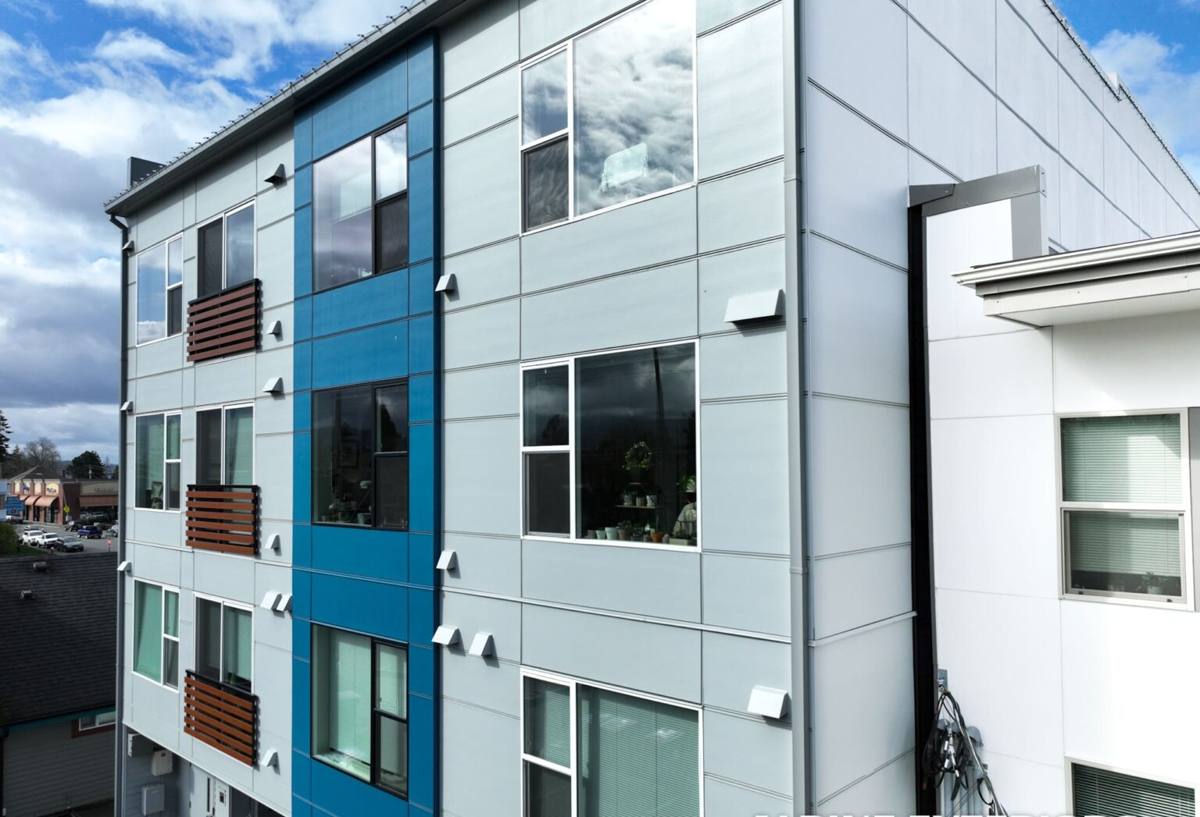
How Hardie Builds Board and Batten
James Hardie offers a few product paths to this look, and the right one depends on the home's architecture and the look the homeowner wants:
HardiePanel Vertical Siding
This is fiber cement panel siding installed vertically, with battens placed over the panel seams at regular intervals. It's the most common way we install board and batten, and it gives a very close match to the traditional look with the durability of fiber cement behind it.
Hardie Artisan Siding
Hardie's higher-end Artisan line includes vertical siding options with deeper, more dimensional reveals for homes where the architecture calls for a more refined, custom look. It costs more than standard HardiePanel but reads as a noticeably higher-end product up close.
Batten Material and Spacing
Battens are typically fiber cement trim boards, matched or contrasted in color to the field panels. Spacing is a design decision — tighter spacing reads more traditional and busier, wider spacing reads more modern and restrained. On a typical home we're usually working in a range of 12 to 24 inches on center, but the right number depends on window placement, gable proportions, and the overall elevation.
Why Fiber Cement Matters More on This Style
Board and batten has more vertical seams and more fastener penetrations per square foot than lap siding, simply because of the batten strips. That makes the underlying material and the installation quality more important here than on a standard lap job. Wood battens and boards move with moisture, and that movement telegraphs as cracking, warping, or nail popping over a few seasons — especially somewhere like Skagit County, where boards are wet more months of the year than they're dry. Vinyl board and batten avoids rot but has its own limits: it's a thin material trying to mimic a look that depends on real depth and shadow, and it can look visibly flat or start to wave in full sun exposure.
Hardie's fiber cement holds its dimension. Panels and battens don't swell, don't rot, and don't need to be repainted every few years to keep looking sharp. That matters most on a style where the seams and shadow lines are the whole visual point — if the boards move, the clean lines that make board and batten attractive are the first thing to go.
Skagit County Climate Considerations
Board and batten's vertical seams and batten strips create more places where water can find a way in if the installation isn't done right. That's a bigger deal here than in a drier climate. Skagit County sees driving rain off Puget Sound and the Salish Sea, salt air near Anacortes and the coastal fringe, and a long moss season on north-facing walls and anything shaded by trees — which is most of the county outside the flat farmland.
Correct installation matters more than the product name on the box. That means:
- Proper weather-resistive barrier and flashing behind every panel seam and batten strip, not just at windows and doors.
- Correct fastener placement and spacing per Hardie's engineering specs for the panel profile.
- Rainscreen or furring strips where the wall assembly calls for a drainage gap, so bulk water has somewhere to go.
- Factory-applied ColorPlus finish on all field panels and battens, so cut ends are the only place that needs field touch-up.
We install to HZ10 climate specifications, which is Hardie's zone rating built for regions with sustained moisture exposure like ours — it's not a marketing label, it's a manufacturing formulation difference.
Color and Finish Options
ColorPlus finish is baked on at the factory under controlled conditions, which gives a more even, durable finish than field-applied paint and comes backed by Hardie's finish warranty. For board and batten specifically, color choice interacts directly with the shadow lines the style is known for:
- Same-color battens and panels: the classic, cohesive look — shadow lines do the visual work rather than color contrast.
- Contrasting trim or corner boards: common on farmhouse-style homes, where white trim frames a darker field color.
- Two-tone elevations: board and batten on gables or a second story, paired with a different Hardie profile (lap or shingle) below — a popular way to break up a large elevation without changing materials.
Cost Factors to Understand
Board and batten generally costs more than standard lap siding on the same house, mainly due to labor — more seams, more battens to cut and fasten, and more precise layout work to keep spacing even across window and door openings. Exact numbers depend on your home's size and complexity, but the factors below are what actually move the price.
| Factor | Why It Matters |
|---|---|
| Panel vs. true board-and-batten build-up | True board-and-batten with separate boards and battens takes more labor than pre-formed panel systems |
| Batten spacing and layout | Tighter spacing means more battens, more cuts, and more fasteners per square foot |
| Wall complexity | Gables, dormers, and multiple elevations require more layout precision to keep vertical lines aligned |
| Product line (HardiePanel vs. Artisan) | Artisan's deeper reveal and refined detailing costs more than standard panel siding |
| Existing wall condition | Sheathing repair, moisture damage, or missing weather barrier adds cost before siding even goes up |
Where Board and Batten Works Best
Board and batten isn't the right call for every home. It reads strongest on:
- Farmhouse and modern farmhouse styles, where it's the defining architectural feature
- Gables and dormers on an otherwise lap-sided home, used as an accent
- Modern and craftsman homes using wide-reveal panels for clean vertical lines
- Shed and accessory structures where a simpler, bold look fits the building
On a very traditional or Victorian-style home, board and batten can look out of place — lap siding or shingle siding usually fits the architecture better in those cases. Part of an honest estimate is telling you when a different Hardie profile is the better match for your home, not just selling the style that's trending.
What to Check Before You Hire
Board and batten hides installation mistakes less forgivingly than lap siding — bad layout or missed flashing shows up as visible problems faster given the extra seams. Before hiring anyone for this work, it's worth confirming:
- They can show you their planned batten layout and spacing before installation starts, not figure it out on the fly
- They're installing to Hardie's published fastening and clearance specs, not a generic siding install
- They're including proper flashing and a weather-resistive barrier behind the assembly, in writing on the estimate
- They can explain how they'll handle drainage behind the panels given our rainfall
- They carry Hardie's contractor certification or can speak specifically to HZ10 installation requirements
Maintenance Once It's Installed
Hardie board and batten with a ColorPlus finish needs very little upkeep compared to painted wood: an occasional rinse to keep moss and grime from building up on shaded or north-facing walls, and a periodic look at caulking around windows, doors, and trim intersections. Cut ends exposed during installation should have factory-matched touch-up sealant applied — that's a detail worth asking your contractor about directly, since it's an easy step to skip.
If you're weighing board and batten against other siding styles for a home in Skagit County, we're happy to walk your property, talk through what fits your architecture, and give you a straightforward, no-pressure estimate.