 Skagit County
 What LP SmartSide Actually Is
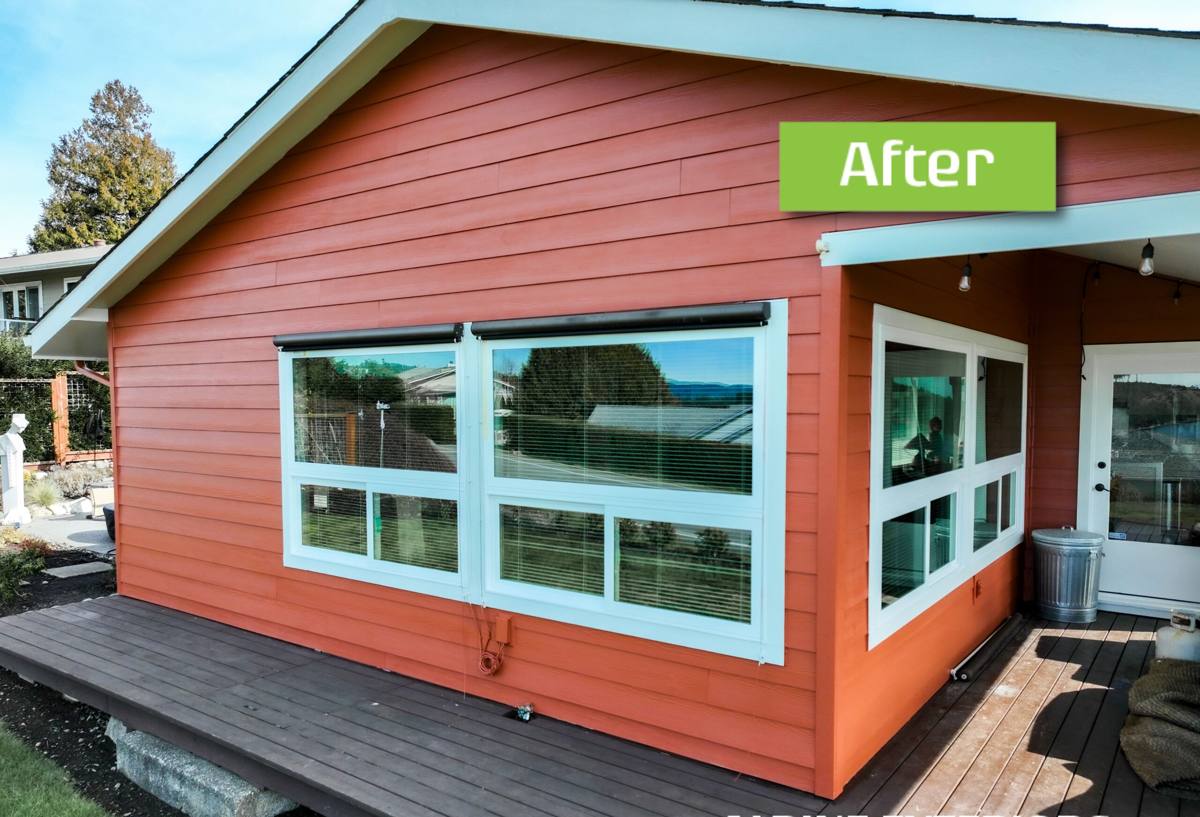
LP SmartSide is an engineered wood siding product made from wood strands bonded with resin, then treated with a zinc borate solution and coated with a factory primer. It's built on the same basic idea as OSB sheathing, but manufactured to be denser, more uniform, and dressed up to look like traditional lap siding, board-and-batten, or cedar shake. It's a legitimate product with a real place in the market, and plenty of homes around the Pacific Northwest wear it without incident.
We get asked about it often enough that we think homeowners in Skagit County deserve a straight answer: we don't install it, and here's the reasoning, not a sales pitch against a competitor's product.
What LP SmartSide Gets Right
Fair is fair. LP SmartSide has real advantages that explain why it's popular:
- Lower material cost than fiber cement in most markets
- Lighter weight, which can speed up installation on some crews
- Easier to cut and nail without specialized blades or fasteners
- Wood grain texture that reads as a warm, natural look
- Zinc borate treatment does provide real resistance to fungal decay and insects compared to untreated wood
If cost is the deciding factor and the home is in a drier, more sheltered part of the state, we understand why a homeowner or builder would choose it. That's just not the environment we're building in here.
Why Skagit County's Climate Changes the Equation
Skagit County sits where marine air off the Salish Sea meets the foothills of the Cascades, and that combination produces a specific kind of punishment for exterior building materials: salt-laden air rolling in off the water, long stretches of driving rain that hits siding at an angle rather than falling straight down, and a moss season that can run from fall through spring on any north-facing or shaded wall. None of that is exotic weather — it's just relentless, and relentless is what wears down wood-based products faster than a warranty schedule assumes.
Engineered wood siding is designed to shed water, not absorb it, and the zinc borate treatment does slow decay. But every wood-strand product still has a cellulose core, and a core that swells when it takes on moisture and shrinks when it dries out. In a climate with occasional rain, that cycle is slow. In Skagit County, where damp conditions can persist for weeks at a stretch, that cycle runs constantly, and it's the cycle — not a single storm — that eventually causes trouble at seams, cut ends, and fastener points.
The Core Issue: Treated to Resist Water, Not Immune to It
This is the heart of why we stopped installing it. Every manufacturer of engineered wood siding is explicit that field-cut ends, joints, and any breach in the factory coating must be sealed with the specified primer and caulk, and that this sealing has to be maintained over the life of the siding. Skip a step during install, or let caulk fail a few years down the road without catching it, and moisture has a direct path into the strand core at exactly the spots most exposed to wind-driven rain.
In a milder or drier climate, a homeowner might go a decade before a caulking gap becomes a real problem. In Skagit County's wet season, we've seen that timeline compress. Moss holding moisture against a north wall, or a butt joint that opens up a hairline gap facing the prevailing weather, doesn't get the drying-out period it would get somewhere with more sun and less rain. The result is swelling, edge softening, and eventually paint or coating failure at the affected boards — not because the product failed, but because the maintenance schedule that keeps it performing is unforgiving in this specific climate.
Where the Trouble Usually Starts
In our experience walking homes in this area, the failure points are consistent and predictable:
- Butt joints between boards where caulk has shrunk or separated
- Bottom edges near grade or near decks where splashback keeps the material wet longer
- Field cuts around windows and trim that weren't re-sealed to spec
- North- and west-facing walls where moss and shade keep surfaces damp longest
- Fastener heads where the factory coating was compromised during installation
Installation Sensitivity Is the Other Half of the Problem
A siding product is only as good as the crew installing it, but some products have a wider margin for error than others. LP SmartSide's performance is closely tied to correct field sealing, proper flashing details, and consistent gapping for expansion. Get those details right every time, on every board, and it holds up. Get them wrong even occasionally, and you've created a moisture entry point that won't show itself for a year or two — long after the crew that installed it has moved on to the next job.
We'd rather install a product where the margin for error is wider, especially in a climate that doesn't give a small mistake much chance to dry out before it becomes a bigger one.
How It Compares to What We Install
| Factor | LP SmartSide (engineered wood) | James Hardie (fiber cement) |
|---|---|---|
| Core material | Wood strand with resin binder | Cement, sand, and cellulose fiber |
| Moisture behavior | Resists water; core can swell if coating is breached | Non-organic core does not swell or rot from moisture |
| Combustibility | Combustible (wood-based) | Non-combustible |
| Caulking/maintenance sensitivity | High — sealed joints and cut ends require ongoing upkeep | Lower — factory-engineered joints, less dependent on field caulking |
| Finish | Factory-primed; typically field-painted | ColorPlus factory finish available with extended finish warranty |
| Climate-specific engineering | General-purpose product line | HZ5 line engineered for cold/damp, high-moisture climates |
| Typical material cost | Lower | Moderate to higher |
Warranty Realities Worth Understanding
Warranty paperwork on any engineered wood siding is worth reading closely before you sign a contract, not after a problem shows up. Most of these warranties are prorated, meaning the payout shrinks the longer you've owned the siding, and most carry explicit maintenance requirements — documented caulking, timely repainting, and prompt repair of any coating damage. If those maintenance steps lapse, or if the original installer didn't follow the manufacturer's sealing details exactly, a warranty claim can be reduced or denied. That puts a real burden on the homeowner to track upkeep for the life of the siding, on top of a general contractor no longer being around to stand behind day-one workmanship.
We'd rather sell a homeowner a product and a warranty structure we can stand behind without asterisks.
Why We Standardized on James Hardie Instead
After years of servicing and replacing siding across Skagit County, we made the call to install James Hardie fiber cement exclusively. A few reasons stand out:
- Non-combustible core — no wood strand or cellulose fiber to feed a fire
- HZ5 product engineering — Hardie's climate-specific line is built for the freeze-thaw and high-moisture conditions common to this region
- ColorPlus factory finish — a baked-on finish that resists the fading and peeling that comes with field-applied paint in a wet climate
- Cement core — doesn't swell, rot, or feed moss and mildew the way an organic substrate can
- Strong, transferable warranty — backed by a manufacturer with decades in the fiber cement category and less dependent on perfect ongoing homeowner maintenance
It costs more up front than engineered wood. We think that's the honest trade-off, and in a climate that includes salt air, driving rain, and months of moss pressure every year, it's the trade-off that holds up best over the decades a siding job is supposed to last.
Questions Worth Asking Before You Choose a Siding Product
Whatever siding you're considering, and whichever contractor you hire, these are worth asking directly:
- What does the manufacturer's warranty actually require of me as the homeowner to stay valid?
- Is the warranty prorated, and how does the payout change over time?
- What flashing and sealing details does this product require at joints, corners, and penetrations?
- Is this product's factory finish rated for the maintenance interval I'm willing to commit to?
- How does this product perform specifically in wet, salt-air, or high-moss climates — not just in general?
- What's the contractor's own experience installing and later servicing this specific product locally?
Let's Talk About Your Home
None of this is meant to talk anyone out of a product that works fine in the right setting — it's meant to explain why we chose one lane and stick to it. If you're weighing your siding options for a home in Skagit County, we're happy to walk your property, point out what your specific exposure looks like, and give you a straightforward, no-pressure estimate for a James Hardie installation done to spec.