 Skagit County
 Siding Built for Clear Lake's Climate
Clear Lake sits in that stretch of Skagit County where the weather never quite makes up its mind. Homes here deal with a long wet season, moisture that lingers under tree cover, and enough salt-tinged air rolling in from the Sound to matter over the life of a house. Add in the moss and algae that thrive in shaded, damp yards throughout the Skagit Valley, and you've got a climate that is genuinely hard on exterior building materials — not dramatically, just relentlessly, year after year.
We install siding, roofing, windows, and decks throughout Skagit County, and Clear Lake properties tend to show the same wear patterns: soft or swelling trim near the ground, streaking and dark staining on north-facing walls, caulk lines that give out early, and paint that needs refreshing more often than homeowners expect. None of that is a mystery once you understand what the material is fighting against. The fix isn't more maintenance — it's choosing a siding system that was engineered for exactly this kind of weather in the first place.
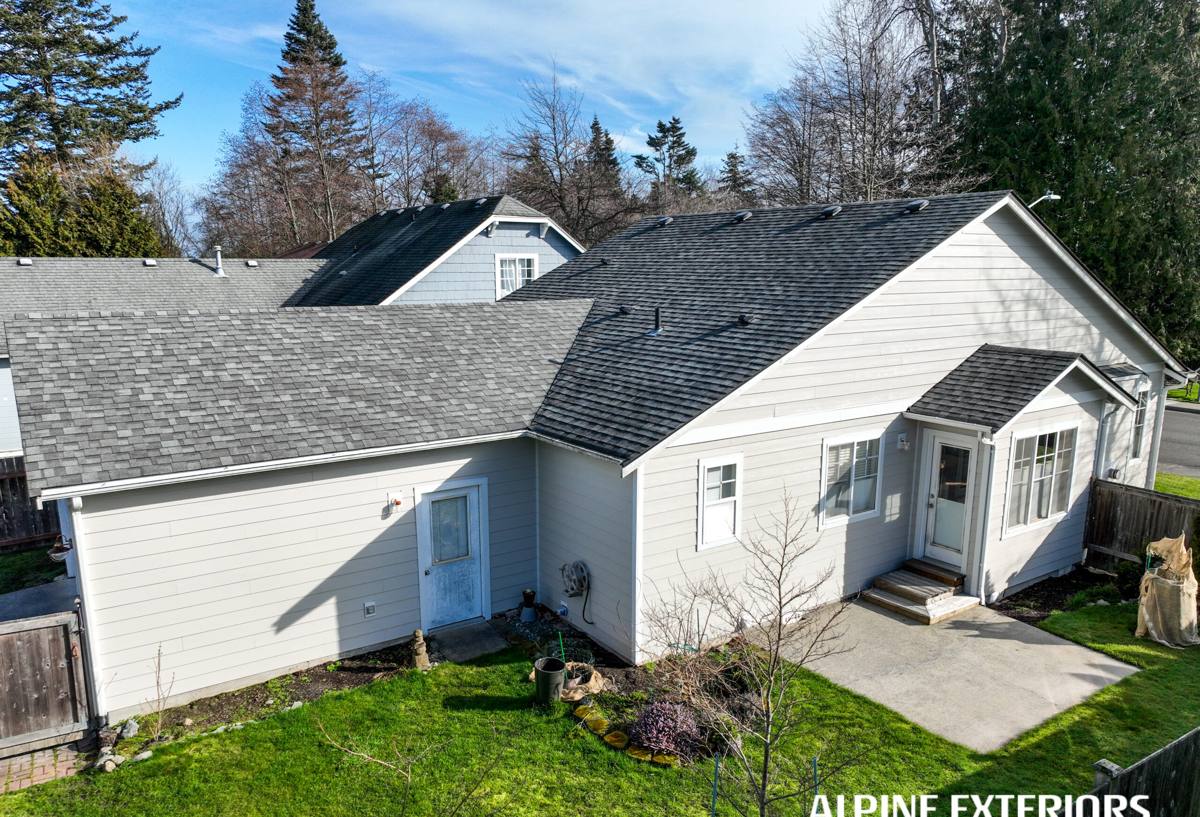
What Clear Lake Homes Are Up Against
Driving Rain and Sustained Moisture
Skagit County doesn't get the heaviest rainfall totals in Western Washington, but it gets a lot of low-intensity, wind-driven rain that pushes moisture sideways into wall assemblies rather than just falling straight down. Over months and years, that pattern finds every weak seam, unsealed joint, and thin spot in a siding system. Materials that absorb water and swell — rather than shed it — are the ones that fail first.
A Long Moss and Algae Season
Between the tree cover common around Clear Lake and the extended damp stretch from fall through spring, moss and algae get a long runway to establish themselves on roofs, decks, and siding. On siding specifically, organic growth holds moisture against the surface longer than it would otherwise sit there, which accelerates rot in wood-based products and speeds up finish breakdown on anything with a weak factory coating.
Salt Air Influence
Clear Lake isn't oceanfront, but Skagit County's proximity to Puget Sound and the Strait means a measurable amount of salt-laden air moves through the region, especially during storm systems. Salt exposure accelerates corrosion on fasteners and trim hardware and can degrade lower-quality paint and coatings faster than inland climates would.
Temperature Swings and UV
Summers bring real UV exposure and temperature swings between a cool, wet spring and a dry, warm July and August. Materials and finishes that aren't rated for that combination of moisture cycling and sun exposure tend to fade, chalk, or crack years ahead of schedule.
Why We Only Install James Hardie Fiber Cement
We made a decision as a company to install James Hardie fiber cement siding exclusively. We don't install vinyl, LP SmartSide, Cemplank, Allura, primed spruce, or cedar. That's not a marketing position — it's a standard we set after years of seeing which products actually hold up in Skagit County's specific combination of rain, moisture, and organic growth, and which ones create ongoing maintenance headaches for homeowners.
Each of the alternatives we don't install has real strengths, and none of them is a bad product in the abstract. But every one of them comes with a trade-off that matters more in our climate than it might somewhere drier:
- Vinyl siding is inexpensive and low-maintenance in mild climates, but it can warp or become brittle with temperature swings, and it doesn't hold paint if you ever want to change the color.
- LP SmartSide is an engineered wood product with real durability improvements over old-style wood siding, but it's still wood-based, meaning any breach in the finish or caulking gives moisture a path to the substrate.
- Cemplank and Allura are also fiber cement, and reasonable products — but they don't carry the same factory-applied ColorPlus finish system or the specific climate-engineered HZ formulations Hardie builds for Pacific Northwest conditions.
- Primed spruce and cedar are traditional, attractive choices with real character, but raw or primed wood siding demands the most ongoing maintenance of any option — repainting, caulking, and moisture vigilance — to survive a long wet season like ours.
James Hardie fiber cement is non-combustible, dimensionally stable, and doesn't feed moss and algae the way organic materials do. It's manufactured in HZ5 and HZ10 formulations specifically engineered for climates like Skagit County's, with factory-applied ColorPlus finishes that resist fading and chipping far better than field-applied paint. It's the product we're willing to put our name behind and warranty.
Comparing Siding Options for Skagit County Weather
| Factor | Vinyl | Wood / Primed Spruce | LP SmartSide | James Hardie Fiber Cement |
|---|---|---|---|---|
| Moisture resistance | Good, but can trap moisture behind panels | Poor without diligent upkeep | Moderate — engineered but wood-based | Excellent, non-combustible core |
| Moss/algae resistance | Moderate | Low | Moderate | High |
| Repainting needed | Cannot repaint effectively | Every 3-7 years | Every 7-10 years typically | ColorPlus finish rated 15+ years |
| Fire resistance | Low | Low | Moderate | Non-combustible |
| Typical lifespan installed to spec | 20-30 years | 15-25 years with upkeep | 25-30 years | 30-50+ years |
How We Approach a Clear Lake Siding Project
Every project starts with a real look at the house, not a generic estimate. We assess the current siding condition, check for hidden moisture damage around windows, doors, and the base of the walls, and evaluate how sun and shade patterns on the specific lot affect moss growth and drying time. Skagit County homes vary a lot in orientation, tree cover, and exposure, even within a small area like Clear Lake, so what a neighbor's house needed isn't automatically what yours needs.
Installation Details That Matter
Fiber cement siding performs the way it's supposed to only when it's installed correctly — proper clearances, correct fastener patterns, sealed penetrations, and attention to flashing details around windows and doors. Skipping these details is how even a good product ends up with early moisture problems. We follow manufacturer installation specifications closely because that's what keeps the warranty valid and the wall assembly dry.
Beyond Siding
Siding rarely fails in isolation. Roofing, gutters, window flashing, and deck ledger connections all affect how water moves around a house. Because we also handle roofing, windows, and decks, we can flag related issues — a gutter dumping water against a wall, a window flashing detail that's letting moisture in — during the same visit, rather than treating siding as disconnected from the rest of the exterior.
What to Expect From the Process
- An on-site assessment of your current siding, trim, and any visible moisture or moss damage
- A written estimate that explains scope, materials, and timeline in plain language
- Removal of old siding and inspection of the sheathing and weather barrier underneath
- Correction of any moisture-damaged sheathing or framing found during tear-off
- Installation of James Hardie fiber cement to manufacturer specifications
- Attention to flashing, caulking, and clearances at every penetration and transition
- A final walkthrough so you understand what was done and what warranty coverage applies
Why a Local Crew Matters Here
Skagit County's microclimates shift more than people expect over a short distance — a lot near water, tree cover, or a low-lying spot near Clear Lake can hold moisture differently than an open, sun-exposed site a mile away. A crew that works this specific region regularly knows which details to double-check: where moss tends to establish first, which wall orientations take the worst of the driving rain, and how the wet season affects installation timing and curing. That local knowledge doesn't replace good workmanship, but it does mean fewer surprises and a project that's planned around the actual conditions of your property rather than a generic checklist.
Maintenance Expectations After Installation
One of the real advantages of switching to James Hardie fiber cement is how little ongoing work it demands compared to wood or older siding systems. You're not repainting every few years or chasing caulk failures every wet season. Periodic rinsing to keep organic growth from establishing, an annual visual check of caulking at trim and penetrations, and prompt attention to any impact damage are about all it takes. That's a meaningful change for homeowners who've spent years maintaining wood or vinyl siding in this climate.
Get a Free, No-Pressure Estimate
If your Clear Lake home's siding is showing signs of moisture damage, moss buildup, or finish failure, or if you're planning ahead for a replacement, we're happy to take a look and walk you through honest options. Fill out the form below for a free estimate — no pressure, just a straightforward assessment of what your home actually needs.