 Skagit County
 Siding in Lyman: Built for a Wet, Wooded River Valley
Lyman sits in the upper Skagit River valley, tucked between timbered hillsides and farmland, in one of the wettest, greenest corners of Skagit County. That setting is part of what makes the area beautiful, and it's also exactly why exterior siding here has to work harder than it does in drier parts of Washington. Homes in and around Lyman deal with long stretches of overcast, damp weather, heavy tree cover that keeps walls shaded and slow to dry, and a moss and algae season that can run most of the year on north-facing walls and anything tucked under fir or cedar canopy.
We install siding, roofing, windows, and decks throughout Skagit County, and Lyman is a community where we see the same handful of problems over and over: siding that never fully dries between rain events, paint and caulk failing years ahead of schedule, and moisture finding its way behind panels through gaps that would have been harmless in a drier climate. None of that is unusual for the valley — it's just what happens when a building product isn't matched to the conditions it's living in.
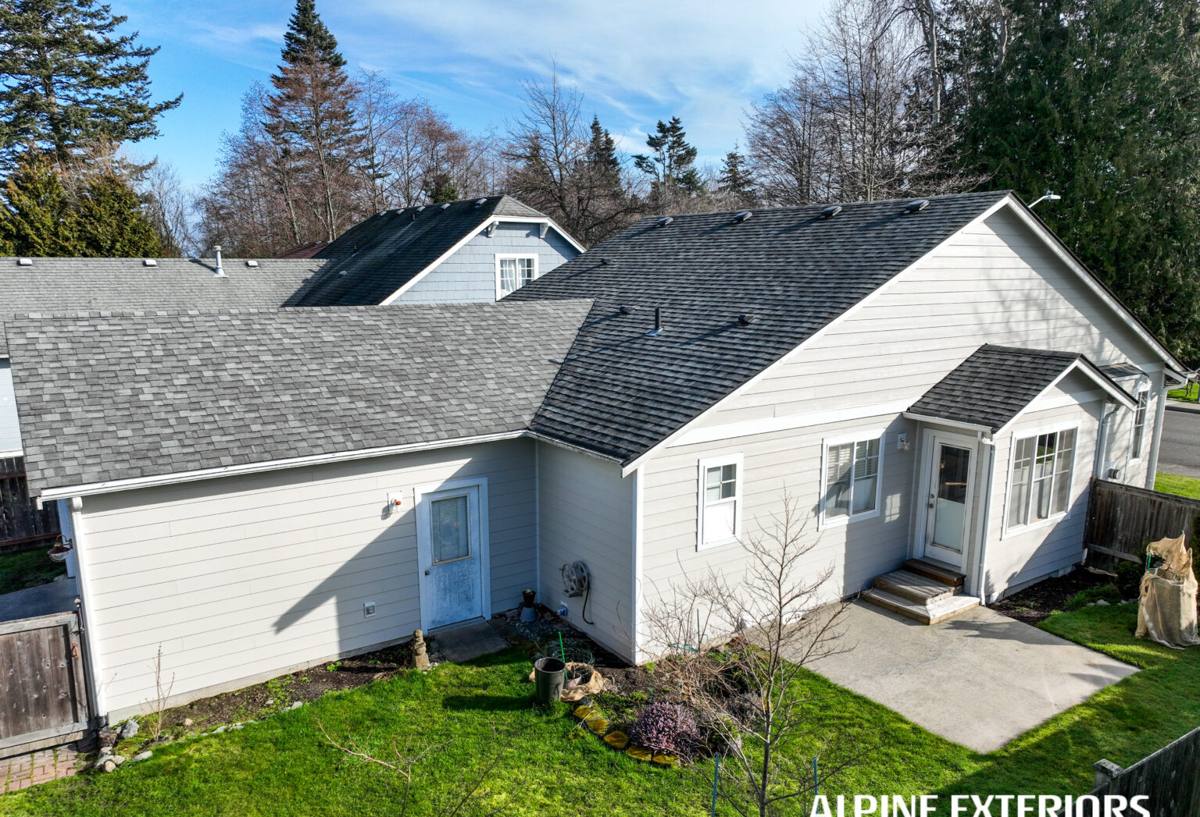
What the Skagit Valley Climate Does to Exterior Siding
Driving Rain and Slow-Drying Walls
Skagit County gets a lot of rain, and in a river valley like Lyman's, that rain often comes with wind that drives it sideways into walls rather than straight down. Add tree cover and hillside shade, common on many Lyman properties, and you get walls that stay damp longer after every storm. Siding materials that absorb water or that swell and shrink with moisture cycles are put under real stress in this kind of environment, especially over a decade or two.
Moss, Algae, and Organic Growth
Shaded, humid, tree-lined settings are ideal for moss and algae growth on exterior surfaces. It shows up first on north walls, under eaves, and anywhere airflow is limited — and once organic growth takes hold, it holds moisture directly against the siding surface, which accelerates whatever moisture problems the material already has. A siding product that resists water absorption and holds its finish well is a much better foundation for a moss-prone property than one that doesn't.
Freeze-Thaw and Seasonal Swings
Winters in this part of the valley bring occasional hard frosts on top of near-constant dampness. Materials that take on moisture and then freeze are prone to cracking, splitting, and finish failure over time. It's a slower, less dramatic kind of damage than a windstorm, but it adds up year after year.
Why We Only Install James Hardie Fiber Cement Siding
We made a deliberate decision as a company to install James Hardie fiber cement siding exclusively, and we don't install vinyl, LP SmartSide, Cemplank, Allura, primed spruce, or cedar. That's not a marketing position — it's a practical one, built from watching how different materials actually hold up in Skagit County's climate over the years.
- Vinyl siding can warp, buckle, or become brittle with temperature swings, and its seams and J-channels give moisture more places to work its way behind the panel over time.
- LP SmartSide and other wood-strand products are engineered wood — meaning they're still wood at the core, which makes them more vulnerable to swelling, edge damage, and moisture intrusion in a wet climate if any point of entry develops.
- Primed spruce and cedar are attractive, traditional materials, but raw or lightly primed wood needs disciplined, ongoing maintenance to keep moisture out — repainting, caulking, and inspection on a schedule most homeowners don't want to keep up with in a climate this wet.
- Cemplank and Allura are also fiber cement products, and fiber cement as a category is the right call for this climate. Our choice to standardize on Hardie specifically comes down to their factory-applied ColorPlus finish, their HZ5 formulation engineered for wetter climates, and the depth of their installer network and warranty support in the Pacific Northwest.
Fiber cement, done right, is simply better suited to a wet, moss-heavy, temperature-swinging valley climate than vinyl or wood-based products. Hardie is the version of that product we trust enough to put our name behind.
James Hardie Products We Install
| Product | Best Use | Notes for Lyman-Area Homes |
|---|---|---|
| HardiePlank lap siding | Whole-home siding | Most common choice; wide range of textures and colors |
| HardieShingle | Accent walls, gables | Popular for a Northwest cottage or craftsman look |
| HardiePanel | Modern/vertical accents, garages, shops | Clean lines, works well on outbuildings common on larger Lyman lots |
| HardieTrim | Corners, fascia, window trim | Resists the rot that plagues wood trim in shaded, damp areas |
All of these come with the ColorPlus factory finish as an option, which matters more here than in a drier climate — a factory-baked finish resists fading and moisture intrusion far better than field-applied paint that has to cure and hold up against near-constant humidity.
How a Siding Project Works, Start to Finish
Assessment and Estimate
We start with an on-site look at the home — checking for existing moisture damage, rot at trim and corners, moss buildup, and any drainage issues around the foundation or roofline that could undermine new siding if left unaddressed. You get a straightforward estimate, not a sales pitch.
Tear-Off and Inspection
Once old siding comes off, we inspect the sheathing and framing underneath. This is often where hidden moisture damage from years of a struggling material gets found — and it needs to be fixed before new siding goes on, not covered up.
Weather Barrier and Flashing
Correct water-resistive barrier installation and flashing at every window, door, and penetration is arguably more important than the siding material itself. In a climate that drives rain sideways into walls, a flashing detail done wrong will cause problems no matter how good the siding is.
Installation to Manufacturer Spec
James Hardie siding has specific installation requirements — proper clearances, fastener patterns, and joint treatment — that directly affect both performance and warranty coverage. We install to that spec, not around it.
Final Walkthrough
We walk the finished project with you, covering care, what to expect over the first year, and warranty documentation.
Roofing, Windows, and Decks in Lyman
Siding rarely fails in isolation. A roof shedding water improperly, windows with failed flashing, or a deck trapping moisture against the wall all put stress on the siding system around them. Because we handle roofing, windows, and decks in addition to siding, we can look at a Lyman home as one connected exterior system rather than a set of unrelated projects — which matters in a valley where every entry point for moisture eventually becomes a problem if it's ignored.
Roofing
A roof in good repair, with clean gutters and proper flashing at walls and chimneys, is the first line of defense against the kind of sustained rain this valley sees.
Windows
Improperly flashed windows are one of the most common sources of hidden wall damage we find during tear-off. Replacing windows at the same time as siding lets us integrate the flashing correctly the first time.
Decks
Decks that attach directly to the house need proper ledger flashing to keep water from tracking back into the wall assembly — a detail that's easy to get wrong and expensive to fix later.
Why a Local Crew Matters in a Community Like Lyman
Lyman is a small, tight-knit community, and homes here range from older farmhouses to newer builds on wooded acreage, often with long driveways, septic systems, wells, and outbuildings that a crew unfamiliar with the area might not account for in scheduling or site access. A contractor based in Skagit County knows the roads, knows how weather windows work in the valley for scheduling a tear-off without leaving a home exposed, and is going to be reachable years down the line if a warranty question comes up — not a name that shows up once and disappears.
What to Look for When Hiring a Siding Contractor
- Washington State contractor license in good standing, with liability insurance
- Manufacturer training/certification for the specific siding product being installed
- A written estimate that spells out materials, scope, and what happens if hidden damage is found during tear-off
- Willingness to explain flashing and moisture-barrier details, not just the visible siding
- Local references and a physical presence in the county, not just a lead-generation website
- A clear warranty explanation covering both materials and labor
What Influences the Cost of a Siding Project
| Factor | Why It Matters |
|---|---|
| Home size and complexity | More corners, gables, and stories mean more material and labor |
| Condition of existing sheathing | Rot or moisture damage found during tear-off adds repair work |
| Product line and finish | ColorPlus factory finish vs. field-painted, and product type selected |
| Trim and accent detail | Shingle accents, custom trim, and multiple textures add labor |
| Site access | Long driveways, steep lots, and tree clearance can affect logistics |
We won't quote a number without seeing the home, but we're glad to walk through these factors honestly during an estimate so there are no surprises.
If your Lyman home's siding is showing moss, fading, soft spots, or just isn't standing up to another Skagit Valley winter, we'd like to take a look. Fill out the form below for a free, no-pressure estimate on siding, roofing, windows, or decks.