 Skagit County
 Siding in Hamilton: Built for the Skagit River Valley
Hamilton sits along the Skagit River in eastern Skagit County, tucked between the foothills of the Cascades and the wide agricultural flats closer to Mount Vernon and Sedro-Woolley. It's a different environment than the coastal parts of the county — more shade from surrounding timber, more standing moisture in the air off the river, and a longer stretch of the year where siding simply doesn't get a chance to fully dry out. Add in the driving rain that rolls up the valley during fall and winter storms, and the broader marine weather pattern that moves inland off Puget Sound and Skagit Bay, and you've got a climate that is genuinely hard on exterior materials — even if Hamilton itself isn't sitting on the water.
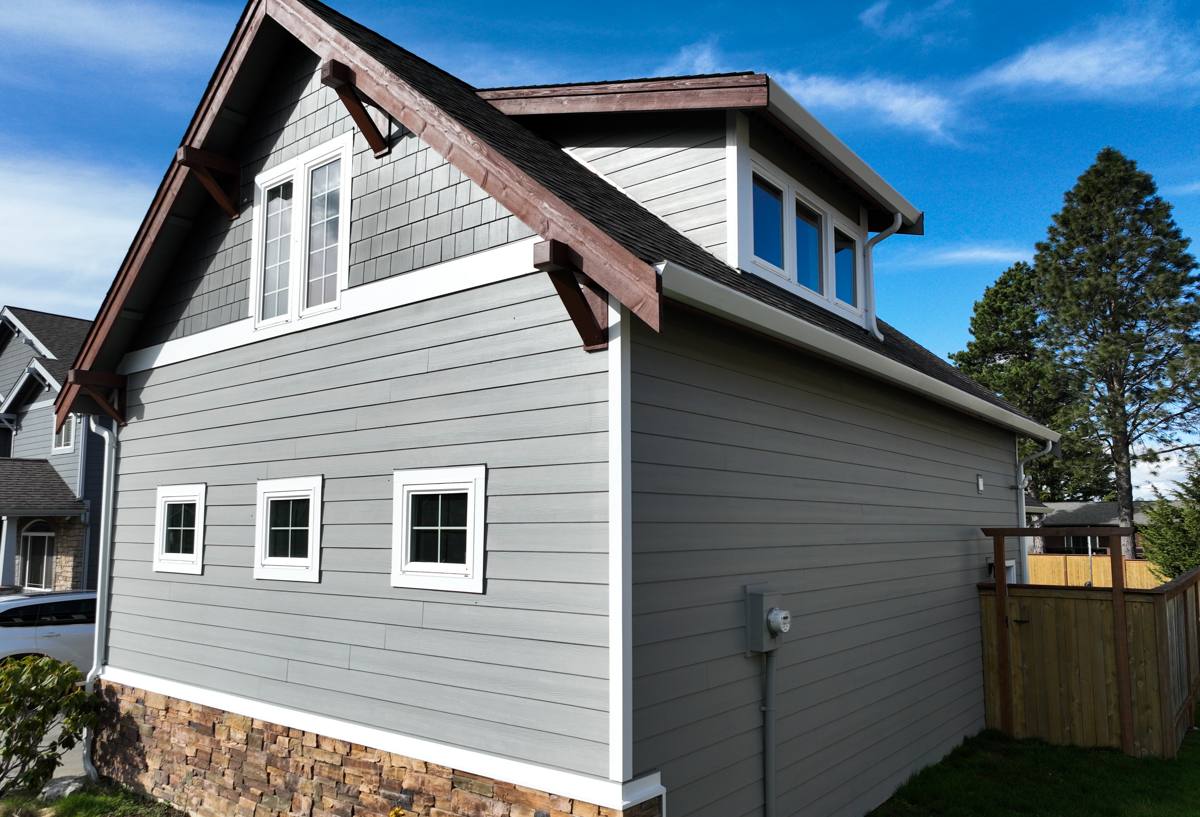
We install James Hardie fiber cement siding exclusively. Not because it's the only decent product on the market, but because after years of working on homes throughout Skagit County we standardized on the one exterior product line that consistently holds up to this specific combination of rain, humidity, shade, and moss without turning into a maintenance project. This page walks through what Hamilton homes tend to deal with, how a proper siding replacement works, and why the product choice matters as much as the installation.
What the Climate Actually Does to Siding Here
Moisture That Doesn't Leave
River valley towns like Hamilton get a lot of shade from mature trees and surrounding terrain. That's part of what makes the area attractive, but it also means siding on north-facing and tree-shaded walls can stay damp for days after a storm passes. Materials that absorb moisture — or that rely on paint film alone to keep water out — are the ones that show swelling, soft spots, and paint failure first in exactly these conditions.
Driving Rain and Wind-Driven Exposure
Skagit County storms don't always fall straight down. Wind off the valley pushes rain sideways into wall assemblies, which stresses every seam, joint, and butt edge on a home's exterior. Poorly installed siding — regardless of brand — is where these storms find their way in over time.
Moss, Algae, and Long-Term Growth
The extended damp season in this part of the county is exactly what moss and algae need to get established on siding, trim, and fascia. Once organic growth takes hold on a porous or textured surface, it holds even more moisture against the wall and accelerates whatever decay process has already started.
Why We Only Install James Hardie
Homeowners in Hamilton are often quoted a mix of products — vinyl, LP SmartSide, primed wood, and various fiber cement brands. We don't install any of those, and we think homeowners deserve an honest explanation rather than a sales pitch.
Vinyl
Vinyl is inexpensive and low-maintenance in dry climates, but it's not rigid and it expands and contracts with temperature swings, which opens gaps at seams over time. In a wet climate like this one, those gaps are where moisture gets behind the panel and into the wall assembly, often without any visible sign from the outside.
LP SmartSide and Engineered Wood
Engineered wood products have improved a lot over the years, but they're still wood-based, which means the cut edges and any breach in the factory coating are vulnerable to moisture intrusion. In a valley climate with extended damp periods, that's a real long-term risk, not a hypothetical one.
Primed Wood and Cedar
Traditional wood siding can look great, but it demands a repainting and caulking schedule that most homeowners underestimate. Skip a cycle in a climate this wet, and moisture finds the gaps fast.
Other Fiber Cement Brands (Cemplank, Allura)
These are legitimate fiber cement products and share some of Hardie's core advantages — they're non-combustible and dimensionally stable. Where we've found the difference is in the factory finish system, the depth of the regional product lineup engineered for specific climate zones, and the strength of the transferable warranty. James Hardie's ColorPlus finish is baked on in a controlled factory process rather than field-applied, and it's backed by a finish warranty that travels with the home if it sells. For a product that's going to sit on a house through Skagit County winters for decades, that difference matters enough that we don't install anything else.
The James Hardie System We Install
| Product Line | Best Use | Why It Fits Hamilton |
|---|---|---|
| HardiePlank Lap Siding | Most homes, classic and modern styles | Engineered HZ10 formulation for the Pacific Northwest's wet, temperate climate |
| HardiePanel Vertical Siding | Accent walls, gables, modern designs | Clean lines that pair well with board-and-batten detailing |
| HardieTrim | Corners, window and door surrounds, fascia | Non-combustible, dimensionally stable trim that matches the siding's lifespan |
| HardieSoffit | Eaves and overhangs | Resists the moisture and organic growth that collects under shaded overhangs |
Every plank in Hardie's HZ5 and HZ10 climate-engineered lines is formulated for specific moisture and temperature conditions rather than a one-size-fits-all approach — a distinction that matters more in a river valley microclimate than it does in a drier region.
What a Siding Replacement Involves
Assessment and Tear-Off
We start by pulling the existing siding and inspecting the sheathing and framing underneath. This is often where hidden problems show up — rot, soft sheathing, or water staining that wasn't visible from outside. Any structural repairs get addressed before new siding goes on; covering up a problem with new material never fixes it.
Weather-Resistive Barrier and Flashing
A correctly installed weather-resistive barrier, along with properly integrated flashing at every window, door, and roofline intersection, is what actually keeps water out of the wall assembly. Siding is the visible layer, but the drainage plane behind it is what does most of the work during a wind-driven Skagit County storm.
Installation to Manufacturer Spec
James Hardie's warranty depends on installation following their published specifications — proper fastener placement, correct clearances from grade and roof lines, and proper joint treatment. This is where a lot of siding jobs go wrong even with a good product, and it's a big part of why the crew doing the work matters as much as the material itself.
Trim, Caulking, and Finish Detail
The last stage is where a job looks finished or looks rushed — clean trim lines, consistent reveals, and properly sealed penetrations for vents, hose bibs, and light fixtures.
Why a Local Crew Matters
A crew that works throughout Skagit County regularly sees how homes in shaded river valley settings like Hamilton perform differently than homes out on the open flats or closer to the water. That means we know to pay extra attention to ventilation and drainage detailing on north-facing and tree-shaded walls, and we're not guessing at how a product will hold up here — we're installing it in this climate on a regular basis and seeing the results years later on other local homes.
Signs Your Hamilton Home May Need New Siding
- Visible moss or algae buildup that returns shortly after cleaning
- Paint that's peeling, bubbling, or failing faster than expected
- Soft or spongy spots when you press on the siding, especially near the bottom edges
- Warping, buckling, or gaps at seams and corners
- Rising energy bills that suggest the wall assembly isn't performing the way it should
- Visible rot or staining around window and door trim
Other Exterior Work We Handle
Siding is rarely an isolated issue. We also handle roofing, windows, and decks, because these systems all interact — a roof that's shedding water improperly, or windows with failed flashing, will undermine even a perfect siding installation. When we're on site for an estimate, we'll flag anything else that's contributing to moisture problems, even if it's outside the scope of the siding work itself.
Cost Factors for a Hamilton Siding Project
| Factor | Why It Affects Cost |
|---|---|
| Home size and wall complexity | More corners, gables, and dormers mean more cutting, trim, and labor time |
| Extent of hidden damage | Sheathing or framing repairs found during tear-off add scope |
| Siding profile and accessories | Lap width, trim style, and accent panels affect material cost |
| Site access | Steep lots or limited access near river-valley properties can affect equipment and staging |
| Existing paint or lead concerns | Older homes may require additional precautions during tear-off |
If your Hamilton home is due for new siding, we're happy to take a look and walk you through what we see — no pressure, no obligation. A free estimate gets you a straight answer on condition, scope, and what James Hardie siding would look like on your home.