 Skagit County
 What Primed Spruce Siding Is, and Why It's Still Around
Primed spruce lap siding has been a staple of Pacific Northwest home building for decades. It's real wood, milled from spruce or a similar softwood, coated at the factory with a primer coat so it's ready for field paint. It's lightweight, easy for framing crews to cut and nail, takes paint well when it's fresh, and it costs less per square foot than most alternatives. On paper, that's a reasonable set of trade-offs. In practice, after years of tear-offs and re-sides across Skagit County, we stopped installing it. This page explains why, honestly, without pretending the product is worthless — it isn't — but it also isn't what we're willing to put our name on anymore.
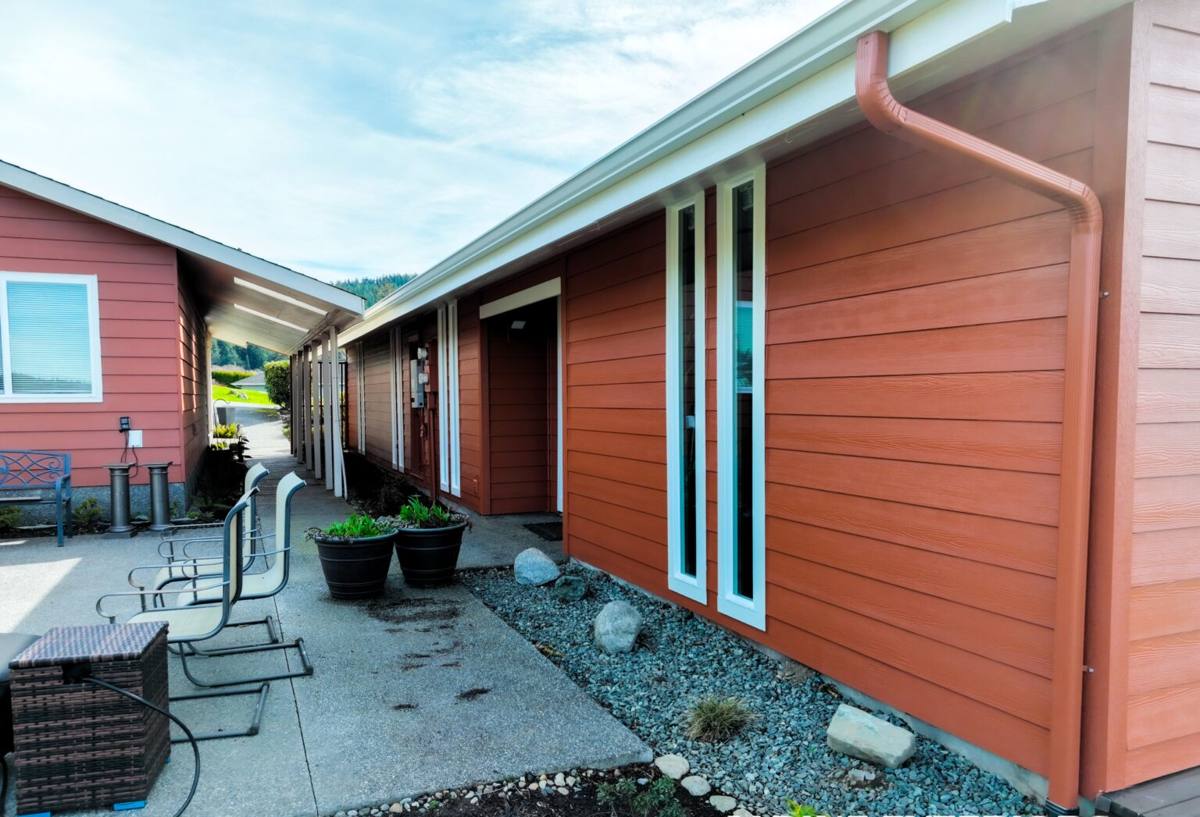
The Core Problem: Wood Moves, and Water Always Finds a Way In
Spruce is a natural material, and natural materials expand and contract with moisture. A primer coat is a thin barrier, not a permanent seal. Once that primer and the topcoat paint start to break down at the surface — from UV exposure, from repeated wet-dry cycles, from the flexing of the board itself — water gets into the wood fiber. Spruce doesn't handle that well. It swells, it can cup or bow, and once moisture is trapped behind a paint film it doesn't dry out quickly. That's the mechanism behind almost every callback we used to get on primed wood siding jobs: paint failure at the butt joints and bottom edges, soft spots near ground contact, and delamination where the factory primer separates from the board.
None of this means the crew that installed it did anything wrong. It's the nature of the material. Even a textbook installation with correct flashing, proper nailing, and back-priming the cut ends is fighting an uphill battle against Western Washington weather, year after year.
Why Skagit County's Climate Is Especially Hard on Primed Wood
Skagit County sits right where that fight gets harder than average. Homes near Bay View, Anacortes, and the shoreline neighborhoods along Skagit and Padilla Bay deal with salt-laden air that accelerates the breakdown of paint films and metal fasteners alike. Inland toward Mount Vernon and Burlington, you get less salt exposure but the same long, wet winters and the driving rain that comes with Pacific storm systems moving through the Skagit Valley. And across the whole county, the mild, damp climate that makes this such a green place to live is also exactly the recipe for a long moss and algae season — moss holds moisture directly against the siding surface for months at a time, right where primed wood is most vulnerable.
Put those three things together — salt air, driving rain, and moss — and you have conditions that shorten the useful life of a painted wood product well below what a homeowner in a drier climate would see from the same siding.
What That Looks Like on an Actual House
- Paint failure and visible wood grain "telegraphing" through the finish within 5-8 years instead of the 10+ years advertised
- Soft, spongy boards at the bottom courses near grade, decks, and downspouts where water sits longest
- Moss and algae staining on north-facing and shaded walls that never gets a chance to fully dry between rain events
- Nail pops and cracked caulk joints as the boards swell and shrink through repeated wet-dry cycles
- Woodpecker and carpenter ant damage once moisture has softened the wood fiber
The Maintenance Reality Homeowners Don't Always Hear Upfront
Primed spruce siding is a paint-and-maintain product, not a set-it-and-forget-it product. To get anywhere near its full service life, it needs a quality topcoat within a reasonable window of installation (primer alone is not a final finish), then repainting on a cycle — realistically every 5 to 10 years in a climate like ours, sooner on south- and west-facing walls that take the brunt of the weather. Caulk joints need to be inspected and refreshed. Any board that starts to show soft spots needs to be caught early and replaced before rot spreads to the sheathing behind it. That's a real, recurring cost and a real, recurring homeowner responsibility — one that a lot of buyers don't fully register until they're a few years into ownership.
Primed Spruce vs. James Hardie Fiber Cement
| Factor | Primed Spruce Siding | James Hardie Fiber Cement |
|---|---|---|
| Core material | Natural softwood, absorbs moisture | Cement, sand, and cellulose fiber — dimensionally stable, won't rot |
| Finish | Factory primer, field-painted; touch-up and repainting on a recurring cycle | Factory-baked ColorPlus finish, engineered to resist fading and chipping far longer |
| Moisture behavior | Swells, cups, and can trap water behind failing paint | Non-combustible and moisture-resistant by design; won't swell or rot |
| Pest resistance | Vulnerable to woodpeckers, carpenter ants, and rot once softened | Not a food or nesting source for pests |
| Warranty | Typically limited to the manufacturer's primer, not a full system warranty | Long-term, transferable manufacturer warranty on the product |
| Upfront cost | Lower material cost per square foot | Higher material cost, offset by lower repainting and repair costs over time |
Where Primed Spruce Siding Tends to Fail First
If you're evaluating an existing home with primed wood siding, or trying to decide whether to keep repainting versus replace, these are the spots we check first on every inspection:
- Bottom courses within a foot or two of grade, patios, or hard surfaces that splash water back onto the wall
- Butt joints where two boards meet — the end grain absorbs water far faster than the face of the board
- Areas below poorly maintained gutters or downspouts, where concentrated runoff hits the same section of wall repeatedly
- North and shaded elevations where moss gets a foothold and the wall never fully dries
- Window and door trim intersections where caulk has cracked or pulled away
Any one of these, left unaddressed, tends to spread. Wood rot doesn't stay contained to the board it started on — it moves into the sheathing and framing behind it, which turns a siding repair into a structural repair.
The Real Cost Comparison Is Lifetime Cost, Not Day-One Price
We understand why primed spruce looks attractive on a bid sheet — it's genuinely less expensive to buy and install. But the honest way to compare siding products is over the life of the home, not the day of installation. A homeowner who chooses primed wood is signing up for repainting cycles, caulk maintenance, spot repairs, and eventually a full re-side sooner than they'd expect. A homeowner who chooses a durable, factory-finished product is trading a higher day-one cost for far less maintenance and a longer runway before replacement. In a climate like Skagit County's — with the salt air, the rain, and the moss all working against a painted wood surface — that trade-off tends to favor the more durable product even more than it would in a drier region.
Why We Standardized on James Hardie Instead
We made a decision as a company to install James Hardie fiber cement siding exclusively, and not to install primed spruce, cedar, vinyl, LP SmartSide, Cemplank, or Allura. That's not a marketing position — it's a practical one, built from repeated experience seeing which products actually hold up on homes in this region and which ones generate callbacks. Hardie's fiber cement core doesn't absorb water the way wood does, so it doesn't swell, cup, or feed rot the way a softwood board can. The ColorPlus factory finish is baked on under controlled conditions, which gives it far better resistance to fading and chipping than a field-applied paint job can match. Hardie also builds climate-engineered HZ product lines specifically suited to different regional conditions, and backs the product with a strong, transferable warranty — something that matters both to the homeowner living in the house now and to a future buyer.
None of that means primed spruce is a scam or that everyone who has it needs to panic. Plenty of homes in Skagit County have real wood siding that's been diligently maintained and looks fine. But "diligently maintained" is the operative phrase, and we'd rather install a product that doesn't ask that much of a homeowner every five to ten years. That's the whole reason behind our standard.
If You're Weighing Your Options
Whether you're dealing with a primed wood siding job that's starting to show its age, planning ahead for a home you just bought, or simply comparing materials before a new build, we're happy to walk your property with you and talk through what we're actually seeing — no pressure, no scare tactics. If you'd like an honest assessment and a free estimate for James Hardie siding on your Skagit County home, reach out using the form below.