 Skagit County
 Why Moisture Is the Real Enemy, Not Just Rain
Every siding failure we get called out to inspect in Skagit County traces back to the same root cause: water got behind the cladding and had somewhere to sit. Rain itself rarely damages a wall. What damages a wall is rain that gets past the siding, plus a wood-based material or substrate underneath that's willing to absorb it, plus enough time between wet and dry cycles for fungus to take hold. Take away any one of those three things and rot doesn't happen. Understanding that chain is the whole point of this page, because it explains why the same amount of rainfall does very different things to different homes.
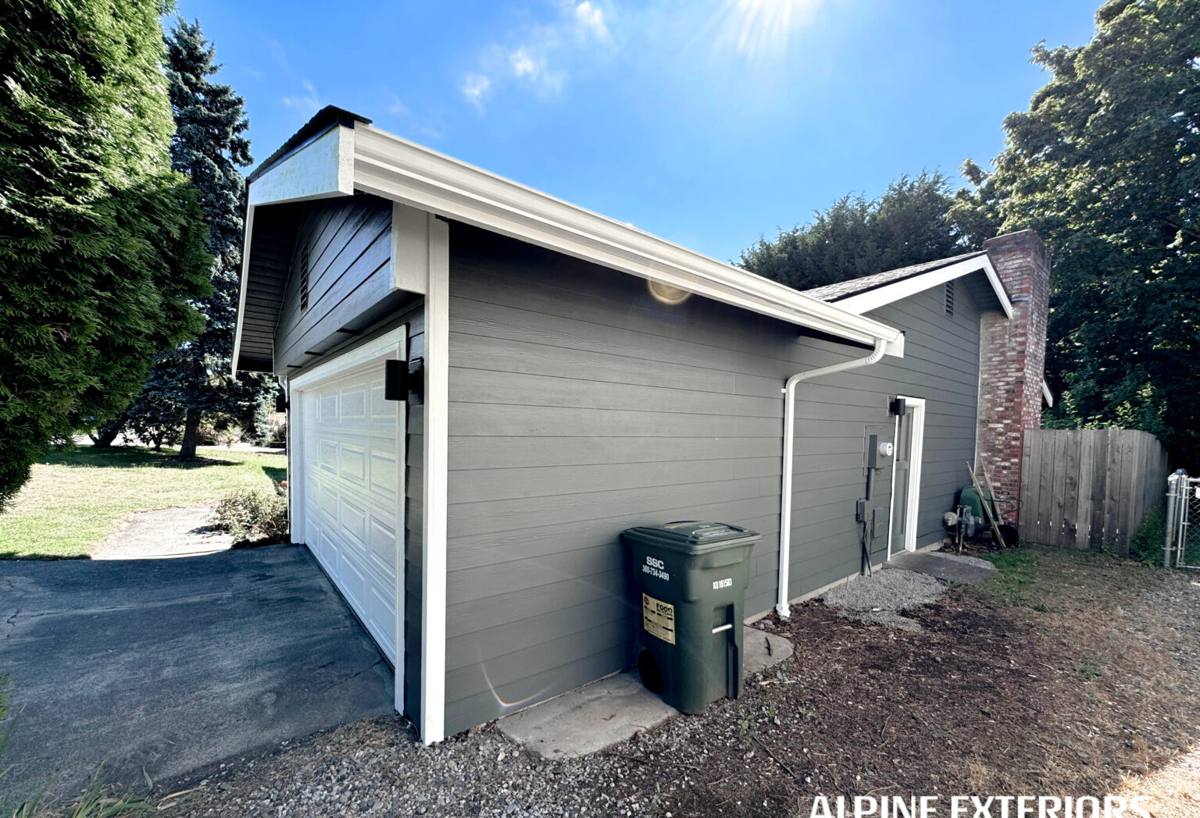
How Rot Actually Starts Behind a Wall
Rot is caused by wood-decay fungi, and those fungi need three things to establish themselves: a food source (wood fiber, or the wood-derived core of some engineered products), oxygen, and sustained moisture — generally wood held above roughly 20% moisture content for weeks at a time. A single heavy storm doesn't do it. What does it is a slow, chronic leak that never fully dries between rain events.
The Usual Entry Points
- Failed or missing flashing above windows, doors, and decks
- Caulk joints that have shrunk, cracked, or were never applied correctly at butt joints and trim
- Nail and fastener penetrations that were never sealed or were driven at the wrong depth
- Siding installed tight to grade, roofing, or a deck surface with no clearance to drain or dry
- Poor or missing kick-out flashing where a roofline meets a wall
- House wrap or building paper that was torn, improperly lapped, or punctured during installation
Most of these are installation issues, not material issues — which matters, because a homeowner can pick the best siding material available and still get rot if the crew behind it cut corners on flashing and sequencing.
The Skagit County Factor
Regional climate changes the math considerably. Skagit County sits in a marine environment with salt-laden air off Puget Sound and the Salish Sea, long stretches of driving, wind-driven rain rather than gentle vertical rainfall, and a moss and algae season that can run most of the year on north- and shade-facing walls. Each of those does something specific to a wall assembly.
Driving Rain
Wind-driven rain doesn't just fall on a wall — it's pushed sideways and upward into laps, seams, and trim joints that were only designed to shed water moving straight down. A siding system and its flashing details have to account for that lateral force, not just gravity.
Salt Air
Salt accelerates the breakdown of caulk, fasteners, and some coatings, and it holds moisture against a surface longer than dry air would. Coastal and near-coastal walls in the county see faster wear on sealants and hardware than the same assembly would see further inland.
Moss and Algae Season
A long wet season with limited direct sun on many north-facing and tree-shaded elevations lets moss and algae establish on siding surfaces. Beyond the cosmetic issue, moss holds a layer of standing moisture against the cladding almost continuously, which shortens the dry-out window that keeps wood-based materials safe.
Warning Signs Worth Checking For
Rot is much cheaper to deal with early. A short walk around the exterior once or twice a year, especially after the wettest months, can catch it before it reaches framing.
- Soft or spongy spots when you press on siding, especially near the bottom courses and around windows
- Paint or finish bubbling, peeling, or discoloring in a localized area rather than uniformly
- Visible gaps opening up at butt joints, corners, or trim that weren't there before
- A musty smell near an exterior wall from the inside of the house
- Dark staining or streaking below window sills, deck ledgers, or roof-to-wall intersections
- Persistent moss or algae growth that never fully dries out between rains
- Siding that has visibly swelled, delaminated, or separated at the edges
Why Some Materials Handle Moisture Better Than Others
Not every siding product responds to water the same way. Some are wood-based and absorb it; some are engineered to resist it. Here's a general comparison of how common materials behave when moisture gets past the surface:
| Material | Moisture Behavior | Maintenance Burden |
|---|---|---|
| Cedar / primed spruce | Absorbs water readily; prone to swelling, cupping, and rot if finish isn't maintained | High — repainting and caulk checks every few years |
| Engineered wood (OSB-based) | Wood-fiber core can swell and deteriorate at edges and cut ends if moisture reaches it | Moderate to high — edge sealing and inspection matter |
| Vinyl | Doesn't absorb water itself, but can trap moisture behind it against the sheathing if the drainage plane is poor | Low surface maintenance, but hidden problems can go unseen longer |
| Fiber cement (general) | Cement-based, doesn't rot or feed fungus; performance depends heavily on correct installation and finish quality | Low — periodic caulk and finish inspection |
Fiber cement as a category holds up well because its base material isn't a food source for decay fungi. That's a meaningful advantage in a climate like this one, but it doesn't make installation quality any less important — a fiber cement board with a failed flashing detail above it can still let water into the wall cavity behind it.
Installation Details That Determine Whether a Wall Stays Dry
The Drainage Plane
Modern wall assemblies are built around the assumption that some water will get past the cladding, and the wall needs a way to drain and dry rather than trap it. That means a properly lapped water-resistive barrier, flashing integrated into that barrier at every penetration and horizontal transition, and often a rain screen gap that lets air move behind the siding.
Fastening and Clearance
Fasteners driven too deep or at the wrong spacing can crack or distort siding and open a path for water. Clearance from grade, roofing, decks, and patios — typically a minimum of several inches — keeps the bottom edge of the siding from sitting in standing water or snow.
Caulk Is a Maintenance Item, Not a Permanent Fix
Sealant at trim joints and penetrations is expected to fail eventually, especially under UV and salt exposure. A wall detailed correctly relies on flashing and drainage as the primary defense, with caulk as a secondary layer — not the other way around.
Why We Install Only James Hardie Fiber Cement
Given everything above, we standardized on James Hardie fiber cement siding for every project we take on. It's a cement-based product, so it isn't a food source for the fungi that cause rot, and it holds up to the wind-driven rain and salt air common in this county without the swelling and edge deterioration that wood-based products can experience over time. Hardie's climate-engineered HZ product lines are specifically formulated for wetter regions like ours, and the factory-applied ColorPlus finish is baked on under controlled conditions rather than field-painted, which gives it a more consistent, longer-lasting bond than a coating applied on site. It also comes with a strong transferable warranty, which matters on a product meant to last for decades. None of that replaces good installation — flashing, drainage, and fastening still have to be done correctly — but starting with a material that isn't vulnerable to rot in the first place removes one entire failure mode from the wall.
If You Already Have Rot
Finding a soft spot or staining doesn't mean the whole wall needs to be replaced. Localized rot, caught early, is usually a repair — cutting out the damaged sheathing and framing, correcting whatever let water in, and re-siding that section. The risk is in waiting: rot spreads along wood grain and can reach structural framing, at which point the repair scope and cost both grow. If you're seeing any of the warning signs above, it's worth having someone experienced take a look before the next wet season sets in.
A Simple Maintenance Rhythm
Keeping a wall dry over the long run doesn't take much — it takes consistency. A yearly walk-around after the rainy season, keeping gutters and downspouts clear so they aren't dumping water against a wall, trimming vegetation back so walls get some airflow and sun, and addressing moss growth before it becomes a permanent, damp layer against the siding will catch most problems long before they become expensive ones.
If you're noticing any of these signs on your home, or you'd just like an honest read on how your current siding is holding up, we're happy to take a look. Reach out for a free, no-pressure estimate — there's a form right below this page.