 Skagit County
 Roofing in Alger Has Its Own Set of Problems
Alger sits close enough to Samish Bay and the Sound that homes here deal with a mix most inland Skagit County properties don't have to think about as much: salty, moisture-laden air off the water, driving rain that comes in sideways during winter storms, and long stretches of shade under fir and cedar that keep roofs damp for days after the rain stops. Put those three together and you get a climate that's hard on roofing materials in ways that aren't always obvious until a roof is 12 or 15 years in and starting to fail early.
A roof that's correctly installed for Alger's conditions isn't dramatically different from a roof installed anywhere else in Western Washington — but the details matter more here. Fastener choice, underlayment quality, ventilation, and how the edges and valleys are flashed all have a bigger effect on how long the roof actually lasts when it's fighting salt air and moss pressure every day of the year.
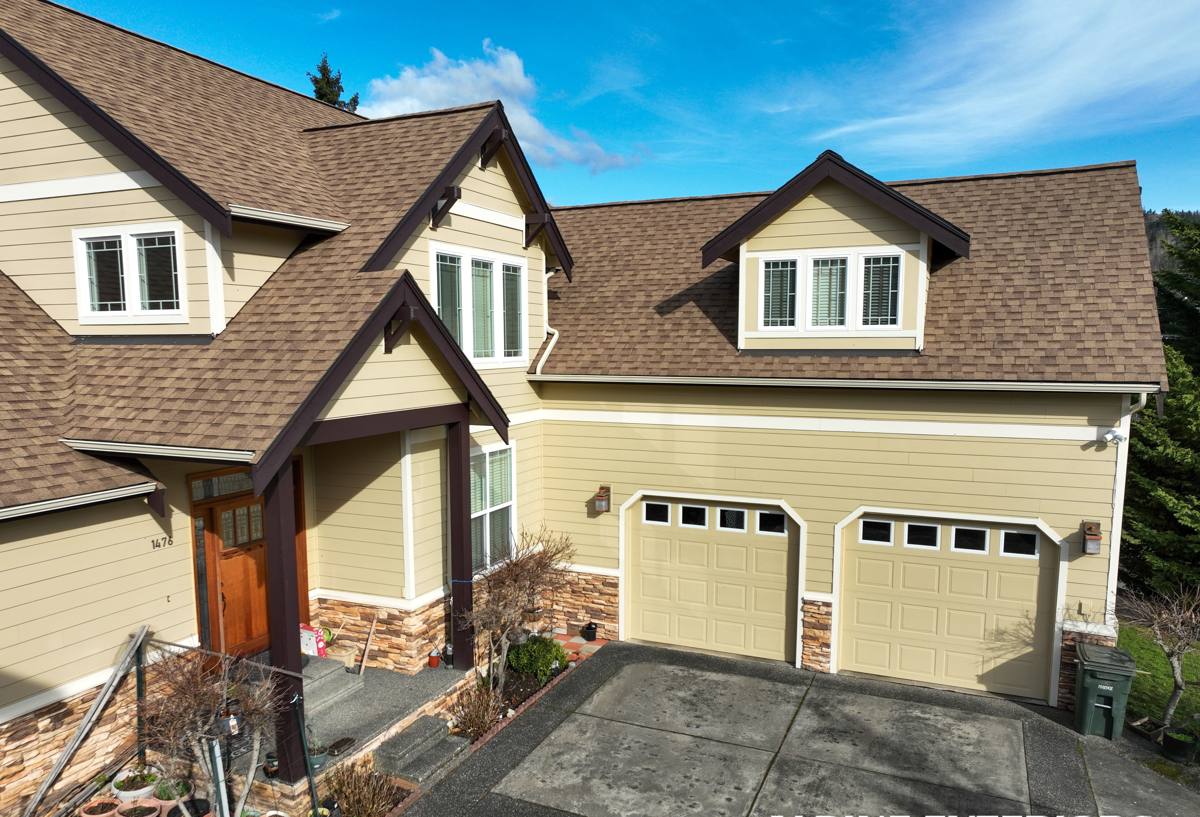
What Salt Air, Rain, and Moss Actually Do to a Roof
Salt Air and Corrosion
Homes closer to the water are exposed to airborne salt that settles on roofing surfaces and metal components. Over years, that accelerates corrosion on unprotected fasteners, flashing, and drip edge. It's not usually dramatic — it's slow, and it shows up first at the fasteners and metal edges long before the shingles or panels themselves show wear. The fix isn't complicated: use corrosion-resistant fasteners and flashing rated for coastal exposure from day one, rather than standard-grade materials that are fine 30 miles inland but undersized for a property like this.
Driving Rain
Skagit County gets plenty of straight-down rain, but Alger's exposure means storms often push rain sideways and up under laps and edges that would stay dry in a calmer setting. That makes underlayment quality and lap technique more important than they'd be on a sheltered inland lot. A roof that's "good enough" for a mild rain event can still leak during a real Pacific storm if the underlayment and flashing details were done to the minimum instead of done right.
Moss Season
Between the tree cover common around Alger and the long wet season, moss has a lot of time to establish itself on north-facing slopes and shaded valleys. Moss holds moisture against the roofing material, works its way under shingle edges, and can lift or loosen fasteners over time. A roof designed with moss in mind — proper ventilation, zinc or copper strips where appropriate, and a slope and material choice that sheds water fast — will hold up dramatically better than one that wasn't.
Signs an Alger Home Needs a New Roof, Not Another Repair
- Granule loss showing up in gutters or at downspout discharge points, especially after wind events
- Shingles that are curling, cupping, or visibly brittle
- Moss or moss staining that keeps coming back within a season or two of cleaning
- Daylight visible through the roof deck from the attic, or damp insulation after storms
- Repeated flashing leaks around chimneys, skylights, or valleys despite prior patching
- A roof that's 20+ years old on asphalt shingle, or showing corrosion on metal fasteners and flashing
- Sagging rooflines or soft spots underfoot, which usually point to deck damage underneath
One or two of these on their own might mean a repair is enough. Several at once, especially combined with age, usually means the roof system as a whole is past the point where patching makes financial sense.
What a Correct New Roof Installation Involves
Tear-Off and Deck Inspection
A proper job starts with a full tear-off, not a layover. That lets us actually see the roof deck — plywood or plank sheathing — and find soft, rotted, or delaminated areas before they're covered up again. Skipping this step is one of the most common ways a "new roof" ends up failing early, because damaged decking under new material doesn't fix itself.
Underlayment
Given the rain exposure in Alger, we treat underlayment as a real line item, not an afterthought. Synthetic underlayment with proper lap and fastening, plus ice-and-water shield in valleys and along eaves, gives the roof a real second line of defense if wind-driven rain ever gets past the primary roofing material.
Flashing and Fasteners
Every penetration — chimneys, vents, skylights — and every valley and edge gets flashed with corrosion-resistant metal, sealed correctly, and fastened with hardware rated for coastal, wet-climate exposure. This is the detail that separates a roof that lasts 25-30 years from one that starts leaking at year eight.
Ventilation
Balanced intake and exhaust ventilation keeps the attic dry and temperature-regulated, which reduces condensation, extends shingle life, and helps prevent the trapped moisture that moss and rot both depend on. On a lot of older Alger homes, ventilation was undersized or mismatched when the home was built — a new roof install is the right time to correct it.
Moss and Algae Prevention
Where appropriate, we install zinc or copper strips near the ridge, which release trace metals that inhibit moss and algae growth as rain washes over them. It's not a substitute for good ventilation and slope, but it's a low-cost addition that meaningfully extends the time between moss treatments.
Material Options for Alger Homes
| Material | Typical Lifespan Here | How It Handles Moss/Salt Air | Notes |
|---|---|---|---|
| Architectural asphalt shingle | 20-30 years | Good, if paired with zinc/copper strips and proper ventilation | Most common choice; wide range of price points and colors |
| Standing seam metal | 40-60 years | Excellent moss resistance; needs coastal-rated fasteners and coatings | Higher upfront cost, very low long-term maintenance |
| Cedar shake | 20-30 years with upkeep | Requires active maintenance to resist moss and rot in this climate | We're honest that this is a higher-maintenance option here specifically because of moss pressure and moisture retention in shakes |
| Synthetic composite shingle | 30-50 years | Very good; resists moisture absorption better than wood | Good middle ground between asphalt and metal on cost and durability |
There's no single "best" material for every Alger property — it depends on the roof's slope, tree cover, budget, and how the home is oriented to prevailing weather. We'll walk through the honest trade-offs for your specific roof rather than pushing one product line.
Our Process for a New Roof Installation
- On-site assessment — we walk the roof and attic, check the deck condition where accessible, and note existing ventilation, moss patterns, and problem areas
- Written estimate — clear scope, material options, and pricing before any work starts, no surprise add-ons sprung on you mid-project
- Tear-off and deck repair — full removal of old roofing, replacement of any damaged sheathing found underneath
- Underlayment and flashing installation — sized and detailed for the rain and salt exposure typical of the Alger area
- Roofing material installation — installed to manufacturer spec, with attention to fastener corrosion resistance
- Ventilation check and correction — confirming balanced intake/exhaust before the job is closed out
- Final walkthrough and cleanup — magnetic sweep for stray fasteners, full site cleanup, and a walkthrough so you know exactly what was done
Why It Matters That We Already Work in Skagit County
A crew that regularly works Alger and the surrounding Skagit County area already knows which details matter for this specific stretch of coastline — where moss tends to build up fastest, how far the salt air exposure typically extends inland, and which fastener and flashing grades hold up instead of failing early. That's not something you get from a crew that mostly works dry inland climates and treats every roof the same way. We also carry the licensing and insurance you'd expect from a legitimate local contractor, and we're not going anywhere if a warranty issue comes up down the line.
What This Typically Costs
Roofing costs vary based on roof size, pitch, material choice, tear-off complexity, and any deck repair needed once the old roofing comes off. Rather than throw out a number that doesn't reflect your actual roof, we provide a written estimate after seeing the property — that's the only way to give you a figure you can actually rely on.
Ready for an Honest Look at Your Roof?
If your Alger home's roof is showing its age, dealing with recurring moss, or you're just not sure whether it's a repair-or-replace situation, we're glad to take a look. We'll give you a straightforward assessment and a written estimate with no pressure to decide on the spot — just use the form below to get started.