 Skagit County
 Exterior Homes Face in Alger's Climate
Alger sits in the kind of in-between climate that's harder on a house than people expect. It's close enough to the water to pick up salt-laden air off Samish Bay and the Sound, but it's also tucked into enough tree cover and low terrain that homes stay damp and shaded for long stretches of the year. That combination — salt exposure plus persistent moisture plus limited direct sun — is a tough environment for exterior building materials, and siding takes the brunt of it because it's the first line of defense against all three.
Homeowners in this part of Skagit County usually notice the same handful of problems over time: paint that won't hold, wood trim that softens at the corners, moss and algae creeping across north-facing walls, and caulk lines that crack faster than they should. None of that is unusual for the area. It's just what happens when a building material isn't matched to the conditions it's actually living in.
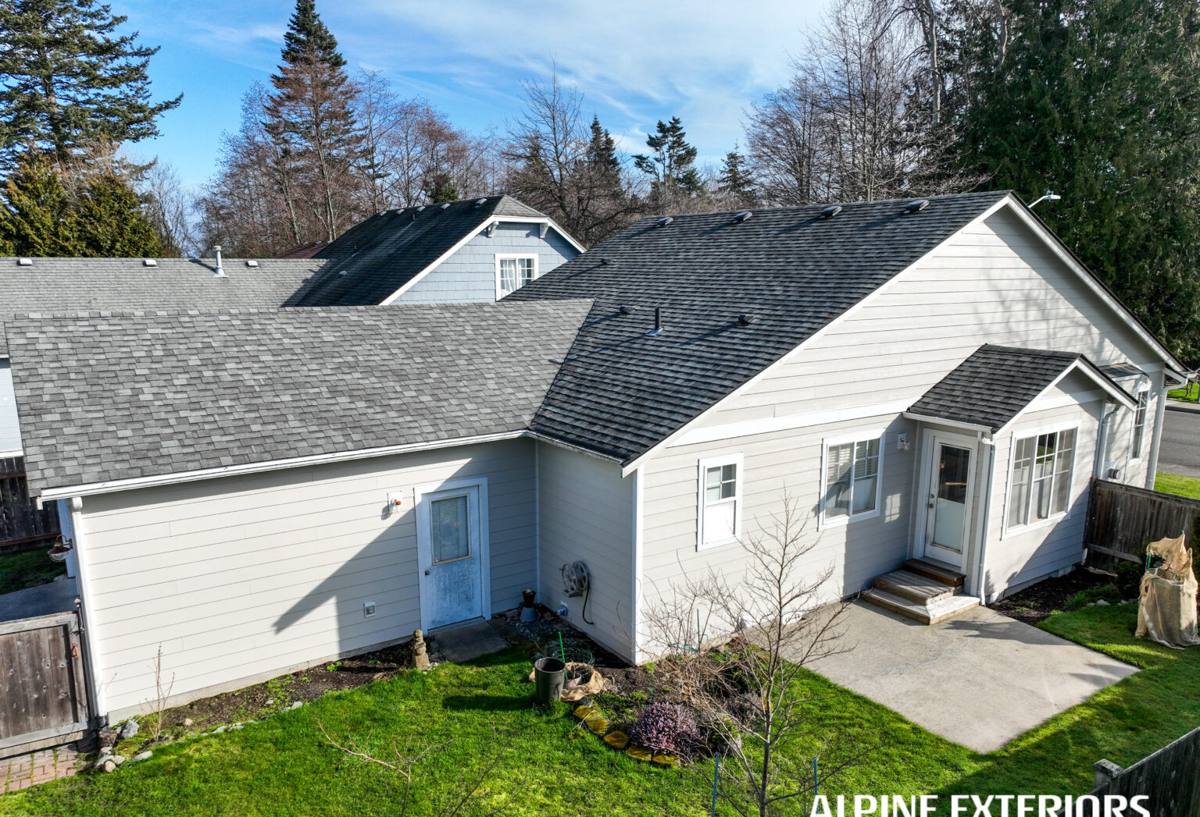
Salt Air, Rain, and Moss — What It Does to Siding
Three things drive most of the exterior wear we see on homes in and around Alger:
- Salt air accelerates corrosion on fasteners and metal trim, and it speeds up the breakdown of lower-grade paint finishes, especially on south and west exposures that also take direct weather.
- Driving rain, often blown sideways in winter storms, finds every gap in poorly flashed siding, trim, and window openings. Once water gets behind the siding plane, it doesn't dry out quickly in a climate this humid.
- A long moss and algae season — often eight or nine months out of the year in shaded, tree-covered lots — keeps organic growth active on siding surfaces that don't shed moisture well or that stay damp from poor sun exposure.
Wood-based products, whether that's primed spruce trim, cedar siding, or engineered wood siding, are the most vulnerable to this combination because they rely entirely on the paint film and caulk joints to keep water out. Once either fails, the substrate underneath starts absorbing moisture, and in a climate that rarely gets a long dry stretch to let materials recover, that damage compounds year over year instead of reversing itself.
Siding, Roofing, Windows, and Decks — One Local Crew
We work on the full exterior envelope, not just siding, because on most homes those systems interact. A roof that's shedding water improperly onto a wall, a window that's flashed wrong, or a deck ledger that's trapping moisture against the house can all undo good siding work. Handling all four trades under one crew means fewer handoffs and fewer places for a mistake to hide.
Siding
Full tear-off and re-side jobs, plus siding replacement on storm or moisture-damaged sections. We install James Hardie fiber cement exclusively — more on why below.
Roofing
Roof replacement and repair, with attention to how roof edges, valleys, and penetrations interact with the siding and trim below them. A lot of the "siding failures" we get called out for actually start at a poorly detailed roofline.
Windows
Window replacement done with proper flashing integration into the siding plane — the step that's most often skipped or rushed on lower-bid jobs, and the step most responsible for hidden water intrusion around window openings.
Decks
Deck building and replacement, including attention to ledger board flashing where the deck attaches to the house, which is one of the most common sources of long-term rot on Pacific Northwest homes.
Why We Install Only James Hardie Fiber Cement
We made a deliberate decision to install James Hardie fiber cement siding and nothing else. Not vinyl, not LP SmartSide, not Cemplank or Allura, not primed spruce or cedar. That's not a marketing angle — it's a standard we hold because of what we've seen play out on homes in this climate over time.
Fiber cement is a mix of cement, sand, and cellulose fibers, and it doesn't behave like a wood product when it gets wet. It doesn't swell, delaminate, or feed rot the way engineered wood siding can if moisture gets past the paint film. It's also non-combustible, which matters increasingly to homeowners and insurers alike. James Hardie's ColorPlus factory-applied finish is baked on under controlled conditions rather than field-painted, which gives it more consistent coverage and better fade resistance than a job-site paint job, and their HZ5 product line is engineered specifically for the freeze-thaw, wind, and moisture conditions common to our region.
We're not going to tell you every other product is bad — vinyl is inexpensive and low-maintenance in the right application, LP SmartSide has genuine fans and a real engineering pedigree, and cedar has an appearance a lot of people love. But each of those comes with trade-offs — maintenance burden, moisture sensitivity, appearance limitations, or warranty structure — that we're not willing to install and then stand behind in a climate that's this consistently wet and salt-exposed. Standardizing on one product also means our crews install it correctly every time, instead of switching techniques and details across five different siding systems.
How Hardie Compares to Other Siding Options
| Material | Moisture Behavior | Combustibility | Typical Maintenance |
|---|---|---|---|
| James Hardie fiber cement | Doesn't swell, rot, or delaminate from water exposure | Non-combustible | Occasional wash; repaint only if ever desired, not required for protection |
| LP SmartSide (engineered wood) | Treated to resist moisture, but still wood-based and edge-sealing dependent | Combustible | Caulk and paint film must be maintained to prevent moisture intrusion |
| Vinyl | Doesn't absorb water, but seams and panels can allow water behind the cladding | Combustible, can deform under heat | Low, but limited repair options if damaged; can fade or become brittle over time |
| Cedar | Absorbs and releases moisture readily; performance depends heavily on finish upkeep | Combustible | Regular refinishing needed to prevent graying, cupping, and rot |
| Primed spruce / wood composite | Vulnerable once paint film fails; prone to swelling at joints | Combustible | Frequent repainting and caulk maintenance |
What Correct Installation Looks Like
Fiber cement performs well, but it performs well because of how it's installed, not just because of what it's made of. A lot of the siding problems we get called to look at on older homes trace back to installation shortcuts rather than the product itself. On every Hardie job, our crew follows the same core details:
- Proper water-resistive barrier and rainscreen or drainage plane behind the siding, so any moisture that does get past the cladding has somewhere to drain and dry.
- Correct flashing at every window, door, and roof-to-wall intersection — the highest-risk spots for water intrusion on any home.
- Manufacturer-specified fastener type, spacing, and penetration depth, since under- or over-driven fasteners are a common cause of premature siding failure.
- Proper clearance between siding and grade, decks, roofing, and other surfaces, so the bottom edge of the siding isn't sitting in standing water or snow load.
- Factory-caulked and painted ColorPlus joints where possible, minimizing the amount of field-applied caulk that has to hold up over decades.
James Hardie publishes detailed installation specifications for a reason — the warranty is tied to installation meeting those specs. A crew that treats fiber cement like "siding is siding" and installs it the way they'd install vinyl or wood is setting the homeowner up for the exact kind of moisture problems fiber cement is supposed to prevent.
What Affects Your Project Cost
We don't publish fixed prices because every home is different, but the main cost drivers on a siding, roofing, window, or deck project in this area are fairly consistent:
| Factor | Why It Matters |
|---|---|
| Home size and wall complexity | More corners, gables, and cutouts mean more cutting, fitting, and trim work |
| Existing siding removal | Tear-off and disposal of old material adds labor and dump costs versus new construction |
| Extent of hidden damage | Rot found under old siding or around windows has to be repaired before new siding goes on |
| Product line and color | Hardie's HZ5 lines and ColorPlus color options vary in cost versus primed panels painted on site |
| Access and site conditions | Steep lots, tree cover, and limited staging area affect labor time and equipment needs |
| Scope bundling | Combining siding with roofing, window, or deck work in one mobilization can reduce overlapping costs |
The only way to get an accurate number is a walk-through, but knowing these factors ahead of time helps homeowners understand why two quotes for what looks like "the same job" can come in differently.
Why a Local Skagit County Crew Matters
A lot of exterior work in this part of Washington gets done by crews who travel in from outside the region, work a job, and move on. That's not automatically a problem, but it does mean less accountability if something goes wrong later, and less firsthand familiarity with how homes in Skagit County actually weather over time — the salt exposure near the water, the moss buildup under tree canopy, the way driving rain hits certain exposures harder than others.
Being local also means we're realistic about scheduling around this region's weather windows, and we're around after the job is done if a question comes up. Warranty support means something different when the crew that installed your siding is still local and reachable, not just a name on a paid invoice.
Getting Started
If your home in Alger is dealing with tired siding, moss buildup, moisture damage, or you're planning ahead for a roof, window, or deck project, we're happy to take a look and give you an honest read on condition and options — no pressure, no obligation. Use the form below to request a free estimate.