 Skagit County
 Siding in Avon: Built for the Skagit Valley, Not Just the Pacific Northwest
Avon sits in the heart of the Skagit River delta, where flat farmland meets a climate shaped by two things at once: a marine layer that pushes moisture in off Puget Sound and Padilla Bay, and a valley floor that holds fog, dampness, and standing humidity longer than the hillier parts of the county. Homes here don't just get rained on — they sit in prolonged dampness for weeks at a stretch, and that changes what a siding material has to survive.
We're a Skagit County exterior contractor, and we treat Avon as its own microclimate rather than a generic "Pacific Northwest" checkbox. Salt-tinged air moving up the valley, driving horizontal rain during winter storms, and a moss season that can run eight or nine months out of the year all put steady, compounding stress on exterior surfaces. Siding that's rated for a dry inland climate simply doesn't hold up the same way out here.
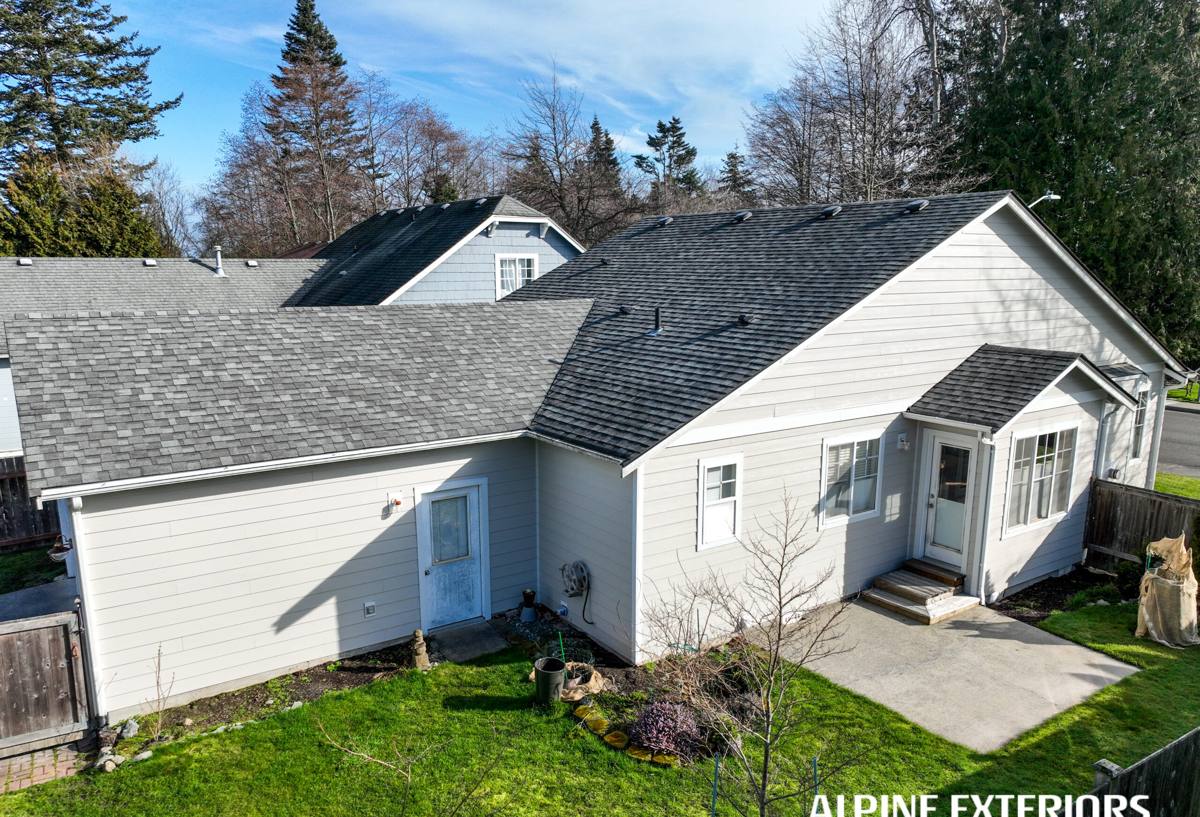
What the Local Climate Actually Does to Siding
Most siding failure in this part of Skagit County isn't dramatic — it's slow. It shows up as swelling at the bottom edge of boards, soft spots around window trim, or a green-black film that keeps coming back no matter how many times it's washed off. A few specific mechanisms drive most of it:
Moisture that never fully dries
Between fog off the delta, low winter sun angles, and long stretches of overcast days, siding in Avon often doesn't get a real chance to dry out between rain events. Wood-based products, including engineered wood siding, are dimensionally sensitive to that cycle — they swell when wet and shrink when they finally do dry, and that repeated movement is what eventually opens up seams and finish cracks.
Moss, algae, and organic growth
Shaded north and west elevations, tree cover common on delta properties, and consistent dampness make Avon a strong environment for moss and algae growth on siding. Beyond the cosmetic issue, organic growth holds moisture against the surface longer, which accelerates whatever underlying deterioration is already happening.
Salt-influenced air
While Avon isn't oceanfront, the marine air that moves up the Skagit Valley from Puget Sound carries salt content that's higher than a purely inland climate. Over years, that air interacts with fasteners, caulking, and some paint systems, contributing to premature fading and corrosion at the margins — trim edges, fastener heads, and joints.
Driving, wind-blown rain
Storms coming through the valley often bring rain at an angle rather than straight down, which pushes water into laps, seams, and butt joints that a vertical-only rain assumption wouldn't account for. Flashing detail and lap coverage matter more here than they would in a drier climate.
Why We Only Install James Hardie Fiber Cement
We made a deliberate decision, years ago, to install exactly one siding system: James Hardie fiber cement. We don't offer vinyl, LP SmartSide, Cemplank, Allura, primed spruce, or cedar as alternatives — not because those products don't have a place in the market, but because we've weighed how each performs against the specific climate stresses described above, and Hardie is the one we're willing to stand behind with our own crews and our own name.
Non-combustible core
Fiber cement is composed primarily of sand, cement, and cellulose fiber, which makes it non-combustible. That's a meaningful difference from wood-based siding products, particularly for homes near the agricultural land and seasonal burning that's common around Avon and the broader delta.
Engineered for this exact climate
James Hardie's HZ5 product line is engineered specifically for the moisture and freeze-thaw conditions of the Pacific Northwest. That's not a marketing distinction — the formulation and finish system are built around the reality that siding here spends more time wet than dry siding in, say, eastern Washington does.
ColorPlus factory finish
Hardie's ColorPlus finish is baked on in a controlled factory environment rather than field-applied. That matters in a climate where job-site paint conditions — humidity, temperature swings, drying time — are rarely ideal. A factory finish also holds color and resists the fading contributors in salt-influenced coastal air better than most field-applied paint systems.
Warranty backing
James Hardie backs its siding with a strong, transferable limited warranty, and the ColorPlus finish carries its own separate finish warranty. For homeowners planning to stay in Avon long-term — or planning to sell — that warranty structure adds real value that alternative materials generally can't match.
How Hardie compares to the alternatives we don't install
| Material | Where it falls short in this climate | Our position |
|---|---|---|
| Vinyl siding | Can warp or deform in the temperature swings that come with sun breaks after cold, damp stretches; seams and laps are more moisture-permeable over time | Not installed |
| LP SmartSide / engineered wood | Wood-strand core is dimensionally sensitive to repeated wet/dry cycling; edge swelling is a known failure point if any cut edge or joint isn't fully sealed | Not installed |
| Cedar / primed spruce | Natural wood requires ongoing refinishing and is highly susceptible to moisture absorption and rot in prolonged damp conditions | Not installed |
| Cemplank / Allura fiber cement | Comparable core material to Hardie, but we standardized on one manufacturer's finish system, warranty structure, and installation specs for consistency and accountability | Not installed |
| James Hardie fiber cement | Engineered specifically for Pacific Northwest moisture; factory finish; non-combustible | What we install |
How We Install Siding for Avon's Conditions
The material is only half the equation — installation detail is what actually determines whether siding performs for 30-plus years or fails early. In a climate like this one, a few details matter more than usual.
Moisture barrier and flashing first
Before any board goes up, we address the water-resistive barrier and flashing details around windows, doors, and penetrations. Given how much wind-driven rain this valley sees, flashing that directs water back out rather than trapping it against sheathing is not optional — it's the difference between siding that lasts and rot you don't discover until it's expensive.
Proper clearances and gaps
Hardie specifies clearances from grade, roofing, and decking, along with gapping at butt joints for caulking or trim. Skipping these details is one of the most common ways fiber cement siding underperforms, and it's almost always an installation issue rather than a product issue.
Fastener and finish integrity
We follow Hardie's fastening specifications and use finish and caulk products compatible with their system, so the ColorPlus warranty stays intact and cut edges get properly sealed before installation — which matters given the salt-influenced air moving through the area.
Siding, Roofing, Windows, and Decks Work as One System
Siding doesn't function in isolation. Roofing that sheds water improperly can send it straight down a wall. Aging windows create the trim and flashing transitions where leaks most often start. Decks attached to the house create another set of flashing and moisture points right where siding meets the structure. Because we handle siding, roofing, windows, and decks, we can look at an Avon home's exterior as one connected system rather than patching one component while ignoring how it interacts with the rest of the envelope.
That matters practically: if we're re-siding a home and notice roof flashing that's failing or a window that's already let moisture into the wall cavity, we can address it as part of the same project instead of leaving a homeowner to discover it later.
Signs Your Avon Home May Need New Siding
- Persistent moss or algae staining that returns quickly after cleaning
- Soft or spongy spots, especially near the bottom courses or around window trim
- Visible warping, buckling, or gaps opening at seams and butt joints
- Paint or finish that's chalking, peeling, or fading unevenly, especially on shaded elevations
- Rising energy bills that suggest the wall assembly isn't sealing the way it used to
- Visible fastener corrosion or staining bleeding through the finish
- Interior signs like musty smells or discoloration on walls that back up to exterior siding
What Affects the Cost of a Siding Project in Avon
Every home is different, but a few factors consistently move the price of a siding project up or down. We don't quote broad numbers without seeing the house, but this gives a sense of what we're weighing during an estimate.
| Factor | Why it matters |
|---|---|
| Home size and wall complexity | More corners, dormers, and trim details mean more labor and material cuts |
| Current siding removal | Tear-off and disposal of failing wood or vinyl siding adds time versus a bare-sheathing new build |
| Extent of moisture damage | Rotted sheathing or framing found during tear-off needs repair before new siding goes on |
| Hardie product line and profile | Lap width, panel style, and trim detail choices affect material cost |
| ColorPlus color and accent choices | Standard versus premium color offerings can shift pricing slightly |
| Access and site conditions | Landscaping, fencing, or limited access around the home can affect labor time |
Why Working With a Local Crew Matters
A siding crew that works Skagit County regularly knows what Avon's climate does to a house year over year — not from a manual, but from having pulled off failed siding on homes in this exact valley and seen firsthand where moisture gets in. That local knowledge shapes decisions on flashing details, clearances, and material choices that a crew unfamiliar with delta conditions might not think twice about. It also means someone is close by if a warranty question or a follow-up detail ever comes up after the project wraps.
If you're weighing a siding project for a home in Avon — whether it's a full replacement, storm damage repair, or you're planning ahead before a problem gets expensive — we're happy to take a look and give you an honest read on your options. Reach out for a free, no-pressure estimate, and we'll walk the exterior with you and explain exactly what we see.