 Skagit County
 Exterior Work Built for Edison's Coastal Farmland Setting
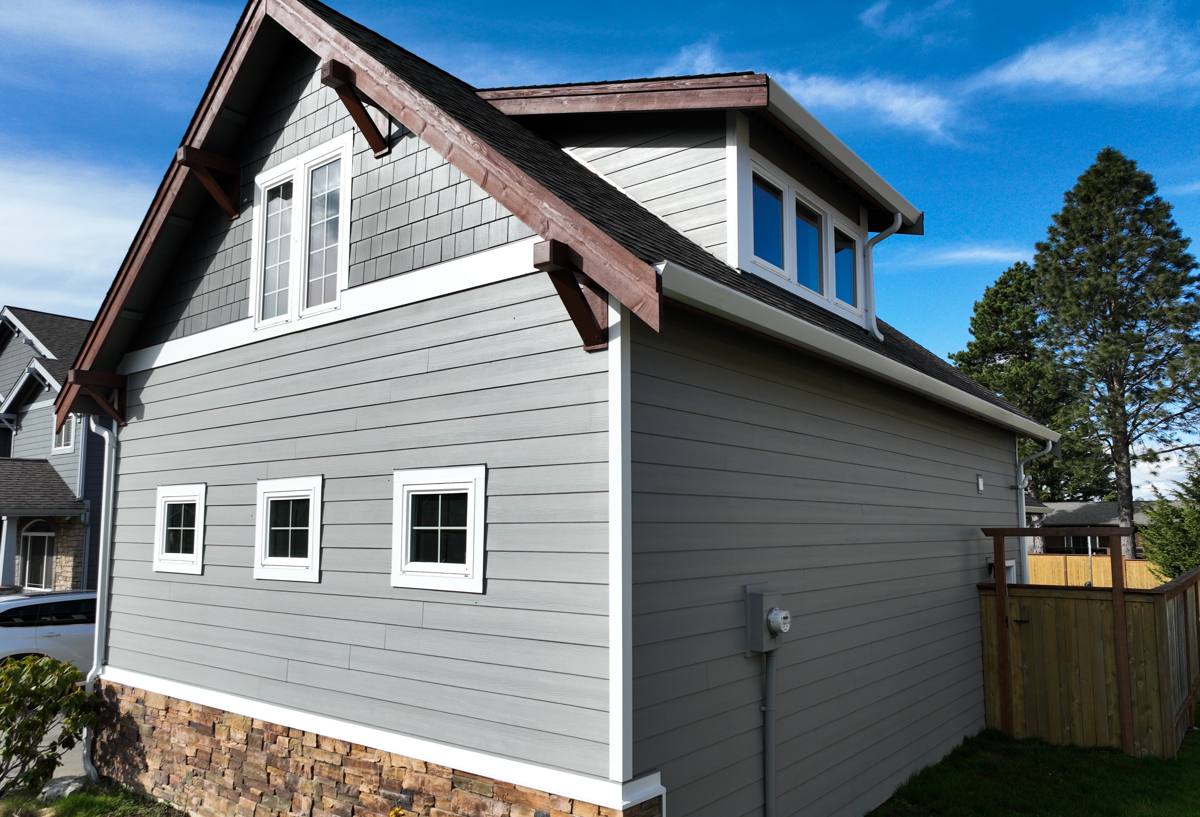
Edison sits in a stretch of Skagit County where farmland meets saltwater, tucked near Samish Bay and the sloughs and tideflats that define this part of the county. It's a beautiful place to own a home, but it's also a demanding one for exterior building materials. Homes here take on a steady combination of salt-laden air moving in off the bay, long stretches of driving rain through the fall and winter, and the shaded, damp conditions that let moss and algae get a foothold on siding, trim, and roofing almost every year. We've built our siding, roofing, window, and deck work around exactly this kind of environment, because generic materials and generic installation don't hold up out here the way they might in a drier inland climate.
What Skagit County's Climate Actually Does to a House
It helps to be specific about the mechanisms at work, because "wet climate" undersells what's actually happening to a building envelope near Edison year after year.
Salt Air and Moisture Together
Proximity to tidal water means airborne salt is a constant low-level presence on exterior surfaces. On its own, salt exposure is corrosive to fasteners and metal flashing and can accelerate the breakdown of paint films. Combined with near-constant moisture, it's a one-two punch: salt draws in and holds moisture against a surface, and moisture is what actually does the damage — swelling wood fibers, feeding mold and algae, and driving rot at the most vulnerable spots on a house, like butt joints, corner trim, and anywhere caulking has started to fail.
Driving Rain, Not Just Rain
Skagit County gets plenty of straight-down rain, but the rain that causes real problems is wind-driven rain that hits siding at an angle and works its way behind laps, around window and door trim, and into any gap in the water-resistive barrier. A siding system's performance in driving rain comes down to lap design, flashing detail, and how well the installer manages every penetration — not just the material itself.
The Long Moss Season
Shaded, low-airflow sides of a house — often the north and east elevations, or anywhere landscaping or tree cover blocks sun and wind — stay damp for months at a time here. That's exactly the condition moss and algae need to establish themselves on siding, trim, and roofing surfaces. Once established, moss holds moisture against the substrate underneath it, which is a slow but real threat to any wood-based product.
Why We Install Only James Hardie Fiber Cement
We made a deliberate decision years ago to install James Hardie fiber cement exclusively, and we don't install vinyl, LP SmartSide, Cemplank, Allura, primed spruce, or raw cedar siding. That's not a marketing position — it's a standard we hold ourselves to because of what we've seen this climate do to homes over time.
- Non-combustible core: fiber cement doesn't feed a fire the way wood-based or wood-fiber products can, which matters for insurance conversations and long-term peace of mind.
- Moisture behavior: Hardie's cement-based composition doesn't swell, rot, or delaminate the way wood substrates can when they stay damp for weeks at a stretch, which is a real risk on shaded Edison lots.
- Factory-applied ColorPlus finish: the finish is baked on at the factory under controlled conditions, rather than field-applied, which gives more consistent coverage and better long-term color retention than most site-painted products.
- Climate-engineered product lines: Hardie builds region-specific formulations (their HZ5 line, for example, is engineered for wetter, harsher climates), which is directly relevant to a bay-adjacent, high-moisture area like Edison.
- Warranty structure: Hardie backs its products with a strong, transferable limited warranty, which matters both for a homeowner's peace of mind and for resale.
We're not going to claim the products we don't install are poorly made — some of them are reasonable products for the right application. What we will say plainly is that after years of exterior work in this specific climate, we decided the maintenance burden, moisture sensitivity, or installation tolerances of those alternatives weren't what we wanted to put our name behind on a Skagit County home. Fiber cement, installed correctly, is what we believe holds up best here.
How We Approach a Siding Project Near Edison
Assessment First
Every project starts with a walk of the home, checking existing siding condition, trim and flashing details, moisture readings where there's visible staining or softness, and how the house's orientation and landscaping affect sun and airflow on each elevation. This tells us where past moisture problems have concentrated and what needs extra attention in the new installation.
Installation to Manufacturer Spec
Fiber cement's long-term performance depends heavily on correct installation — proper fastener spacing and type, correct clearance from grade and roof lines, properly lapped and sealed joints, and flashing that actually sheds water rather than trapping it. We install to James Hardie's published specifications rather than shortcuts, because in a driving-rain climate the installation detail is often what separates a siding job that lasts decades from one that fails early.
Attention to Problem Elevations
Given how moss and algae concentrate on shaded sides of a house, we pay particular attention to trim, caulking, and drainage detail on those elevations — the places where a poor installation would show problems first.
Comparing Siding Materials for This Climate
| Factor | Vinyl | Wood / Engineered Wood | James Hardie Fiber Cement |
|---|---|---|---|
| Moisture resistance | Doesn't rot, but can warp and gap over time | Vulnerable to swelling, rot, and moss retention if maintenance lapses | Cement-based, does not rot or swell with moisture |
| Fire performance | Combustible, can melt/deform near heat | Combustible | Non-combustible core |
| Finish durability | Color molded in, but can fade and chalk | Field-applied paint needs regular recoating | Factory-baked ColorPlus finish, longer color retention |
| Maintenance in salt air / moss conditions | Low, but panels can crack in impacts | Higher — regular inspection, caulking, repainting | Lower — periodic caulk/paint touch-up, no rot risk |
| Warranty | Varies widely by manufacturer | Varies, often shorter | Strong, transferable limited warranty |
Roofing, Windows, and Decks — Same Climate, Same Standard
Siding isn't the only part of a home's exterior fighting salt air and moisture near Edison. We handle roofing, window, and deck work with the same climate-first mindset:
Roofing
Roofs in this area deal with the same moss pressure as siding, plus the added stress of driving rain finding its way under improperly sealed flashing at valleys, chimneys, and roof-to-wall transitions. Proper ventilation and moss-resistant material choices matter more here than in drier parts of the state.
Windows
Window flashing and integration with the siding plane are one of the most common failure points we find in older Skagit County homes. Replacing windows without correcting flashing detail just relocates the leak; we treat window replacement and siding work as one integrated water-management system.
Decks
Outdoor living spaces near the bay take on the same salt and moisture exposure as siding, with the added stress of foot traffic and standing water risk. Ledger board flashing and proper drainage are the details that most often get skipped and most often cause problems later.
Why a Local Crew Matters Here
Edison is a small community within a larger county that has a wide range of microclimates, from tidal flats to inland valleys. A crew that works across Skagit County regularly develops a feel for which elevations on a bay-adjacent property will need extra flashing attention, which lots hold moisture longer because of tree cover, and how quickly moss can reestablish on a north-facing wall. That's the kind of judgment that shows up in the small installation decisions — not just the big material choice — and it's part of why we keep our crews working in this same region rather than spreading thin across unfamiliar climates.
Signs Your Siding May Already Be Struggling
- Soft or spongy spots when you press on siding, especially near the bottom courses or around window trim
- Visible moss or dark streaking that returns quickly after cleaning, particularly on shaded elevations
- Paint that's bubbling, peeling, or chalking heavily rather than aging evenly
- Gaps opening up at butt joints, corner boards, or trim where caulking has failed
- Warping, cupping, or visible separation between siding panels
- Musty smells or interior staining near exterior walls, which can indicate moisture getting behind the siding
Planning a Siding Project: What to Expect
A typical siding replacement moves through assessment, material selection (color and profile from James Hardie's available lines), removal of existing siding, correction of any water-resistive barrier or flashing issues found underneath, installation to spec, and a final walkthrough. Timelines vary with home size and weather windows, and we're upfront that driving rain events in this region can occasionally push a schedule — we'd rather delay a day than install over wet substrate.
If you're weighing a siding, roofing, window, or deck project on a home near Edison, we're glad to walk the property with you and talk through what we're seeing and what it would take to address it. There's no cost or pressure attached to a estimate — just a straightforward look at your home and honest options.