 Skagit County
 Siding Built for Skyline's Weather, Not Just Its Curb Appeal
Skyline sits in a part of Skagit County where the exterior of a home works hard year-round. Between salt-laden air moving in off the water, long stretches of driving rain in the fall and winter, and a moss season that can stretch for months under gray skies, siding here has to do more than look good on installation day. It has to hold up to moisture that finds every gap, algae and moss that thrive in shade and dampness, and temperature swings that stress seams and caulk lines over time.
We've worked on enough homes throughout Skagit County to know that what performs well in a drier inland climate often struggles here. That's shaped how we approach every project in Skyline, from the material we recommend to the way we detail flashing and trim around windows and doors.
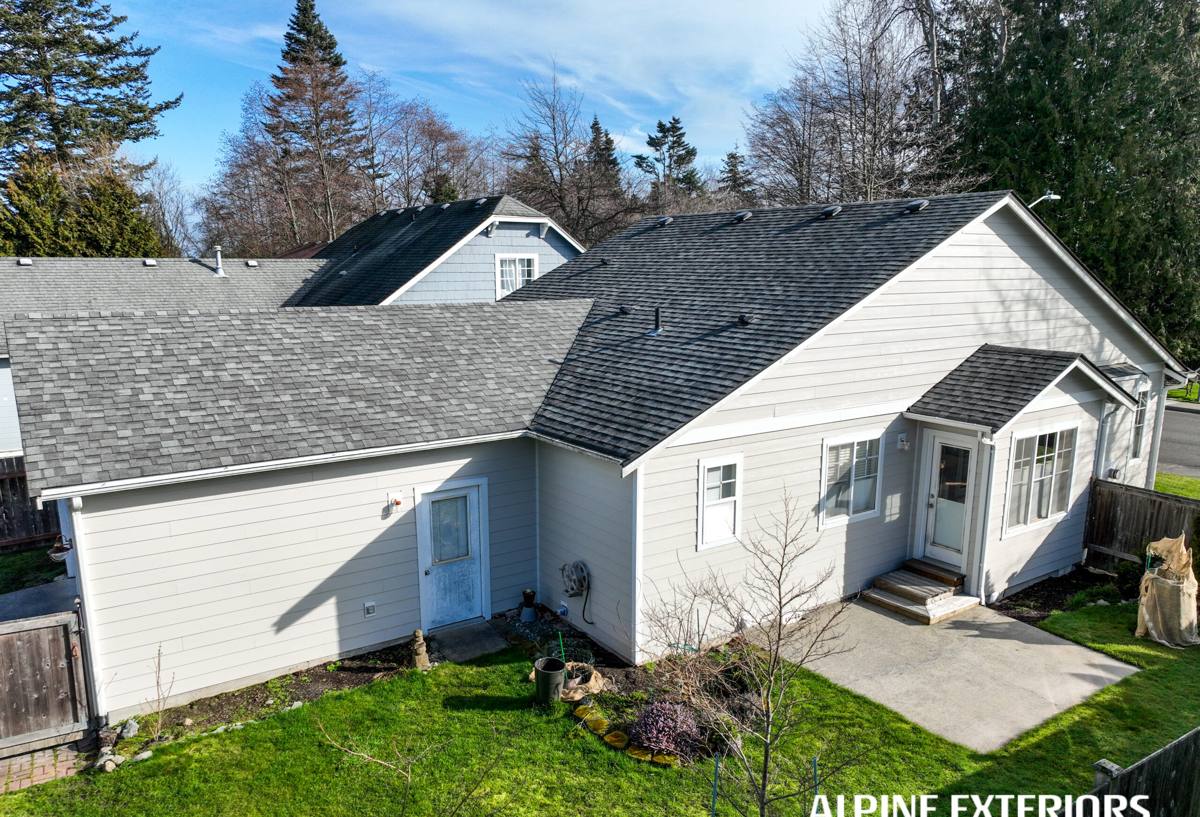
What Skyline Homes Are Actually Up Against
Salt Air and Coastal Moisture
Even homes that aren't right on the water pick up salt-laden moisture carried in on marine air. Over years, that moisture accelerates corrosion on fasteners and hardware, and it speeds up the breakdown of finishes that weren't engineered to resist it. Paint film that would last a decade in a dry climate can start chalking or peeling years earlier here.
Driving Rain and Wind-Driven Water
Skagit County gets its share of storms where rain doesn't just fall straight down — it's pushed sideways into walls, seams, and trim by wind. That kind of exposure tests every joint, every piece of flashing, and every caulk line on a home's exterior. Siding and trim that aren't detailed correctly for wind-driven rain will eventually let water behind the surface, where it causes damage you can't see until it's serious.
Moss, Algae, and Extended Shade
Between tree cover, cloud cover, and the general dampness of the region, many Skyline properties deal with moss and algae growth on roofs and siding for a good part of the year. Materials that hold moisture at the surface give moss more to grab onto, and organic growth that isn't addressed can trap dampness against the siding itself, shortening its life.
Why the Siding Material You Choose Matters More Here Than Elsewhere
In a milder, drier climate, the gap between a mid-grade product and a well-engineered one might not show up for a long time. In Skagit County's marine climate, that gap shows up faster — in caulk lines that fail early, panels that cup or swell, and finishes that fade or chalk well before their rated lifespan.
| Material | How It Handles Local Moisture | Common Long-Term Issue Here |
|---|---|---|
| Vinyl siding | Sheds surface water but seams and J-channels can allow moisture intrusion; expands/contracts with temperature swings | Warping, fading, and seams opening over time |
| LP SmartSide (engineered wood) | Wood-based substrate is vulnerable if the factory seal is ever compromised at cuts or fastener points | Edge swelling and moisture damage if not perfectly maintained |
| Cedar or primed wood siding | Natural material that absorbs and releases moisture with the weather | Repainting cycles, rot risk, and higher upkeep in a wet climate |
| James Hardie fiber cement | Cement-based composition doesn't absorb moisture the way wood-based products do; factory finish is baked on, not field-applied | Requires correct installation, but the material itself resists the moisture and organic growth that shorten other products' lives |
This isn't a case of one product being universally bad — vinyl, engineered wood, and natural wood siding all have a place in construction. But for the specific combination of salt air, wind-driven rain, and moss season that Skyline homes face, we made a decision as a company: we only install James Hardie fiber cement. We'd rather stand behind one product we trust completely for this climate than offer several and hope the wrong one holds up.
Why We Standardized on James Hardie
A Non-Combustible, Cement-Based Core
James Hardie siding is made primarily from cement, sand, and cellulose fiber. That composition means it doesn't swell, rot, or feed moss the way wood-based sidings can when moisture gets to them. It also means it's non-combustible, which matters to a lot of homeowners regardless of climate.
ColorPlus Factory Finish
Instead of relying on job-site painting, Hardie's ColorPlus finish is baked on in a controlled factory environment through multiple coats. In a climate with as much sun-fade and moisture exposure as Skagit County sees, a factory finish that's engineered for UV and weather resistance holds its color and integrity longer than field-applied paint typically does.
Climate-Engineered HZ Product Lines
Hardie manufactures its siding in different formulations for different climate zones — HZ5 for regions with more freeze-thaw cycling, HZ10 for warmer, wetter climates. Installing the product line that's actually engineered for the Pacific Northwest's combination of rain, humidity, and temperature swings is part of why the material performs the way it's rated to.
A Warranty Backed by the Manufacturer
Hardie's transferable limited warranty is a meaningful part of the value proposition — it protects the homeowner and, if the home sells, the next owner too. That warranty is only as good as the installation behind it, which is why correct installation practices matter as much as the product itself.
Installation Is Where the Real Protection Comes From
Flashing and Moisture Management
Any siding material, including Hardie, can fail prematurely if it's installed without proper flashing at windows, doors, and roof-to-wall intersections. In a climate where wind-driven rain is a regular occurrence, we pay close attention to how water is directed away from the wall assembly, not just how the siding looks once it's up.
Fastening, Gaps, and Manufacturer Spec
Hardie publishes specific installation requirements — fastener spacing, minimum clearances from grade and roof lines, gaps at butt joints, and caulking practices. Skipping or shortcutting these details is one of the most common reasons fiber cement siding underperforms. We install to Hardie's published specifications, which is also what keeps the manufacturer's warranty intact.
More Than Siding: A Full Exterior Approach
Siding doesn't work in isolation — it's one piece of a home's overall building envelope. We also handle roofing, windows, and decks, which lets us look at a Skyline property's exterior as a connected system rather than a series of separate projects.
- Roofing: A roof in poor condition or with failing flashing can send water down behind siding no matter how well the siding itself is installed.
- Windows: Window flashing and siding integration is one of the most common failure points on any home; handling both trades ourselves means fewer gaps in accountability.
- Decks: Decks attached to the home need proper ledger board flashing where they meet the siding, an area that's easy to get wrong if the trades aren't coordinated.
Signs a Skyline Home May Need Siding Work
- Visible moss or algae streaking that keeps coming back after cleaning
- Soft spots, bubbling, or a spongy feel when you press on siding, especially near the bottom courses
- Paint that's peeling, chalking heavily, or fading unevenly across a wall
- Warping, cupping, or gaps opening up at seams and corners
- Visible water staining on interior walls near exterior corners or windows
- Siding that's original to a home built more than 20-25 years ago with an older-generation product
What Cost Depends On
Every Skyline property is different, so we don't quote broad numbers without seeing the home. What actually drives cost on a siding project includes:
- Total square footage and the complexity of the roofline and wall angles
- How much of the existing siding, sheathing, or trim needs to be removed and replaced versus reused
- Whether flashing, moisture barriers, or window trim need to be addressed as part of the job
- Siding profile and color selection, since ColorPlus finishes and certain textures vary in material cost
- Access and site conditions, including how the home sits relative to grade and landscaping
Our Process for Skyline Homeowners
- An on-site inspection to assess current siding condition, moisture risk areas, and overall exterior needs
- A straightforward walkthrough of material options and why we recommend what we recommend
- A detailed, written estimate that breaks down scope rather than a vague lump sum
- Installation to manufacturer specification, with attention to flashing and moisture details specific to this climate
- A final walkthrough so you understand what was done and how to maintain it
Skyline's climate isn't gentle on exteriors, and it doesn't forgive shortcuts in material or installation. If your home is showing signs of wear, or you're planning ahead for a replacement, we're happy to take a look and give you an honest read on where things stand. Reach out for a free, no-pressure estimate — there's no obligation, just a straight assessment of your home's exterior.