 Skagit County
 Big Lake Sits at the Crossroads of Lake Moisture and Skagit County Weather
Big Lake is a little different from a lot of the neighborhoods we serve around Skagit County. Homes here don't just deal with the region's typical marine-influenced weather — they're also ringed by open water and a good amount of mature tree cover, which changes how moisture behaves on an exterior wall. Between the lake itself and the tree canopy that shades many properties, siding on Big Lake homes tends to stay damp longer after a storm than siding on a home out in open farmland a few miles away.
Add in what the rest of Skagit County already deals with — long stretches of driving rain, air that carries a faint edge of salt off Puget Sound, and a moss and algae season that can run most of the year — and you've got an exterior environment that punishes the wrong siding material faster than most homeowners expect. This page covers what we actually see on Big Lake homes, how our process works for this area, and why we've standardized on one siding product instead of offering the usual lineup.
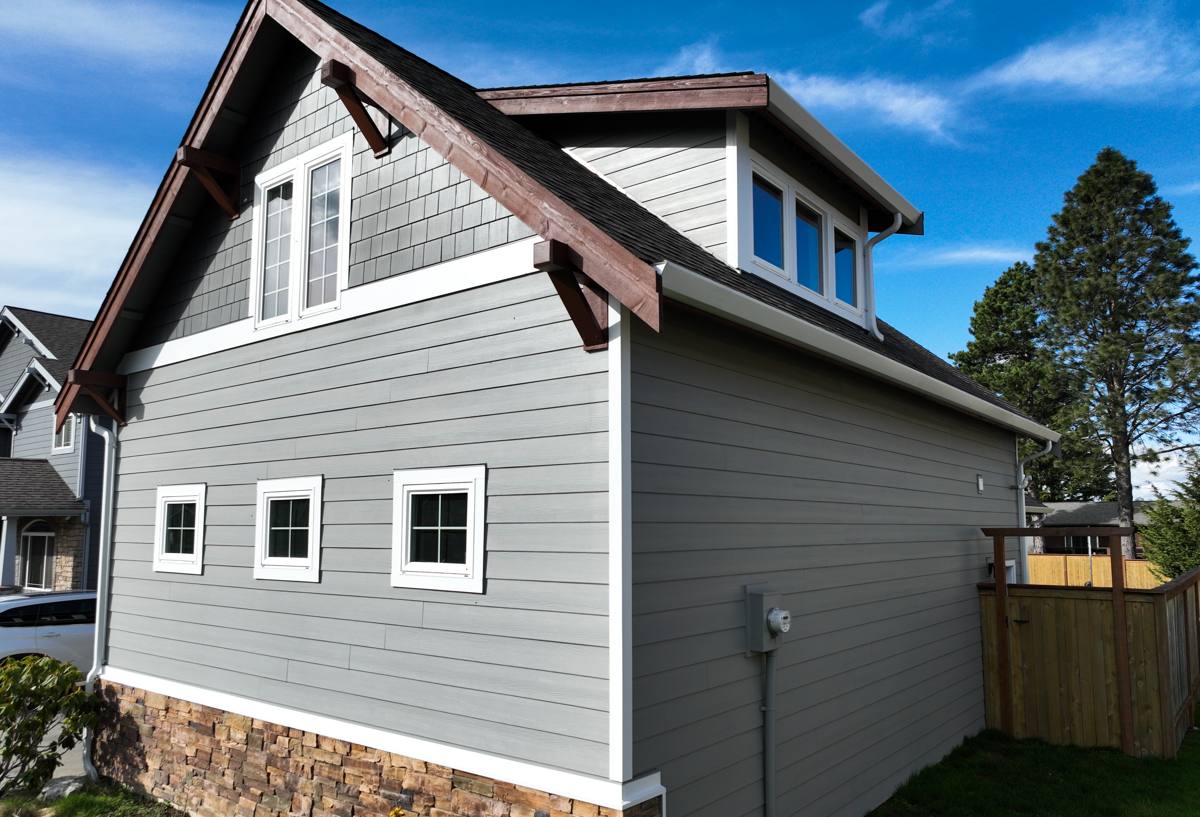
What Shows Up on Big Lake Homes Over Time
We've worked on enough homes around Big Lake and the surrounding lake communities to know the pattern. It's rarely one dramatic failure — it's a slow accumulation of small problems that homeowners don't notice until they add up.
- Shaded siding stays wet longer. North-facing walls and anything under tree canopy dry out slowly, which gives moss, algae, and mildew more time to take hold.
- Lake-adjacent humidity. Even without direct wave exposure, homes near open water sit in air with higher ambient moisture than inland properties, which stresses paint film and swells wood-based products.
- Wind-driven rain finds gaps. Storms moving through the Skagit Valley push rain sideways into laps, seams, and trim joints rather than straight down, so poor flashing details get exposed fast.
- Salt-tinged air across the county. Skagit County's proximity to Puget Sound means metal fasteners, trim, and paint finishes everywhere in the area — not just on the immediate waterfront — see faster wear than they would inland.
None of this means Big Lake is an unusually harsh place to own a home. It means the siding material and the installation details matter more here than they would in a drier climate, and cutting corners on either one shows up sooner.
Why We Install Only James Hardie Fiber Cement
We made a decision as a company to install one siding system: James Hardie fiber cement. We don't offer vinyl, LP SmartSide, Cemplank, Allura, or primed wood species like spruce or cedar as alternatives. That's not a marketing angle — it's because we've seen how each of those products actually performs in exactly the kind of damp, shaded, moisture-heavy conditions common around Big Lake, and we'd rather stand behind one product we trust than offer a menu that includes options we know will disappoint some homeowners years down the road.
What Fiber Cement Does That the Alternatives Don't
Fiber cement is made primarily from cement, sand, and cellulose fiber. It doesn't rot, it isn't a food source for mold or insects, and it's non-combustible — a genuine advantage in a state that takes wildfire risk seriously even outside the immediate fire zones. James Hardie's ColorPlus factory-applied finish is baked on under controlled conditions, which gives it better fade and moisture resistance than field-applied paint, and it comes with a strong, transferable limited warranty backed by a large national manufacturer.
Why We Passed on the Others
| Product | What it does well | Why it's a harder sell here |
|---|---|---|
| Vinyl siding | Low upfront cost, minimal maintenance for the material itself | Can warp or deform in temperature swings, seams and J-channels are ongoing moisture entry points, and it's a poor match for the fire-conscious, higher-end look many Skagit County homeowners want |
| LP SmartSide | Engineered wood strand product, easier and lighter to install than fiber cement | It's a wood-based product — edge and cut-end moisture intrusion is the failure mode we've watched repeat in wet, shaded settings like Big Lake's |
| Cemplank / Allura | Also fiber cement, similar core material to Hardie | We chose to standardize on one manufacturer, one warranty structure, and one factory finish system rather than mix products across jobs |
| Primed cedar / spruce | Traditional look, real wood grain | Requires ongoing repainting and caulking discipline that most homeowners underestimate; humid, shaded exteriors accelerate rot at the most vulnerable points |
This isn't a claim that these products are junk — plenty of homes around the country wear them fine. It's that we install exteriors we're willing to stand behind for decades in this specific climate, and for Big Lake's combination of shade, lake moisture, and driving rain, fiber cement is the product that consistently holds up.
How We Approach a Big Lake Siding Project
Every job starts with a walk-around, not a sales pitch. We look at what's actually happening on the house — where moisture is collecting, where old flashing has failed, where moss has gotten a foothold — before we talk about products or pricing.
Typical Project Steps
- On-site inspection of existing siding, trim, and any visible water damage or rot
- Assessment of house wrap, flashing, and moisture barrier condition underneath the old siding
- James Hardie product and color selection suited to the home's exposure and shading
- Tear-off, sheathing repair where needed, and correct water-resistive barrier installation
- Installation to James Hardie's fastening, clearance, and flashing specifications
- Final walkthrough covering care and what to watch for going forward
The installation details matter as much as the material. Fiber cement performs the way it's supposed to only when it's fastened, gapped, flashed, and caulked correctly — sloppy installation can undercut even the best siding product, which is exactly what we're trying to avoid.
Roofing, Windows, and Decks — The Rest of the Home's Defense
Siding is only one piece of how a Big Lake home holds up against the weather. We also handle roofing, windows, and decks, because a home's exterior works as a system — a roof that's shedding water improperly, or windows with failed seals, can undermine even a well-installed siding job by feeding moisture into places it shouldn't reach.
- Roofing: A roof in poor condition sends water down behind trim and siding long before a homeowner sees a stain inside.
- Windows: Old or poorly flashed windows are one of the most common hidden moisture entry points we find during siding tear-off.
- Decks: Outdoor living spaces around a lake community see heavy seasonal use and constant moisture exposure, and they deserve the same attention to material and installation quality as the siding.
If you're only budgeting for one of these right now, that's fine — we'll tell you honestly whether the others can wait or whether they're actively working against the project you're planning.
Why a Local Crew Matters for Big Lake
A contractor who mostly works in dry inland climates, or who's never dealt with a lake-adjacent, tree-shaded property, will make different assumptions than one who works around Skagit County regularly. We know what a shaded north wall in this area looks like after five wet winters, and we plan flashing, ventilation, and product selection around that reality instead of a generic install spec. Being local also means we're not disappearing after the last day of the job — warranty service and follow-up questions get answered by the same crew that did the work.
Signs It's Time to Have Your Siding Looked At
- Persistent moss, algae, or dark streaking that returns quickly after cleaning
- Soft or spongy spots when you press on siding near the bottom edges or trim
- Paint that's bubbling, peeling, or chalking heavily, especially on shaded walls
- Visible gaps, warping, or separation at seams and corner boards
- Rising energy bills that suggest the wall assembly isn't performing the way it should
What Affects the Cost of a Siding Project Here
| Factor | Why it matters at Big Lake |
|---|---|
| Existing moisture damage | Shaded, lake-adjacent walls are more likely to need sheathing repair discovered during tear-off |
| Home size and stories | Larger and multi-story homes require more material, labor, and access equipment |
| Trim and architectural detail | Homes with more corners, dormers, or trim work take longer to flash and finish correctly |
| Product line and color | James Hardie's HZ product lines and ColorPlus color options vary in cost by style and finish |
| Access and site conditions | Tree cover, slopes, and proximity to the lake can affect staging and scaffolding needs |
We won't quote a number without seeing the house — anyone who does is guessing. What we can tell you upfront is that we price the job we'd actually want on our own home, using one material system we know inside and out.
If you're weighing a siding, roofing, window, or deck project on a Big Lake property, we're happy to come take a look and give you a straight, no-pressure estimate. There's no obligation — just an honest read on what your home actually needs. Fill out the form below to get started.