 Skagit County
 Roof Repair in Avon: Work Built for This Climate
Avon sits low in the Skagit Valley, close to the river and not far off the water, which means roofs here take on a specific combination of punishment: near-constant damp, wind-driven rain that finds every weak seam, and a moss season that can run most of the year if a roof isn't kept clear. A roof repair that works in a drier climate, or even in a nearby city with different exposure, doesn't automatically hold up on an Avon roof. We work on homes in this area regularly, and the repairs we do here are shaped by what actually fails on local roofs, not a generic checklist.
This page is specifically about roof repair for homes in and around Avon — what typically goes wrong, what a correct fix looks like, and how we approach the job so the repair actually lasts through the next few wet seasons instead of needing to be redone.
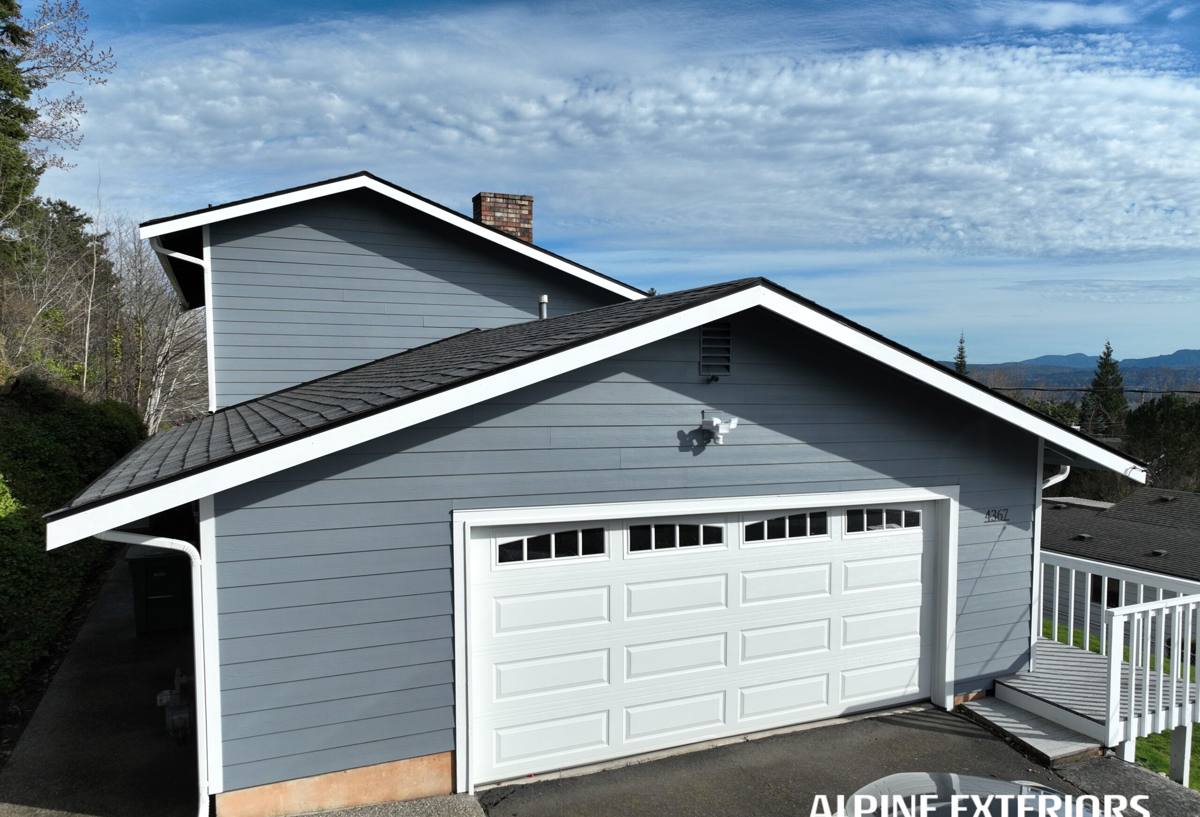
What Skagit County's Climate Does to a Roof
Three conditions do most of the damage to roofs in this part of Skagit County, and they tend to compound each other.
Driving rain
Storms coming off the water and up the valley often bring rain at an angle, not straight down. That matters because a roof system relies on layers — shingles, underlayment, flashing — shedding water downhill in sequence. Wind-driven rain can push water sideways and uphill under shingle edges, at valleys, and around anything that penetrates the roof deck. A repair that only patches the visible surface without addressing how water moves during a sideways storm tends to fail again at the next one.
Moss and constant moisture
Shaded roof sections, north-facing slopes, and areas near trees stay damp for extended stretches. Moss takes hold in those conditions, and once established it lifts shingle edges, holds moisture directly against the roofing material, and speeds up granule loss. Left alone, moss growth is one of the more common reasons a repairable roof turns into a full-section replacement.
Salt air
Proximity to Puget Sound and the surrounding tidal areas means metal roof components — flashing, fasteners, vents, gutter edges — are exposed to airborne salt. Lower-grade or unprotected metal corrodes faster here than it would inland. Fastener failure and flashing corrosion are common culprits behind leaks that seem to come from nowhere.
None of these three factors is dramatic on its own. The problem is that Skagit County gets all three at once, for months at a stretch, which is why roofs in Avon tend to show wear patterns that differ from roofs even twenty or thirty miles inland.
Signs an Avon Roof Needs Repair
Most roof problems show themselves before there's an active leak inside the house. Catching them early is almost always the difference between a repair and a much bigger job.
- Dark streaking or visible moss growth on shingles, especially on shaded or north-facing slopes
- Granules collecting in gutters or at downspout outlets
- Shingles that look cupped, curled, or lifted at the edges
- Soft or spongy spots when the roof deck is walked
- Water stains on interior ceilings, especially near chimneys, skylights, or roof valleys
- Daylight visible through the roof deck from inside the attic
- Rusted, loose, or missing flashing around vents, chimneys, or wall intersections
- Gutters pulling away from the fascia or overflowing during heavy rain
If you're seeing more than one of these at once, it's worth having the roof looked at before the next storm cycle rather than after.
What a Correct Roof Repair Actually Involves
A roof repair is often judged by whether the visible leak stops, but a leak stopping and a roof being correctly repaired aren't always the same thing. Water can travel along the underlayment or roof deck before it shows up as a stain, so the point where water appears inside the house isn't always the point where it's actually getting in.
Finding the real entry point
We start by tracing the leak from the interior evidence back to its source on the roof, checking the surrounding flashing, penetrations, and shingle courses rather than assuming the nearest visible damage is the cause. Patching the wrong spot is one of the most common reasons a "repaired" roof leaks again.
Flashing first
In this climate, flashing failure is behind a large share of the leaks we're called out for — around chimneys, skylights, dormers, and roof-to-wall transitions. A correct repair replaces or properly reseats compromised flashing rather than just caulking over a gap, since caulk over corroded or improperly lapped flashing is a short-term fix at best.
Underlayment and deck condition
If water has been getting under the shingles for a while, the underlayment and roof deck underneath may be compromised even if the shingles above look mostly fine. We check for soft decking and deteriorated underlayment as part of any repair, because shingles installed over a wet or damaged deck won't hold.
Matching materials
When shingles need to be replaced in a section, matching the existing profile, color, and exposure as closely as possible keeps the repair from standing out and keeps the roof's water-shedding pattern consistent. We source materials to match what's already on the roof whenever that's realistically possible.
Ventilation
A roof with poor attic ventilation traps moisture underneath the deck, which accelerates rot and can cause problems that look like a roofing leak but are actually a ventilation issue. Where ventilation is clearly part of the problem, we'll point it out rather than repairing over a condition that will just cause the same damage again.
Common Roof Repair Types in Avon
| Repair Type | Typical Cause Here | What the Fix Involves |
|---|---|---|
| Flashing repair/replacement | Salt-air corrosion, wind lift, improper original install | Remove and replace flashing, reseat shingles, check underlayment beneath |
| Moss-related shingle damage | Shaded, damp roof sections with heavy moss buildup | Careful moss removal, damaged shingle replacement, treatment to slow regrowth |
| Valley leaks | Driving rain overwhelming an aging or improperly lapped valley | Rebuild valley flashing and shingle layering to correct water flow |
| Wind-lifted or missing shingles | Coastal wind exposure, aging adhesive seal strips | Replace missing shingles, reseal or replace surrounding courses |
| Soft deck / rot repair | Prolonged undetected leak or poor ventilation | Cut out and replace damaged decking before new roofing goes back down |
Our Repair Process, Start to Finish
1. Assessment
We inspect the roof surface and, where accessible, the attic side, to identify the actual source of the problem rather than just the symptom. You'll get a plain explanation of what we found, in terms that make sense whether or not you know roofing.
2. Honest scope
We tell you whether this is a straightforward repair, a larger section repair, or a case where repair isn't the right long-term call. We're not incentivized to oversell a job, and we're not going to talk you into a repair that's just going to fail again in a year.
3. The work itself
Repairs are done using materials matched to your existing roof where possible, with attention to flashing, underlayment, and deck condition — not just the top layer of shingles. We work with an eye toward how the specific section of roof handles wind-driven rain, since that's the condition that exposes a sloppy repair fastest.
4. Cleanup and check
We clear debris, old materials, and stray fasteners from the property and gutters before we consider the job done.
Repair vs. Replacement: How We Help You Decide
Not every roof problem calls for the same response, and the right call depends on more than just the roof's age.
| Factor | Leans Toward Repair | Leans Toward Replacement |
|---|---|---|
| Extent of damage | Isolated to one section or penetration | Widespread across multiple slopes |
| Roof age | Well within expected shingle lifespan | At or past typical lifespan for the material |
| Deck condition | Solid, dry decking beneath the damage | Soft, rotted, or repeatedly wet decking |
| Moss/algae history | Limited growth, manageable with treatment | Heavy, recurring growth across the roof |
| Underlying cause | A single identifiable failure point | Systemic issue like poor original ventilation or installation |
We'll walk through where your roof falls on these points rather than defaulting to whichever answer is more profitable for us. A lot of roofs in Avon are genuinely good candidates for repair, and we'd rather do that work well than push a replacement that isn't yet necessary.
Why a Crew That Already Works in Avon Matters
Roofing crews who mostly work in drier or more sheltered parts of the state don't always account for how much driving rain and salt exposure change what "correctly flashed" or "properly sealed" needs to mean. A repair method that's fine in a low-wind, low-moisture area can be undersized for what an Avon roof faces most winters. Working regularly in Skagit County means we're used to sourcing materials suited to this exposure, recognizing moss and corrosion patterns early, and building repairs that account for wind-driven rain rather than just vertical rainfall.
It also means we're not guessing at how local weather affects timing — scheduling repair work around the wetter stretches of the year, and knowing which conditions call for a temporary weatherproof measure versus waiting for a dry window to do the job right.
Maintaining a Repaired Roof
A repair holds up longer with a little basic upkeep, especially in a climate that pushes moss and debris buildup year-round.
- Keep gutters and downspouts clear so water isn't backing up under the roof edge
- Trim back tree limbs that keep sections of the roof shaded and damp
- Have moss treated before it spreads, rather than after it's lifted shingles
- Schedule a look at the roof after any unusually severe windstorm
- Address small leaks promptly — deck and insulation damage gets worse, not better, over time
If you're seeing signs of a leak, moss buildup, or storm damage on a roof in Avon, we're glad to take a look and give you a straightforward assessment of what it actually needs. Fill out the form below for a free, no-pressure estimate.