 Skagit County
 Why Windows Wear Out Faster in Bow
Bow sits close enough to Samish Bay and Padilla Bay that salt-laden air is a constant, low-grade stress on anything installed on the outside of a house. It's not the dramatic kind of weather event that makes homeowners call right away — it's the slow kind. Salt air accelerates corrosion on hardware, hinges, and fasteners. Combined with the driving rain that comes off the water during fall and winter storms, older windows in this area tend to show their age from the inside out: fogged glass, soft trim, and drafts that seem to come from nowhere.
Then there's moss season, which in Skagit County isn't really a season — it's most of the year. Moisture that sits on a roofline or against siding for weeks at a time finds its way to any gap in a window's seal, and once it's behind the frame instead of on top of it, the damage is happening where you can't see it. By the time staining or soft wood shows up on the interior sill, the moisture has usually been working on that opening for a while.
What This Means for Homeowners
None of this means windows in Bow fail faster because the products are bad. It means the margin for installation error is smaller here than in a drier inland climate. A window that's slightly out of level, under-flashed, or sealed with the wrong material might perform fine for a few years in a low-moisture area. In a house exposed to salt air and steady rain off the water, the same shortcuts show up as leaks, rot, or fogged glass much sooner.
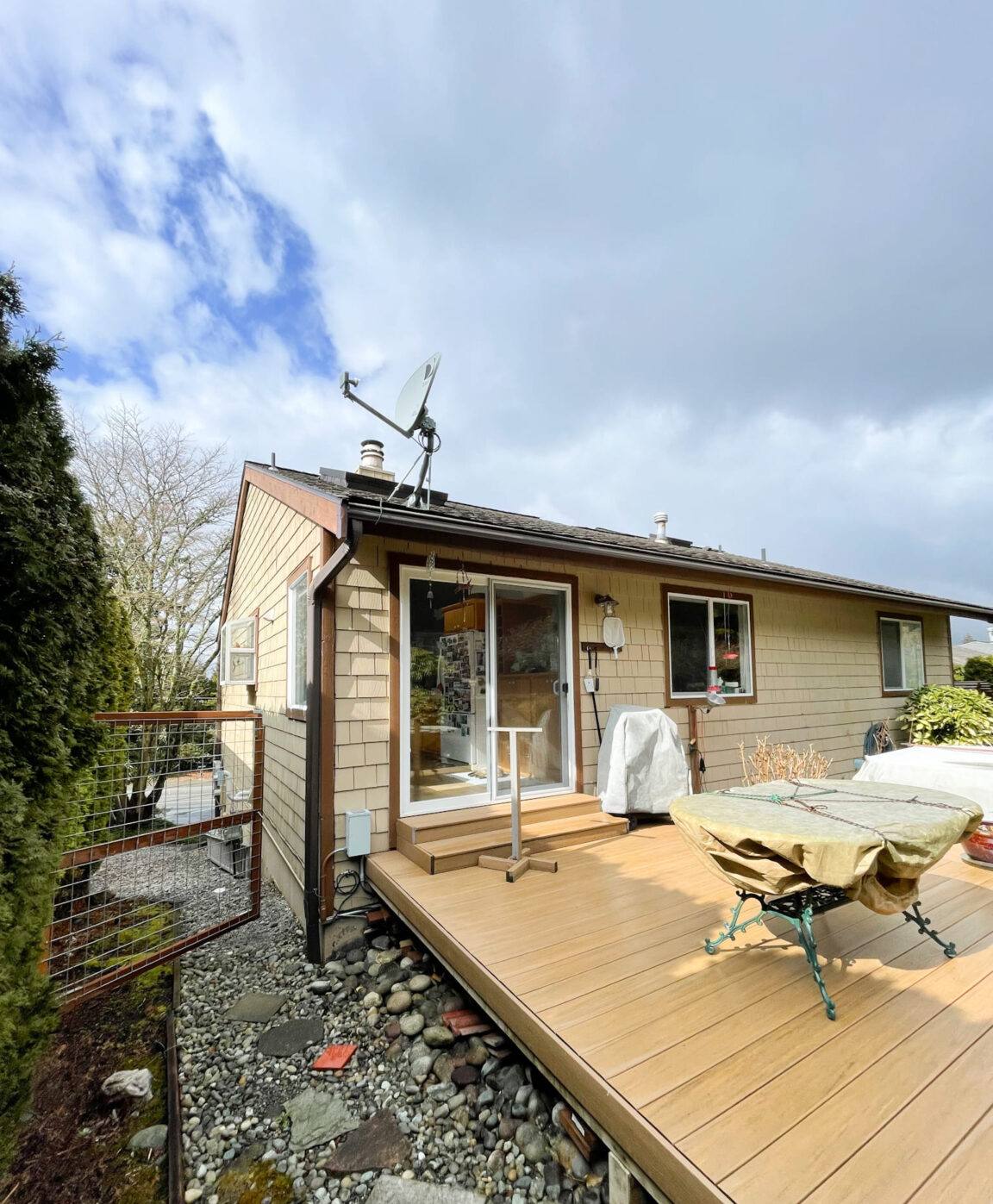
Signs Your Windows Need Attention
Most homeowners don't replace windows because they woke up one day and decided to. They replace them because a specific problem kept showing up. Here's what we typically hear about from Bow homeowners before they call:
- Fogging or moisture between panes — the seal on the insulated glass unit has failed and can't be repaired, only replaced
- Windows that are hard to open, close, or lock, especially after a wet stretch of weather
- Visible gaps, cracked caulk, or soft/spongy wood at the sill or trim
- A noticeable draft near the frame even when the window is fully latched
- Condensation forming on the inside of the glass regularly, which points to poor insulating performance
- Staining on interior drywall or trim below or beside a window — a sign water has been getting behind the frame
- Rooms near older windows that feel noticeably colder or draftier than the rest of the house
Any one of these on its own might just need a repair. Several of them together, especially on a home that still has its original windows, usually means replacement is the more honest answer.
What a Correct Window Replacement Actually Involves
Window replacement gets sold like it's just swapping one box for another, but the work that actually protects a house happens around the window, not inside it. There are two basic approaches, and which one applies depends on the condition of the existing frame.
Retrofit (Insert) Replacement
If the existing frame is square, solid, and free of rot, a new window unit can often be installed into the existing opening without disturbing the siding or exterior trim. This is faster and less invasive, and it's the right call when the bones of the opening are sound. It is not the right call if there's any hidden water damage — installing a new window into a compromised opening just seals the problem behind a new frame.
Full-Frame Replacement
When the existing frame shows rot, soft wood, or evidence of past water intrusion, the job needs to open up to the rough opening. That means removing the old frame down to the studs, inspecting and repairing any damaged framing, and installing new flashing before the new window goes in. This is more labor, but in a home that's been exposed to years of driving rain and salt air, it's often the only way to actually fix the problem instead of covering it.
The Details That Actually Keep Water Out
Regardless of which approach applies, the same details determine whether the job holds up:
- Proper flashing integration with the house's water-resistive barrier, lapped correctly so water sheds outward and down
- A sloped sill pan beneath the window so any water that does get in drains back out instead of pooling
- Correct backer rod and sealant at the exterior trim joint — not just a bead of caulk over a gap
- Shimming and fastening that keeps the unit square and properly supported, so it operates smoothly for years, not just on install day
- Interior air sealing with low-expansion foam or backer rod, which matters as much for comfort and energy performance as the exterior work does for keeping water out
Choosing the Right Window for a Bow Home
There's no single "best" window material — there's the right material for a given home's exposure, budget, and maintenance appetite. Here's how the common options compare for a coastal Skagit County property:
| Frame Material | Moisture & Salt Air Behavior | Maintenance | Typical Trade-Offs |
|---|---|---|---|
| Vinyl | Won't rot or corrode; performs well near salt air | Low — no painting or sealing | Limited color options long-term; can't be refinished if faded |
| Fiberglass | Very stable in moisture and temperature swings; strong salt air resistance | Low | Higher upfront cost than vinyl |
| Wood (unclad interior/exterior) | Attractive, but exterior wood is vulnerable to the driving rain and moss growth common here | High — regular painting/sealing required | Best reserved for interior-only exposure or protected elevations |
| Wood interior / clad exterior | Cladding protects the exterior from weather while wood shows on the interior | Moderate | Higher cost; cladding seams need correct detailing to stay watertight |
| Aluminum | Durable but conducts heat and cold, and is prone to corrosion pitting in salt air over time without proper coatings | Moderate | Better suited to commercial applications than most residential retrofits here |
For most Bow homes, we steer people toward vinyl or fiberglass on exposed elevations simply because it's a better match for salt air and constant moisture without asking the homeowner to keep up with painting and resealing. That's a maintenance and moisture-performance recommendation, not a judgment on wood windows generally — they can be a great fit on a protected elevation or when a homeowner is committed to the upkeep.
Glass and Energy Performance
Skagit County doesn't hit the temperature extremes of the mountains or eastern Washington, but the combination of damp air, wind off the water, and long gray stretches makes glass performance worth getting right. Double-pane, low-E glass with an argon or krypton gas fill is the standard baseline for a home in this area — it cuts down on the condensation that shows up on cold, humid mornings and keeps rooms near large windows from feeling drafty. Homes with more direct wind exposure sometimes benefit from a higher-performance glass package, particularly on the elevations facing open water or prevailing weather.
Our Process for a Bow Window Replacement
1. On-Site Assessment
We look at each window individually — not just the glass, but the condition of the surrounding trim, sill, and framing. This is where we catch hidden moisture damage before it becomes a surprise mid-project.
2. Honest Scope and Options
We'll tell you plainly whether a retrofit install is appropriate or whether the opening needs to be opened up for a full-frame replacement, and walk through material options based on that specific window's sun and weather exposure.
3. Precise Measurement and Ordering
Windows are ordered to the exact dimensions of each opening. Rushing this step is one of the most common causes of gaps and callbacks down the line.
4. Installation
Old units are removed carefully to protect interior finishes and existing siding. Flashing, sill pans, and air sealing go in before the new window, not as an afterthought once it's already set.
5. Cleanup and Walkthrough
We clean up the work area and walk through the finished installation with you — operation, locks, and how the exterior trim was finished.
Why Local Experience in Bow Matters
A crew that only occasionally works near the water doesn't always think about flashing details the same way a crew that works Skagit County's shoreline communities every season does. Working regularly in Bow and the surrounding area means we're used to accounting for wind-driven rain angles, the extra corrosion resistance salt air demands from hardware and fasteners, and the reality that moss and moisture pressure on a home here doesn't really let up for months at a time. It also means we're familiar with the permitting and inspection expectations that apply to exterior work in Skagit County, so there are no surprises partway through a project.
What Affects the Cost of a Window Replacement
| Factor | Why It Matters |
|---|---|
| Retrofit vs. full-frame | Full-frame work involves more labor, framing repair, and exterior trim work |
| Frame material | Vinyl is typically the most budget-friendly; fiberglass and clad-wood cost more upfront |
| Number and size of openings | Larger or custom-sized windows cost more than standard sizes |
| Hidden damage discovered during install | Rot or moisture damage found once trim is removed adds repair scope |
| Glass package | Higher-performance low-E or impact-resistant glass adds cost but improves comfort and durability |
| Access and elevation | Upper-story or hard-to-reach windows take more time and equipment |
We don't quote sight unseen — every estimate follows an actual look at your windows, because the honest range for a job depends entirely on what we find once we're there.
If your windows in Bow are drafty, fogged, or showing signs of moisture damage, we're happy to take a look and give you a straightforward assessment — no pressure, no upsell, just an honest read on what your home actually needs. Use the form below to request a free estimate.