 Skagit County
 Building a Deck That Actually Holds Up in Burlington
Burlington sits close enough to the Skagit River delta and the Salish Sea that homes here deal with a specific combination of weather most decking material and construction advice simply isn't written for: salt-tinged air moving in off the water, long stretches of driving rain from fall through spring, and a moss and algae season that can run eight months or longer on shaded, north-facing exposures. A deck built to a generic national spec will often look fine the first summer and start showing problems by year three or four — soft spots at the ledger, black streaking on the boards, corroded fasteners bleeding rust into the wood. A deck built specifically for this climate is a different project from the start, and that difference shows up in the framing, the material choice, the hardware, and the details around drainage that a lot of installers skip.
This page is about custom deck construction specifically for Burlington homeowners — what the climate demands, what a correctly built deck actually involves, and how we approach the work so it holds up past the first few wet winters.
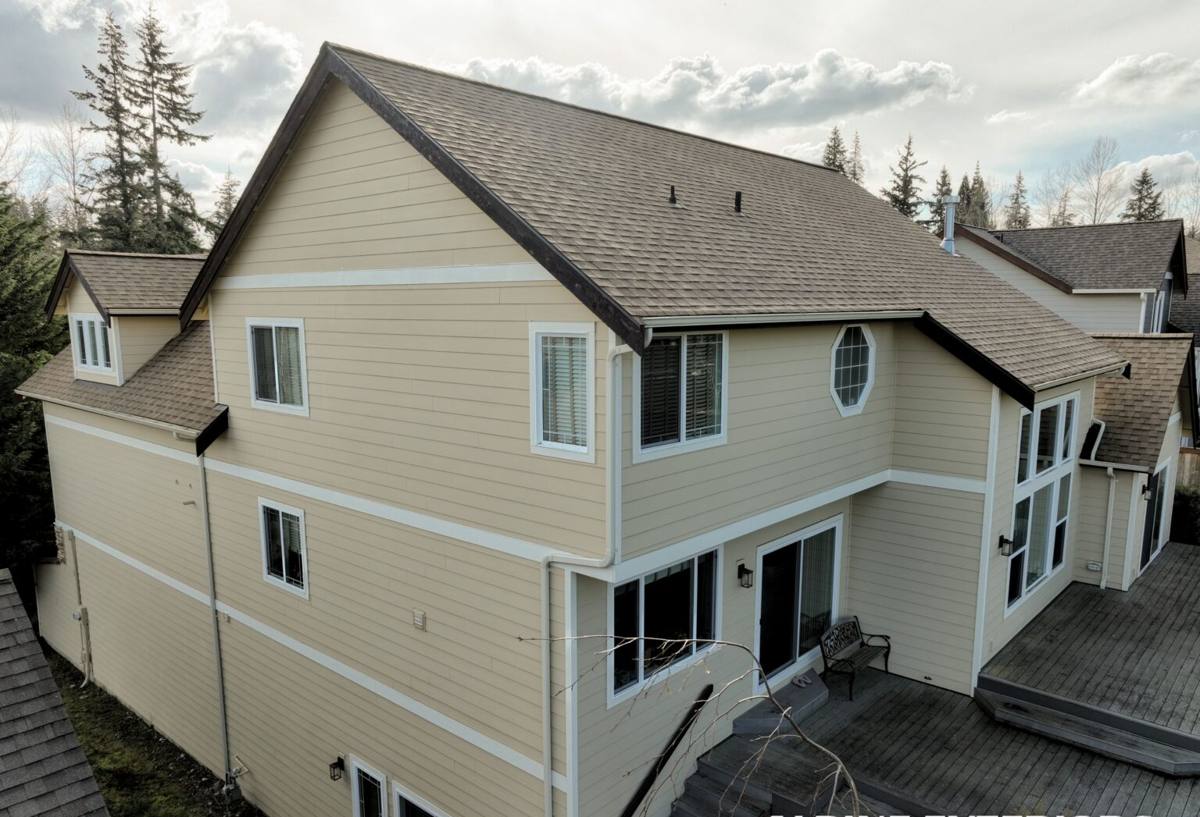
What Skagit County's Climate Does to a Deck Over Time
Three things drive almost every deck problem we see in this area:
Salt Air
Burlington isn't right on the water, but it's close enough that airborne salt reaches homes here, especially on days with wind off the Sound. Salt air accelerates corrosion in fasteners, joist hangers, and railing hardware. Standard zinc-coated screws and connectors can start rusting within a couple of seasons in this environment, and once a fastener corrodes, it loses holding strength long before it looks obviously bad.
Driving Rain
Skagit County gets a lot of rain, but it's the sideways, wind-driven rain that causes the real damage — it gets pushed under flashing, behind ledger boards, and into end-grain cuts that weren't sealed. Standing water on a deck surface is a visible problem; water that's found its way into the framing is the one that actually rots a deck from the inside.
Moss and Algae Season
Shaded decks, north-facing decks, and decks under tree cover in Burlington can stay damp for most of the year. That moisture supports moss and algae growth on the deck surface and on framing members that don't get airflow underneath. Beyond being slippery and unattractive, sustained moisture contact is what breaks down wood fiber and traps water against fasteners.
None of these are exotic problems — they're just consistent, year-round conditions that a deck built for a drier climate isn't designed to shed.
What a Correctly Built Deck Involves
A deck is really three systems working together: the structure (posts, beams, joists), the surface (decking boards, railings), and the water management (flashing, drainage, ventilation). Most visible deck failures start as a water management problem that was never addressed.
Ledger and Flashing
Where the deck attaches to the house is the single most common failure point we find on older Burlington decks. A ledger board without proper flashing lets water track behind it and into the house rim joist — a slow leak that can go unnoticed for years because it's hidden behind the decking. Correct flashing details, including a drip edge that directs water away from the wall rather than behind it, are not optional in this climate.
Framing Ventilation
Joists and beams need airflow underneath to dry out between rain events. Decks built low to the ground, or with skirting that blocks air movement, stay damp longer and are more prone to rot and moss growth on the structure itself, even if the surface boards look fine.
Fastener and Hardware Selection
Given the salt air exposure here, we use fasteners and structural connectors rated for coastal or high-corrosion environments rather than standard exterior-grade hardware. It costs more up front and makes no visible difference on installation day — the difference shows up five and ten years out, when the hardware hasn't rusted through.
Board Spacing and Drainage
Correct gapping between deck boards lets water pass through instead of pooling on the surface, and it matters more here than in drier climates simply because of how much rain the surface has to shed over a year.
Choosing a Decking Material for This Climate
There's no single "best" decking material — the right choice depends on the homeowner's budget, how much upkeep they want to do, and how exposed the deck is to sun, shade, and moisture. Here's how the common options actually perform in Burlington's conditions:
| Material | Moisture Performance | Maintenance | Typical Lifespan Here |
|---|---|---|---|
| Pressure-treated wood | Good if sealed and re-sealed regularly | Annual cleaning and re-sealing recommended | 15-20 years with upkeep |
| Cedar | Naturally moisture- and insect-resistant, but softer | Periodic cleaning and finish maintenance | 15-20 years with upkeep |
| Composite decking | Very good — doesn't absorb water like wood | Occasional washing; no sealing or staining | 25-30 years |
| PVC/cellular decking | Excellent — essentially non-absorbent | Lowest maintenance of the group | 25-30+ years |
Wood costs less to install but asks more of the homeowner in maintenance — and in a climate with this much sustained moisture, skipped maintenance shows up faster than it would in a drier region. Composite and PVC cost more up front but shrug off the rain and moss exposure with far less upkeep, which is why we see more homeowners in Skagit County moving that direction for decks that get heavy shade or are harder to reach for annual sealing.
We don't push one material on every homeowner. We'll walk the site, look at sun and shade exposure, ask how much maintenance you actually want to do, and give you an honest read on which material fits the budget and the spot.
Railings and Structural Hardware
Railings take a lot of direct weather exposure and structural load, and they're also where corrosion is most visible — streaking down the face of a deck from a rusting post base or baluster bracket is one of the most common complaints we hear from Burlington homeowners with older decks. We build railing systems using fasteners and connectors matched to the decking material and rated for the corrosion exposure here, and we pay close attention to post attachment, since a loose or under-built post base is a safety issue, not just a cosmetic one.
Our Process for a Burlington Deck Project
- Site visit and assessment. We look at sun exposure, drainage, existing structure (if it's a rebuild), and how the deck ties into the house.
- Design and material selection. We talk through layout, decking material, and railing style based on your budget and how you'll use the space.
- Permitting. Deck projects in Skagit County and within Burlington city limits typically require a permit depending on size and height — we handle that process as part of the project.
- Framing. Posts, beams, and joists are built to correctly handle the load and to allow airflow and drainage underneath.
- Flashing and water management. Ledger flashing and any transitions against the house are detailed before decking goes down, not treated as an afterthought.
- Decking and railing installation. Boards, fasteners, and railing hardware go in matched to the material and this climate's corrosion exposure.
- Final walkthrough. We go over the finished deck with you, including what maintenance (if any) the material you chose will need.
Maintenance Through Moss Season
Even a well-built deck needs some seasonal attention in this climate, and how much depends heavily on the material you chose. A basic yearly checklist for Burlington homeowners:
- Clear leaves and debris from between boards and along the house-side ledger before fall rains set in
- Check for moss or algae buildup on shaded areas and clean it off before it gets slick or holds moisture against the surface
- Inspect railing posts and stair connections for any looseness
- For wood decks, check the finish or sealer each spring and re-apply if water is no longer beading on the surface
- Keep gutters and downspouts near the deck clear so runoff isn't draining directly onto or under the structure
- Trim back overhanging branches that keep sections of the deck shaded and damp longer than necessary
Repair, Rebuild, or Replace?
Not every aging deck needs to be torn out completely. If the framing is sound and the problems are limited to surface boards, railings, or flashing, a partial rebuild can extend the life of a structurally good deck at a lower cost than starting over. The determining factor is almost always the condition of the framing and the ledger connection — if those have taken on water damage, patching the surface is a short-term fix that doesn't address the actual problem. We'll tell you honestly which category your deck falls into rather than defaulting to a full replacement quote.
Why Hire a Crew That Already Works in Burlington
A lot of the decisions that matter most on a deck project in this area — how much flashing detail a ledger really needs, which hardware actually holds up against the salt air, how low a deck can sit before airflow becomes a problem — aren't things you learn from a general construction manual. They're things you learn from building and later repairing decks in this specific climate, season after season. A crew that already works throughout Skagit County has seen which shortcuts cause callbacks five years down the road and builds around them from the start, rather than treating this coastal, wet climate as an afterthought to a standard build.
If you're planning a new deck or need to replace one that's showing its age, we're happy to come out, take a look, and give you a straightforward, no-pressure estimate. Use the form below to get started.