 Skagit County
 Metal Roofing in Cedardale: What Local Homes Actually Need
Cedardale sits close enough to the water and the tree line that its roofs take a specific kind of beating: salt-laden air drifting in off the Sound, long stretches of driving rain through the fall and winter, and a moss season that seems to start earlier every year. A roof that would hold up fine in a drier inland climate can struggle here if it's not detailed and installed with these conditions in mind. Metal roofing, done correctly, is one of the better answers to that combination — but "done correctly" is doing a lot of work in that sentence, and it's worth understanding what that actually means before you commit to it.
This page covers what a metal roof needs to hold up on a Cedardale home, what a correct installation actually involves, and how our process works from first look to final walk-through.
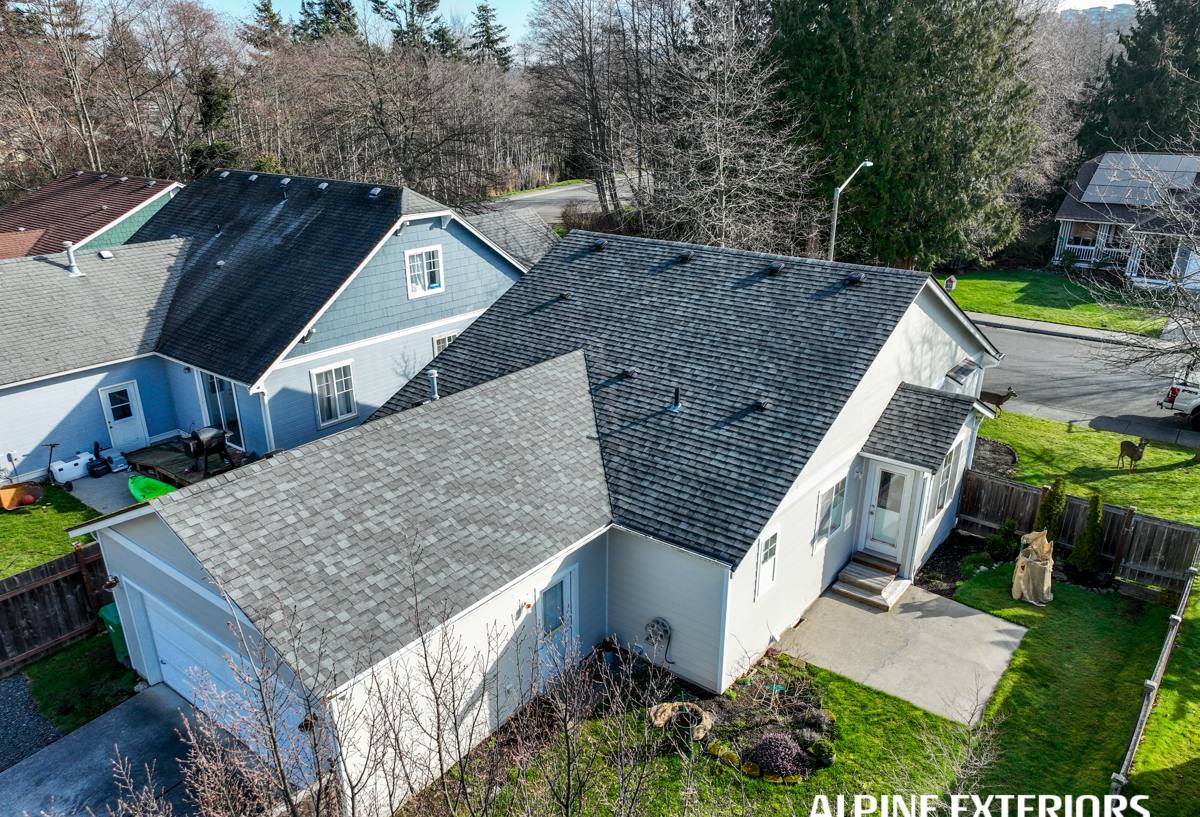
Why Cedardale's Climate Is Hard on Roofs
Salt Air and Corrosion
Homes closer to the water deal with airborne salt that settles on every exterior surface, roofing included. On metal roofing, this matters because not every metal, fastener, or coating handles salt exposure the same way. Bare or poorly coated steel, mismatched fasteners, and cut edges left unsealed are where corrosion tends to start. It's not usually the whole roof failing at once — it's a handful of weak points that were never protected properly in the first place.
Driving Rain and Wind-Driven Water
Skagit County gets plenty of straight-down rain, but the rain that causes problems is the kind that comes in sideways during a windstorm. That kind of weather pushes water uphill under laps, around penetrations, and into any seam that wasn't sealed or lapped correctly. A metal roof's watertightness depends almost entirely on how the panels, flashing, and fasteners were put together — the material itself is nearly waterproof, but the installation is what determines whether water actually stays out.
Moss, Shade, and Organic Debris
Cedardale's tree cover is part of what makes the area appealing, but overhanging branches mean shaded roof sections, trapped moisture, and a steady supply of needles and leaf litter. Moss doesn't damage metal panels the way it can damage some other roofing materials, but it does hold moisture against fasteners, flashing, and valleys, which accelerates wear at those points if debris isn't cleared periodically.
What a Correct Metal Roof Installation Involves
A lot of what separates a metal roof that lasts decades from one that causes headaches within a few years happens in details that aren't visible once the job is finished. On a Cedardale home, we pay particular attention to:
- Fastener selection — using fasteners rated for the specific panel metal and coated to resist the salt exposure common in this area, not generic hardware that corrodes faster than the panels around it.
- Underlayment — a proper synthetic or self-adhering underlayment beneath the panels as a secondary water barrier, especially important given how much wind-driven rain this area sees.
- Flashing at every transition — valleys, walls, chimneys, skylights, and roof-to-wall junctions are where most leaks originate, and each needs flashing sized and lapped correctly for the panel profile used.
- Panel overlap and seam direction — laps run with the prevailing weather pattern so wind-driven rain can't work its way underneath.
- Ventilation — proper intake and exhaust airflow so moisture doesn't get trapped under the panels, which matters more in a consistently damp climate like this one.
- Cut-edge treatment — any field-cut panel edges sealed or coated so bare metal isn't left exposed to salt air.
None of this is exotic. It's standard trade practice applied consistently, which sounds simple until you've seen how often it isn't.
Panel Types and What They Mean for a Cedardale Roof
Metal roofing comes in a few common formats, and the right choice depends on the home's roofline, budget, and how the owner weighs upfront cost against long-term maintenance.
| Panel Type | Typical Use | Coastal/Moisture Considerations |
|---|---|---|
| Standing seam | Concealed fasteners, clean lines, most residential roofs | Fewer exposed penetrations, generally the strongest option against wind-driven rain |
| Exposed-fastener panel | Budget-friendlier, common on outbuildings and some homes | Fastener gaskets wear over time and need periodic checking, especially with salt exposure |
| Stone-coated steel | Homes wanting a shingle or shake appearance | More seams and granule-coated surfaces; coating integrity matters for corrosion resistance |
| Aluminum panel | Homes closer to the water prioritizing corrosion resistance | Naturally resists salt-driven corrosion better than uncoated steel |
We'll walk through which of these makes sense for your specific roof and location rather than defaulting to one option for every job.
Common Failure Points We See on This Type of Roof
When we're called out to look at an existing metal roof in this area that's having problems, the issues tend to cluster around the same handful of causes:
- Mismatched fasteners that corrode faster than the roof panels around them
- Flashing that was undersized, poorly lapped, or sealed with caulk instead of properly formed and integrated
- Debris buildup in valleys and behind chimneys that traps moisture against the metal
- Panel seams running against the prevailing wind and rain direction
- Underlayment that was skipped or damaged during installation
Almost none of these are visible from the ground, which is part of why hiring a crew that understands the local weather pattern up front — rather than fixing it later — saves money in the long run.
Our Process for a Cedardale Metal Roof
1. On-Site Assessment
We look at the existing roof structure, decking condition, ventilation, and any problem areas — tree cover, shaded valleys, low-slope sections — that are specific to your property.
2. Material and Panel Recommendation
Based on the roofline, budget, and exposure, we'll recommend a panel type and finish suited to the property rather than a one-size-fits-all package.
3. Prep and Tear-Off (If Needed)
Old roofing is removed and the deck is inspected for rot or damage before anything new goes down — installing over a compromised deck just hides the problem.
4. Underlayment and Flashing
This is where most of the long-term performance is decided. We install underlayment and custom-formed flashing at every valley, wall, and penetration before a single panel goes up.
5. Panel Installation
Panels are installed with the correct overlap direction, fastener type, and spacing for the profile chosen, with cut edges sealed as we go.
6. Final Walk-Through
We review the finished roof with you, point out anything you should keep an eye on (like overhanging branches or debris-prone valleys), and answer any questions about maintenance going forward.
What Ongoing Maintenance Looks Like
Metal roofing is lower-maintenance than most materials, but "low-maintenance" isn't "no-maintenance," particularly in a climate like Skagit County's. A short seasonal checklist covers most of it:
- Clear needles, leaves, and moss from valleys and behind chimneys once or twice a year, especially under tree cover
- Trim back branches that overhang the roofline to reduce shaded, damp sections
- Have flashing and sealant points checked periodically, particularly after major windstorms
- Keep gutters clear so water isn't backing up against roof edges
- Watch for any rust streaking near fasteners, which can signal an early corrosion issue worth addressing before it spreads
Why Hiring Local Experience Matters Here
Metal roofing installation isn't unique to Cedardale, but the specific combination of salt air, wind-driven rain off the water, and heavy tree cover is a real regional variable. A crew that's used to installing on drier or more sheltered sites can still do competent work, but the details that keep a roof performing well here — fastener choice, flashing approach, seam orientation relative to prevailing weather — come from having actually worked on roofs in this kind of environment repeatedly. That's not a marketing point, it's just how trade knowledge accumulates: you get better at handling a specific climate's failure points by seeing them firsthand.
We work throughout Skagit County, including Cedardale, and we're glad to talk through what we've seen work and what tends to cause problems on homes in this area specifically.
Get a Straightforward Estimate
If you're considering a metal roof for your Cedardale home, or you want a second opinion on an existing one, we're happy to take a look and give you an honest read on what it needs. There's no pressure and no obligation — just a straight answer from a crew that works this area regularly. Fill out the form below to request a free estimate.