 Skagit County
 Windows in Concrete Face a Different Set of Problems
Concrete sits in the Skagit River valley, tucked against forested hillsides where rain lingers, humidity stays high through the shoulder seasons, and moss finds a foothold on anything that stays damp long enough. Add in the wider Skagit County pattern of driving rain and salt-tinged marine air moving up the valley from Puget Sound, and you get a climate that is genuinely hard on window assemblies. Wood trim swells and shrinks. Old caulk lines crack. Aluminum-frame windows from decades past go cold and drippy every winter. None of this is dramatic on its own, but over ten or twenty years it adds up to rot, drafts, and windows that just don't work the way they used to.
Window installation is one of those jobs that looks simple from the outside — pull the old unit, drop in the new one — but the difference between a window that lasts thirty years and one that starts leaking in three comes down almost entirely to what happens behind the trim, where nobody ever looks. That's the part we focus on.
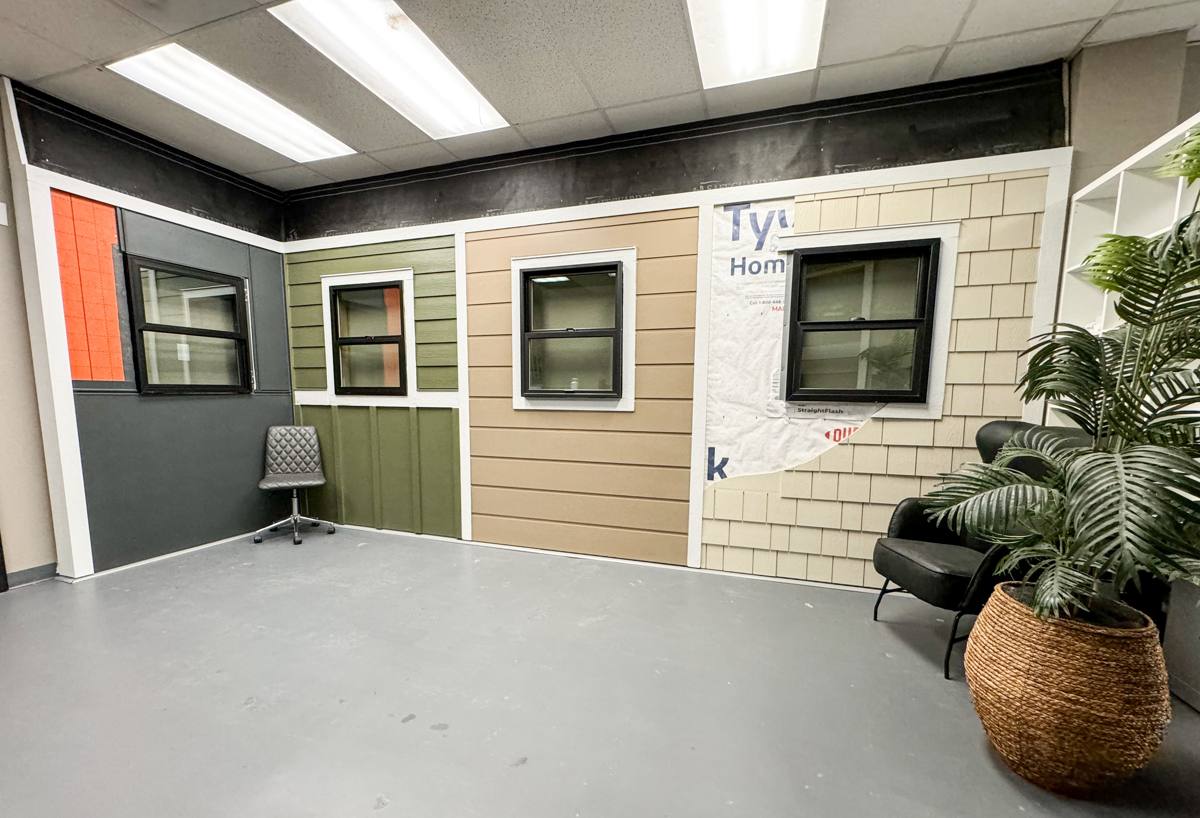
Signs a Concrete Home's Windows Need Attention
Homeowners in this area usually notice one or more of the following before they call:
- Condensation building up between the panes of a double-pane window — a sign the seal has failed
- Soft or discolored wood on the interior sill or exterior trim
- A draft you can feel standing next to the window on a windy day
- Windows that are difficult to open, close, or lock, often from swollen or warped frames
- Visible moss or dark staining on the exterior casing, especially on north- and west-facing walls
- Paint that keeps failing on the trim no matter how often it's repainted
Any one of these can be a minor fix. Several at once, especially on an older home, usually means the window and the flashing behind it are both past their service life.
What a Correct Window Installation Actually Involves
Most window failures we see in Skagit County aren't the window's fault — they're an installation problem. A window is only as good as the flashing and sealing system around it, and that system has to shed water the way roofing does: each layer overlapping the one below it so water always drains outward and down, never behind the housewrap.
Removal and Opening Prep
We remove the old unit carefully and inspect the rough opening before anything new goes in. This is where hidden damage shows up — rotted sheathing, soaked insulation, or framing that's been slowly absorbing moisture behind a failed seal. Any of that gets repaired before a new window goes anywhere near the opening. Installing a new window into a compromised opening just hides the problem for a few more years.
Sill Pan Flashing
A sloped, sealed sill pan at the bottom of the opening is non-negotiable in a climate like ours. It gives any water that does get past the window a way out instead of a place to pool. This is one of the most commonly skipped steps in budget installations, and it's usually the reason a "new" window starts showing rot within a few years.
Shingle-Style Flashing Sequence
Housewrap, flashing tape, and the window's nailing flange all need to layer in the correct order — bottom first, sides next, top last — so water always moves downward over the next layer, never underneath it. Done out of order, it can trap water instead of shedding it.
Sealing and Insulation
The gap between the window frame and the rough opening gets filled with low-expansion foam or backer rod and sealant, not just stuffed with fiberglass. Interior and exterior sealant beads are both necessary — one manages air and water intrusion from outside, the other manages interior air leakage and condensation control.
Choosing a Window Frame for This Climate
Frame material matters more here than in a drier inland climate, because whatever you choose is going to spend a lot of its life wet. Here's how the common options hold up under Concrete's rain and humidity pattern:
| Frame Material | Moisture Behavior | Maintenance | Typical Fit |
|---|---|---|---|
| Vinyl | Doesn't absorb water, won't rot; seams are the weak point if welds fail | Low — occasional cleaning | Most homes, best value |
| Fiberglass | Excellent — expands/contracts close to glass, very stable in wet-dry cycles | Low | Higher-end replacements, larger openings |
| Wood | Attractive but absorbs moisture; needs a sound paint or clad exterior to survive here | High — repainting, sealant checks | Historic or period-style homes only |
| Wood-clad (wood interior, vinyl/aluminum-clad exterior) | Good — exterior shell protects the wood from direct weather | Moderate | Homes wanting a wood interior look with better durability |
| Aluminum | Durable frame but conducts cold, prone to condensation and interior moisture issues | Low, but condensation can damage nearby wood/drywall over time | Generally not recommended for this climate |
For most homes in and around Concrete, we steer people toward vinyl or fiberglass for the exterior-facing durability, reserving solid or clad wood for homes where the look is part of the point and the owner understands the upkeep involved.
How Our Installation Process Works
The process is the same whether it's one window or a whole-house replacement:
- Walkthrough and measurement — we assess every opening individually; older homes rarely have perfectly uniform openings
- Product selection — frame material, glass package, and operating style matched to the opening, sun exposure, and your budget
- Careful removal — old units and trim come out without unnecessary damage to siding or interior finishes
- Opening inspection and repair — any rot or damage found gets fixed before the new window is set
- Sill pan and flashing installation — sloped pan flashing, then housewrap and flashing tape layered shingle-style
- Window setting and leveling — shimmed, squared, and fastened per manufacturer spec, which matters for warranty coverage
- Insulation and sealing — low-expansion foam or backer rod, then interior and exterior sealant
- Trim and finish work — interior and exterior trim reinstalled or replaced, caulked and painted to match
- Final walkthrough — every window operated, checked, and cleaned before we call it done
A Few Things Worth Checking Before You Hire Anyone
- Do they install a sloped sill pan on every opening, or only "if needed"?
- Will they show you the rough opening before it's covered back up?
- Is flashing tape and housewrap integration part of the quote, or is it "trim and caulk only"?
- Do they carry the right insurance and pull permits when the job requires one?
- Will the same crew that measures also be the crew that installs?
What Drives the Cost of a Window Installation
Every project is different, but the same handful of factors drive most of the price difference between jobs:
| Factor | Why It Matters |
|---|---|
| Number and size of openings | Larger and more openings mean more labor, flashing material, and disposal |
| Frame material and glass package | Fiberglass and upgraded low-E or triple-pane glass cost more than standard vinyl |
| Condition of the existing opening | Rot repair, resized openings, or structural work add time and material |
| Retrofit vs. full-frame replacement | Full-frame (removing exterior trim entirely) costs more but is often the right call on older siding |
| Access and site conditions | Second-story windows, steep lots, or limited access add labor time |
| Trim and siding tie-in | Matching existing trim profiles or repairing surrounding siding adds finish work |
We walk every job in person before quoting, because two houses with "the same size window" can have very different scopes once we see the actual opening and siding condition.
Why It Matters to Hire a Crew That Already Works in Concrete
Window installation done right isn't complicated, but it does require respecting how much moisture a home in this valley deals with over the course of a year. A crew that mostly works drier inland climates can get away with shortcuts that simply don't hold up here. We work throughout Skagit County, including Concrete and the surrounding river valley communities, and we build every installation around the assumption that it will spend a lot of its life wet — because it will. That means proper sill pans on every window, correct flashing sequencing, and sealant details that account for the freeze-thaw and wet-dry cycling this area sees through fall, winter, and spring.
We're also familiar with the older housing stock common in and around Concrete — homes with original wood windows, additions with mismatched siding, and openings that were never quite square to begin with. That local familiarity means fewer surprises once the old window comes out.
After Installation: Keeping Windows Performing Long-Term
A correctly installed window doesn't need much, but a little seasonal attention goes a long way in this climate:
- Check exterior caulk lines each fall before the wet season sets in; recaulk any cracked or separated joints
- Clear moss and debris from window sills and adjacent trim so water doesn't sit against wood surfaces
- Operate every window at least a few times a year to keep hardware and weatherstripping working properly
- Watch for condensation between panes, which signals a failed seal even if the frame itself is fine
- Keep gutters and downspouts clear so roof runoff isn't dumping extra water onto upper-story windows
If your windows in Concrete are showing their age or you're planning a remodel that includes new openings, we're happy to take a look and walk you through honest options — no pressure, no obligation. Reach out using the form below for a free estimate.