 Skagit County
 Windows Built for Conway's Delta Climate
Conway sits low in the Skagit River delta, close enough to Puget Sound and Skagit Bay that salt-laden air is part of daily life, not an occasional event. Add in wind-driven rain off the water, heavy fog that lingers in the low ground, and a moss season that stretches for months, and you've got a climate that is genuinely hard on windows. Frames corrode faster near the estuary, sashes swell and stick when humidity never really lets up, and cheap seals fail years before they would in a drier inland town. Homes here need windows selected and installed with that specific environment in mind, not a generic package pulled off a big-box shelf.
We work Conway and the surrounding Skagit County flats regularly, so this isn't theory for us — it's what we see on tear-outs. This page covers what actually matters for energy-efficient window replacement on a Conway home: material choices that hold up near salt air, the installation details that keep water out, and what our process looks like from estimate to final walkthrough.
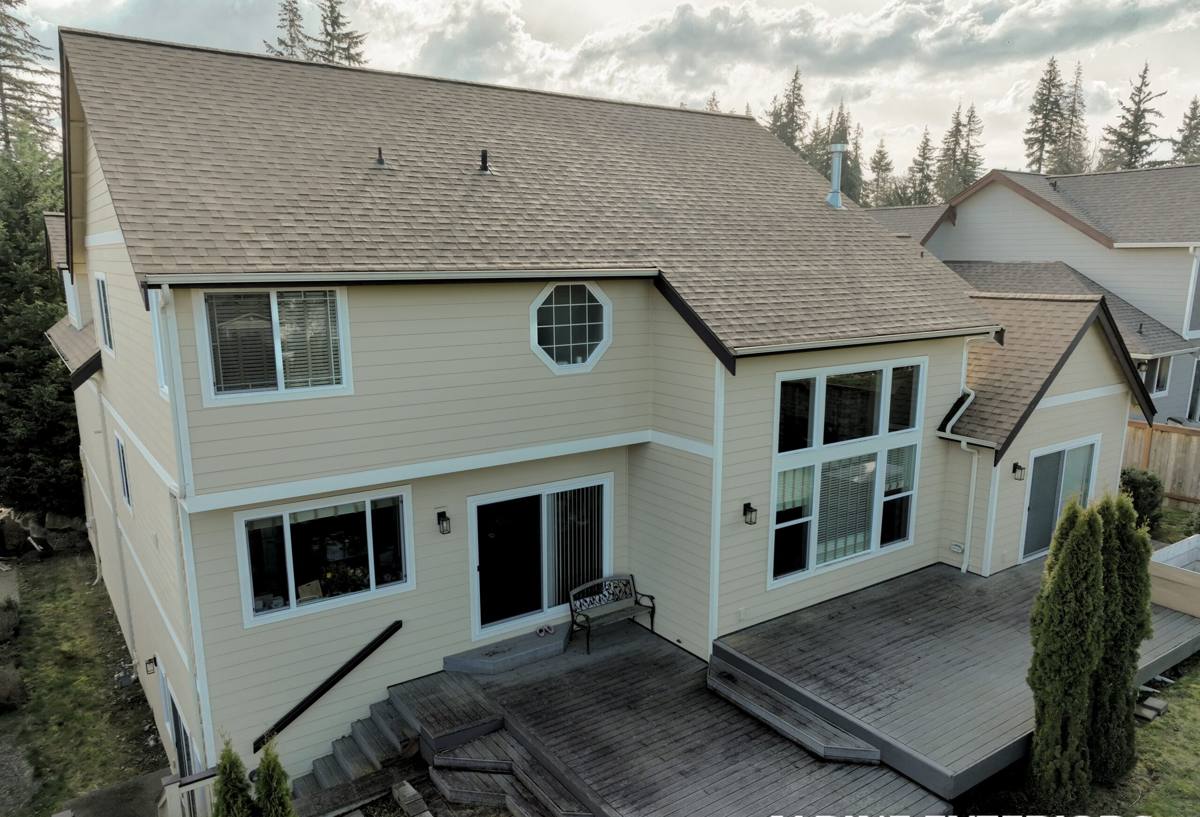
What Conway's Climate Does to Windows
Salt Air and Corrosion
Proximity to the Sound and the tidal reaches of the Skagit River means airborne salt is a real factor, especially on homes closer to the water or exposed to prevailing winds. Salt accelerates corrosion on unprotected metal hardware, pits certain aluminum finishes over time, and can degrade lower-grade weatherstripping faster than the manufacturer's spec sheet assumes. This isn't a reason to panic — it's a reason to be deliberate about hardware finish and frame material when you're spending money on a replacement that should last decades.
Driving Rain and Wind
Storms moving up the delta don't just drop rain straight down — wind pushes it sideways into wall assemblies and window openings. A window can be a fine product and still leak if the flashing, sill pan, and sealant details around it aren't done correctly for a wind-driven-rain climate. Most window failures we get called out to investigate in this area trace back to installation, not the window unit itself.
Moss, Mildew, and Prolonged Dampness
Skagit County's moss season is long, and it's not limited to roofs. Wood trim, sills, and any organic-material components around windows stay damp for extended stretches in fall through spring, which is exactly the environment mildew and rot organisms want. Window selection and detailing that ignore this reality end up needing repair or replacement well ahead of schedule.
What a Correct Energy-Efficient Window Job Looks Like Here
Frame Material
Vinyl and fiberglass frames generally handle Conway's damp, salt-influenced conditions better than bare wood or lower-grade aluminum, because they don't corrode and they resist moisture-driven rot. Fiberglass in particular holds paint and finish well over a long service life and moves less with temperature swings, which helps keep seals intact. Wood-clad options can still work if the cladding and flashing details are done right, but they demand more long-term maintenance in this climate than most homeowners want to sign up for.
Glass Package
Double-pane, low-E glass with an argon gas fill is the practical baseline for this region — it cuts heat loss through the glass and reduces condensation risk on cold, damp mornings, which are common here. Triple-pane is worth pricing out for north-facing rooms, rooms over unheated space, or homes where the owner wants to push efficiency and sound dampening as far as it goes, but it's not mandatory for every opening.
Hardware and Weatherstripping
Given the salt-air exposure, we favor hardware with corrosion-resistant finishes and avoid components known to pit or seize prematurely near coastal air. Weatherstripping quality matters more here than in a drier climate — it's doing more work, more often, holding back wind-driven rain rather than just sealing against temperature difference.
Installation Details That Actually Keep Water Out
- Properly sloped sill pan flashing so any water that gets past the exterior seal drains out, not into the wall
- Correct integration with the home's existing weather-resistive barrier (house wrap) — shingled, not just caulked over
- Quality sealant rated for the exposure, applied at the right joints — not everywhere, which can trap moisture
- Proper shimming and fastening so the frame doesn't rack or bow, which opens gaps over time
- Insulation in the gap between frame and rough opening — not stuffed, not skipped
Our Process for a Conway Window Project
1. On-Site Assessment
We walk the home, look at existing window condition, check for signs of past water intrusion or wood rot around openings, and note anything specific to the site — exposure direction, roof overhang depth, proximity to the water. This tells us which frame material and glass package actually make sense for that house rather than defaulting to one answer for every job.
2. Honest Estimate
You get a written estimate that breaks out material, labor, and any additional work the assessment turned up (rot repair, re-flashing, trim replacement). No pressure to upsell to triple-pane or premium hardware if standard double-pane low-E genuinely covers what the home needs.
3. Removal and Prep
Old units come out carefully to protect interior finishes and give us a clear look at the rough opening. This is when hidden rot or old flashing failures show up — better to find and fix them now than seal a new window over a problem.
4. Installation
New sill pan flashing, correct house wrap integration, proper shimming, and quality sealant at the right joints. This is the step that determines whether the window performs for twenty years or leaks in five, and it's where corner-cutting installers lose homeowners money down the road.
5. Final Check and Cleanup
We check operation, seal integrity, and interior/exterior trim before we call it done, and we clean up the job site.
Comparing Frame Materials for Conway Conditions
| Frame Material | Salt Air Resistance | Maintenance | Typical Fit for Conway Homes |
|---|---|---|---|
| Vinyl | Good — won't corrode | Low | Solid, cost-effective choice for most homes |
| Fiberglass | Very good — stable, corrosion-proof | Low | Strong option for higher exposure or long-term durability priority |
| Aluminum (standard) | Fair — can pit near salt air over time without proper finish | Moderate | Best reserved for specific finish grades and less-exposed locations |
| Wood / wood-clad | Fair — depends entirely on cladding and detailing | High | Works for owners committed to upkeep and specific aesthetic goals |
Why We Frame Our Standards the Way We Do
You'll notice we steer most Conway homeowners away from bare aluminum frames and unclad wood in higher-exposure spots. That's not a knock on those products in general — aluminum and wood both have legitimate uses in the right application. It's about matching material to this specific climate. Bare aluminum without the right finish is more prone to pitting near salt air, and wood demands a maintenance commitment — repainting, recaulking, watching for rot — that a lot of busy homeowners underestimate until it's already a problem. We'd rather set that expectation up front than sell something that looks fine on install day and causes a callback in year six.
Cost Factors for a Conway Window Project
| Factor | Why It Moves the Price |
|---|---|
| Number and size of openings | More or larger windows means more material and labor |
| Frame material | Fiberglass generally costs more upfront than vinyl; both outperform low-grade options long-term |
| Glass package | Triple-pane and specialty coatings add cost over standard double-pane low-E |
| Existing rot or flashing repair | Discovered during removal — fixing it right adds labor but protects the new install |
| Access and site conditions | Second-story openings, tight landscaping, or limited access affect labor time |
Signs It's Time to Replace, Not Repair
- Visible condensation or fogging between panes (seal failure)
- Frames that are soft, discolored, or show corrosion at hardware points
- Drafts you can feel even with the window fully latched
- Sashes that stick, won't stay open, or are difficult to operate
- Rot or staining in the sill or surrounding trim
- Noticeably higher heating bills with no other explanation
Working With a Crew That Knows This Ground
A crew that installs windows in Conway and the rest of Skagit County regularly knows what the salt air, the rain, and the moss actually do to a house over time — it changes which materials get recommended and how the flashing detail gets handled, because we've seen what happens when those details are skipped. That local pattern recognition is worth more than a lower bid from a crew unfamiliar with this specific stretch of the delta.
If you're weighing a window replacement for your Conway home, we're happy to take a look and give you a straight, no-pressure estimate — just fill out the form below.