 Skagit County
 Building New in Hamilton? The Window Install Has to Match the Climate
Hamilton sits along the Skagit River corridor, in a part of Skagit County that sees serious annual rainfall, long stretches of overcast humidity, and a moss season that can run most of the year on north-facing walls. When you're framing a new home or an addition out here, the windows aren't just a design choice — they're one of the first lines of defense against moisture getting into the wall assembly. Get the window opening wrong at the framing stage, and you're not fixing a cosmetic problem later. You're fixing rot.
New-construction windows are different from replacement windows in one important way: they have a nailing fin that ties directly into the house wrap and sheathing before siding goes on. That means the window installer and the sequence of work around them matters as much as the window itself. In Skagit County, where driving rain off the Sound and river-valley humidity both come into play, that sequencing is where most long-term water problems start — or get prevented.
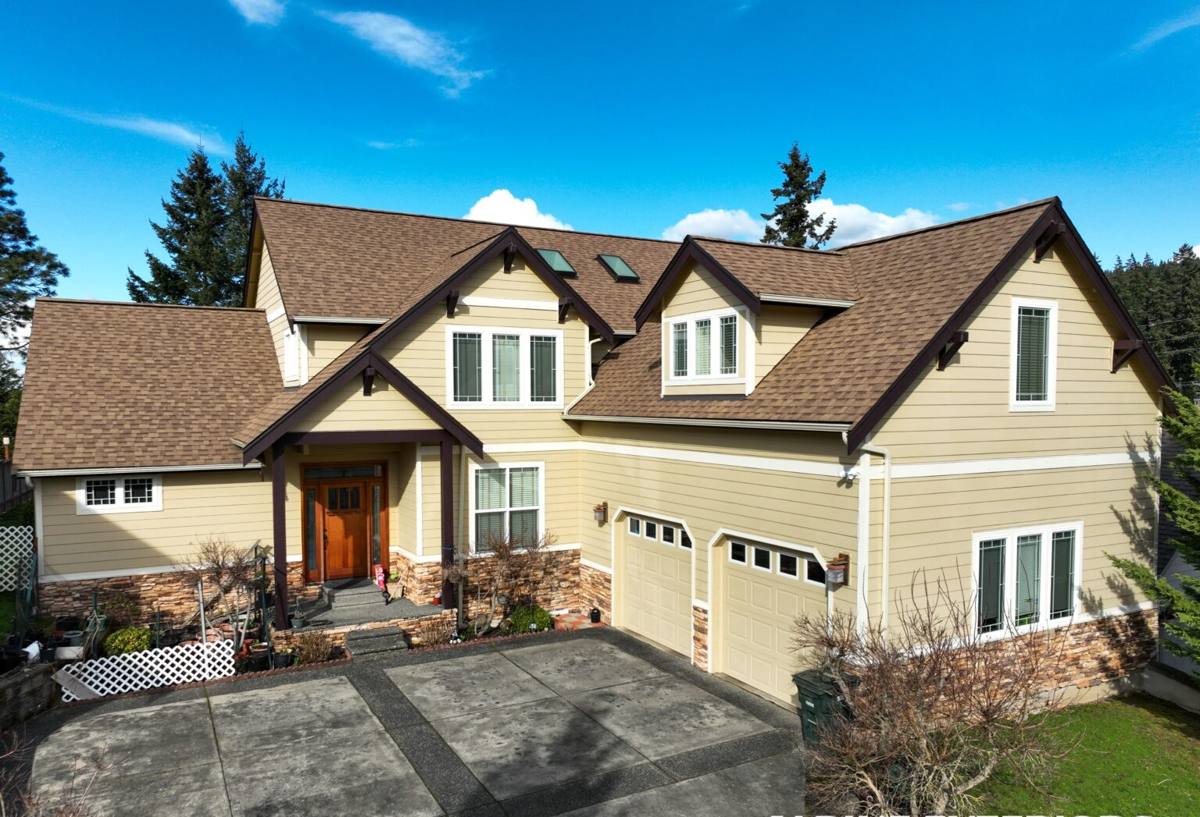
What Skagit County Weather Actually Demands From a Window Install
We work new-construction jobs across Skagit County, from saltwater-influenced shoreline exposures to inland river valleys like Hamilton, and the demands are consistent even where the specific exposure differs:
- Wind-driven rain resistance — Pacific storms push rain sideways, not just down, so flashing has to shed water even when it's hitting the wall at an angle.
- Sustained moisture exposure — long wet seasons mean any gap in the water-resistive barrier around a window opening stays wet for months, not days.
- Moss and biological growth — shaded, north- and east-facing walls in tree-covered lots (common around Hamilton) hold moisture longer, so drainage details around the window sill matter more than they would in a drier climate.
- Temperature swings and condensation — cold mornings followed by damp afternoons create condensation risk on the interior face of poorly rated glass, especially in newer, tighter homes.
None of this is exotic. It's standard Pacific Northwest building science. But it only works if the person setting the window and taping the flashing actually does it in the right order, every time — not just on the walls that are easy to reach.
New-Construction vs. Replacement Windows — Which One Is This Project?
We get asked this a lot on additions and remodels in Hamilton, because the terms get used loosely. The distinction changes the whole install method.
| Factor | New-Construction Window | Replacement (Insert) Window |
|---|---|---|
| Has a nailing fin | Yes — fastens to sheathing | No — fits inside existing frame |
| Typical use | New builds, additions, full wall openings | Swapping out an existing window, frame stays |
| Water management | Integrated with house wrap/WRB and flashing tape | Relies on existing frame and old flashing (if intact) |
| Best for | Framing-stage projects, full siding tear-offs | Occupied homes, siding staying in place |
| Rough opening work | Sized and flashed during framing | Minimal — uses existing rough opening |
If your project is a new build, a room addition, or a full siding tear-off in Hamilton, new-construction windows are almost always the right call — they give the best long-term water management because they tie directly into the drainage plane instead of sitting inside an older frame.
What a Correct New-Construction Window Installation Involves
This is the part that actually determines whether the window performs for the next 20-30 years. A correct install, in order, looks like this:
- Rough opening is checked for square, level, and correct dimensions before the window ever shows up on site.
- A sloped sill pan is installed at the bottom of the opening so any water that gets past the window has somewhere to drain — out, not into the wall.
- House wrap or WRB is lapped correctly around the opening before the window goes in, following proper shingle-style layering (each layer overlapping the one below it).
- The window is set, leveled, and fastened through the nailing fin per the manufacturer's schedule — not just tacked in a few spots.
- Flashing tape is applied at the sides first, then the top, in the correct order so water is always directed outward and downward.
- The window is shimmed and checked for square again after fastening, since a racked frame binds the sash and wears out hardware early.
- Insulation and interior air-sealing are completed around the frame before siding or interior trim goes on.
Skip the sill pan or flash the sides before the head instead of after, and the window can look perfectly fine for years while water is quietly getting behind it. That's the failure mode we see most often when we're called in on a Hamilton-area home built or added onto without a dedicated window crew.
Choosing Window Type and Materials for This Climate
Skagit County's rain and humidity don't demand an exotic window — they demand a well-built one, matched to the exposure of each wall.
Frame material
Vinyl remains the most common and cost-effective choice for new construction here, and modern vinyl frames handle sustained moisture well. Fiberglass frames cost more but resist expansion and contraction better across our temperature swings, which matters most on larger picture windows or south-facing walls that see more direct heat. Wood-clad windows look great but require more diligence on finish maintenance in a climate this wet — we'll walk you through that trade-off honestly rather than push a product that adds upkeep you weren't expecting.
Glass and performance ratings
For this climate, we pay attention to two numbers more than most others: U-factor (heat loss — lower is better in our wet, cool winters) and condensation resistance rating. Double-pane, low-E glass with argon fill is standard for new construction in Skagit County and performs well against both heat loss and interior fogging.
Drainage-conscious hardware
On new construction, we also make sure sill design and weep systems are appropriate for a wall that may stay damp for days at a time during a long November rain event — not just rated for an occasional shower.
Our Process for Hamilton New-Construction Window Projects
- On-site walkthrough — we look at your rough openings, wall orientation, and exposure (tree cover, sun, prevailing wind) before recommending anything.
- Honest product recommendation — matched to your budget and each wall's actual exposure, not a one-size-fits-all package.
- Coordinated sequencing — we work with your framer or general contractor so windows go in at the right point in the build, with WRB and flashing done correctly the first time.
- Installation — sill pans, shingle-lapped flashing, proper fastening schedule, and a final square-and-level check.
- Walkthrough and documentation — we show you what was done at each opening so you have a record for future maintenance or resale.
Common Mistakes We See on New-Construction Window Jobs
Most of the water problems we get called about in this climate trace back to a handful of repeatable mistakes:
- No sill pan, or a flat sill pan that doesn't actually drain.
- Flashing taped in the wrong order (head before sides), which reverses the intended water path.
- House wrap cut and taped around the opening after the window is already set, instead of integrated during install.
- Nailing fins only partially fastened to save time, leaving the window able to flex in wind-driven rain.
- Interior air-sealing skipped, leading to condensation and drafts even with a good window.
Cost Factors for New-Construction Windows in Hamilton
| Factor | Why It Affects Cost |
|---|---|
| Frame material (vinyl, fiberglass, wood-clad) | Material and long-term maintenance cost trade-offs |
| Window size and configuration | Larger openings and multi-unit combinations cost more per unit |
| Number of openings | Volume pricing typically lowers per-window cost |
| Wall exposure | High-exposure walls may warrant upgraded flashing details |
| Access and site conditions | Tree cover, slope, or staging constraints common on wooded Hamilton lots |
| Coordination with framing schedule | Tighter builder timelines can affect scheduling and labor cost |
We'll give you a real, itemized number once we've seen the openings and talked through your priorities — not a ballpark pulled from a national average that doesn't account for our climate or your specific build.
Why a Local Skagit County Crew Matters for Hamilton Projects
A crew that works across Skagit County regularly — from saltwater-exposed shoreline homes to inland river-valley builds like Hamilton — has already seen how this specific climate behaves against a wall over multiple seasons, not just on install day. We know which orientations hold moss longest, which exposures need extra attention on flashing detail, and how to sequence window installs around a framing crew's schedule without slowing the job down. That local pattern-recognition is the difference between a window that looks right today and one that's still performing correctly ten wet winters from now.
If you're planning a new build or addition in Hamilton and want windows installed the right way from the start, we're happy to walk your site, look at your rough openings, and give you a straightforward, no-pressure estimate. Use the form below to get started.