 Skagit County
 Building New in Lyman? Get the Windows Right the First Time
New construction is the one chance to install windows correctly from the studs out, before siding, trim, and interior finishes cover up the details that determine whether a window performs for twenty years or starts leaking in five. In Lyman and the surrounding Skagit County river valley, that first-time-right installation matters more than in drier climates. Long stretches of driving rain, a marine-influenced air mass moving up the valley, and a moss season that can run half the year all put steady pressure on the building envelope. A window opening that's flashed and sequenced correctly shrugs that off. One that isn't will show it, usually behind the wall where you can't see it until there's damage.
We work new-construction window installs throughout Skagit County, including homes and additions going up in Lyman, and we approach every rough opening the same way: as a water-management system first, and a window second.
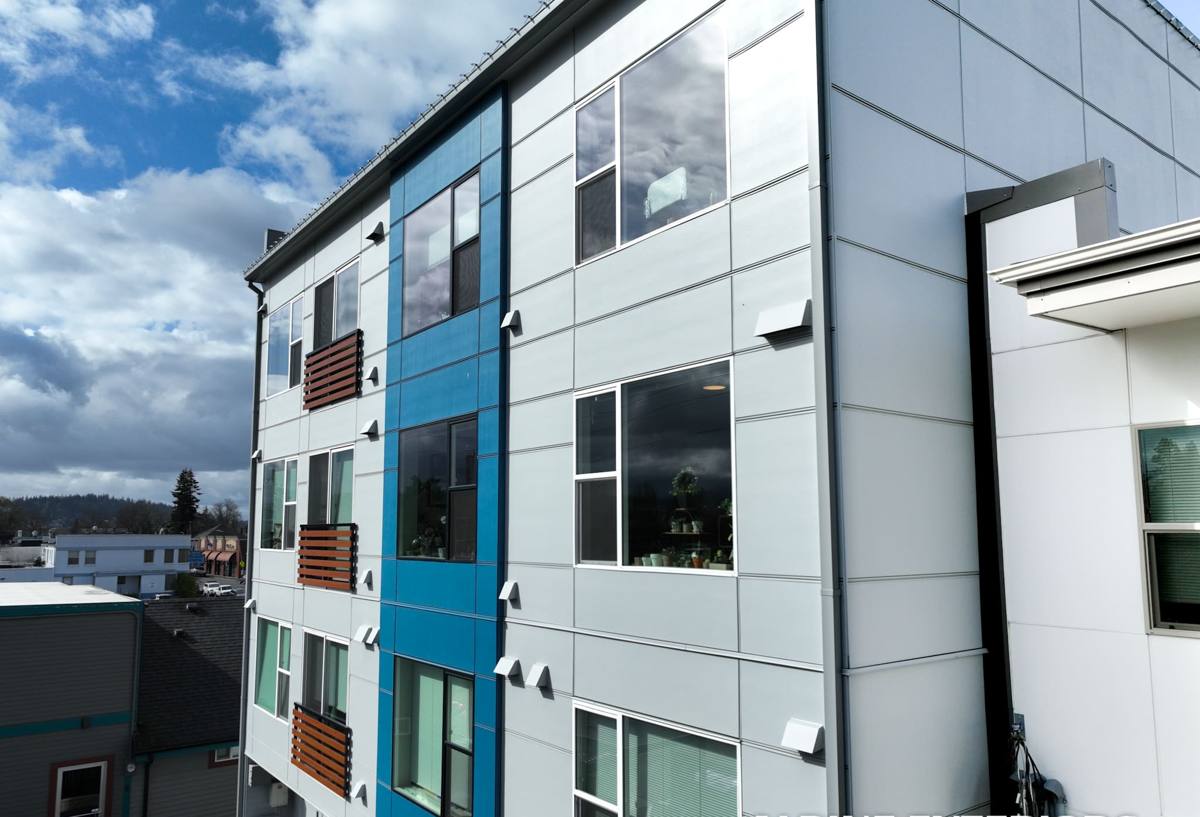
What Lyman's Climate Actually Demands From a Window Install
Lyman sits inland from the coast along the Skagit River corridor, but it still sits inside the same wet, temperate weather pattern that defines this whole county — long rainy stretches from fall through spring, humid air off the water, and enough shade and moisture on the north and tree-covered sides of a lot to keep surfaces damp for extended periods. That combination creates two real risks for new construction:
- Wind-driven rain intrusion — Rain here doesn't just fall straight down; it gets pushed sideways into wall assemblies during storms, which is exactly the condition that exposes a sloppy flashing job.
- Sustained moisture and moss growth — Shaded elevations and north-facing walls stay damp longer, and a poorly sealed opening gives moisture a place to sit against wood framing instead of shedding away.
Neither of these is solved by a better window alone. A premium window installed with a poor flashing sequence will fail the same way a builder-grade window will — the water gets behind it either way. The install is what protects the framing, not the glass.
What a Correct New-Construction Window Install Involves
On new builds, the window goes in before siding but after the weather-resistant barrier (house wrap or equivalent) is on the sheathing. That order matters. Done right, water that gets past the window's exterior trim or siding is directed back out over the barrier, never into the wall cavity. Done out of order, or with shortcuts, water gets trapped exactly where you don't want it.
The sequence we follow on every rough opening
- Rough opening check — confirm the opening is square, plumb, and sized correctly before the window ever goes near it. Fixing framing errors after the window is set is expensive and rarely done well.
- Sill pan flashing — a sloped, sealed pan at the bottom of the opening so any water that reaches the sill drains outward, not down into the wall.
- Weather barrier integration — the house wrap is cut and lapped in the correct shingle-style order (bottom to top) so the window flashing tucks under the barrier above it and laps over the barrier below it. This is the single most common mistake we find corrected on other builders' work — get the lap order backwards and you've built a funnel instead of a drain path.
- Window setting and fastening — set to manufacturer spec, shimmed correctly so the frame isn't racked or bowed, which affects both weatherproofing and how smoothly the window operates for years.
- Side and head flashing — taped or flashed at the jambs and head, again respecting proper lap order, tying back into the weather barrier above.
- Interior and exterior sealant — appropriate sealants at the right joints, not everywhere — over-sealing can trap moisture just as badly as under-sealing.
- Final inspection before siding covers it up — this is the last point anyone can verify the flashing is right. Once siding goes on, it's hidden for the life of the house.
Choosing Windows for a Lyman New Build
Product choice matters, but less than people expect — installation quality is the bigger variable in wet climates. That said, a few practical factors are worth weighing at the design stage:
| Factor | Why it matters in Skagit County |
|---|---|
| Frame material | Vinyl and fiberglass resist moisture-related swelling and rot better than untreated wood in a persistently damp climate; clad-wood options offer a wood interior look with a protected exterior face. |
| Sill design | Sloped, drainable sill design sheds wind-driven rain instead of pooling it against the frame. |
| Glazing / U-factor | Double- or triple-pane low-E glass helps with the region's cool, damp winters and keeps condensation down on interior glass during cold snaps. |
| Exterior finish/color | Darker exterior finishes and shaded elevations hold moisture and organic growth longer — factor that into finish choice and any planned overhangs. |
| Manufacturer flashing compatibility | Some window lines have proprietary flashing fins or nailing flange profiles that need matching tape or flashing products — mixing incompatible systems is a common source of failed seals. |
We don't push a single brand as the only right answer for every project. What we do insist on is that whatever window goes in has documented, manufacturer-approved installation instructions, and that we follow them — because warranty coverage on the window itself is usually tied to installation meeting that spec.
Coordinating Windows With Siding and Trim
New-construction windows aren't installed in isolation — they're one step in a sequence that includes the weather barrier, siding, and exterior trim. Problems show up when trades work out of order or don't communicate: siding installed before window flashing is finished, trim that covers flashing laps before they're inspected, or a siding crew that doesn't know how the window flashing was detailed and caulks over something that should have been left to drain.
Because we handle siding work across Skagit County as well, we plan the window install with the full wall assembly in mind — what siding is going on, how the trim details work, and where the drainage plane needs to stay continuous from foundation to roofline. That coordination is harder to get right when the window installer and the siding crew are two unrelated companies working off different assumptions.
Why Local Experience on Lyman Builds Matters
Lyman's building lots vary — some open and exposed to weather moving up the valley, others tucked under tree cover with more shade and slower drying. A crew that's worked new construction throughout Skagit County has already seen both conditions and adjusts details accordingly: extra attention to drainage on shaded, slow-drying walls; extra attention to wind-driven rain on more exposed elevations. That's the kind of judgment that doesn't come from a spec sheet — it comes from having installed windows on enough local builds to know where this region's weather actually finds the weak points.
We also know the practical side of building in this area — working around county inspection scheduling, coordinating with general contractors and other trades on a build timeline, and getting window rough openings ready and inspected before the schedule moves on to siding.
What to Check Before You Sign Off on a Window Install
Whether you're a homeowner working with a general contractor or building direct, here's a practical checklist for your new-construction window install:
- Sill pan flashing installed and sloped to drain outward, not just caulked flat
- Weather barrier laps confirmed in correct shingle order (upper layers over lower layers) at the window opening
- Manufacturer installation instructions followed for fastening and shimming — ask to see them if unsure
- Flashing tape or materials compatible with both the window manufacturer's flange and the weather barrier product
- Window checked for square and smooth operation before siding closes in around it
- Photos or documentation of the flashing details taken before they're covered by siding
- Written warranty terms reviewed — many window warranties require proof of correct installation
Timing the Window Install in a Skagit County Build Schedule
Weather windows matter for new construction here. Framing and window installation ideally happen during a stretch of manageable weather so the opening isn't sitting exposed during a heavy rain event before the weather barrier and flashing are complete. In practice, builds don't always get to pick their weather, which is part of why sequencing and having materials staged and ready matters — minimizing the time a rough opening sits unprotected reduces risk regardless of the season. We plan window delivery and install around the framing schedule so there's no unnecessary exposure gap.
Get a Straightforward Estimate
If you're building new in Lyman or planning an addition that includes new window openings, we're glad to walk the plans or the site with you and talk through what the install will actually involve — no pressure, no hard sell. Use the form below to request a free estimate and we'll follow up to schedule a time that works.