 Skagit County
 March Point sits out on its own peninsula between Fidalgo Bay and Padilla Bay, just outside Anacortes, and that setting puts extra load on every roof out there. Homes here take on wind and moisture from more than one direction at once, and the combination of salt air, driving rain, and a long moss season that defines Skagit County weather shows up on March Point roofs earlier and more consistently than it does a few miles inland. Roof repair on this peninsula isn't a smaller version of roof repair anywhere else — it's a different set of failure points, and it calls for a crew that already understands them before the first ladder goes up.
Why March Point Roofs Fail Differently
Most roof problems start small and stay hidden until they aren't. On a sheltered inland lot, a lifted shingle or a slightly worn flashing seam might sit for years without causing real damage. On March Point, the same weak point gets tested by wind-driven rain almost every season — rain that's pushed sideways by wind instead of falling straight down, which means it can work its way up and under roofing material at edges, valleys, and flashing joints that would stay dry in calmer conditions. Salt-laden air off the surrounding water also speeds up corrosion on fasteners, drip edge, and any exposed metal flashing, which is a slower process most homeowners never think about until a repair reveals how much thinner the metal has gotten.
Add in moss. Western Washington's long wet season lets moss get a foothold on almost any roof that isn't regularly cleared, and a peninsula location with more shade variation and consistent moisture keeps that moss actively growing longer into the year than it would on a drier, more exposed slope. Moss holds water against the roofing surface, and over time it works its way under shingle tabs and lifts them just enough to let water in during the next windstorm.
The Three Things We Check First
When we get a repair call on March Point, we start in the same three places almost every time, because that's where this location's specific stressors do the most damage:
- Valleys and roof-to-wall transitions, where wind-driven rain concentrates and flashing takes the most abuse
- Any exposed metal — flashing, fasteners, vent boots — for early corrosion from salt air exposure
- Moss coverage and how far it's advanced under shingle edges, not just how visible it is from the ground
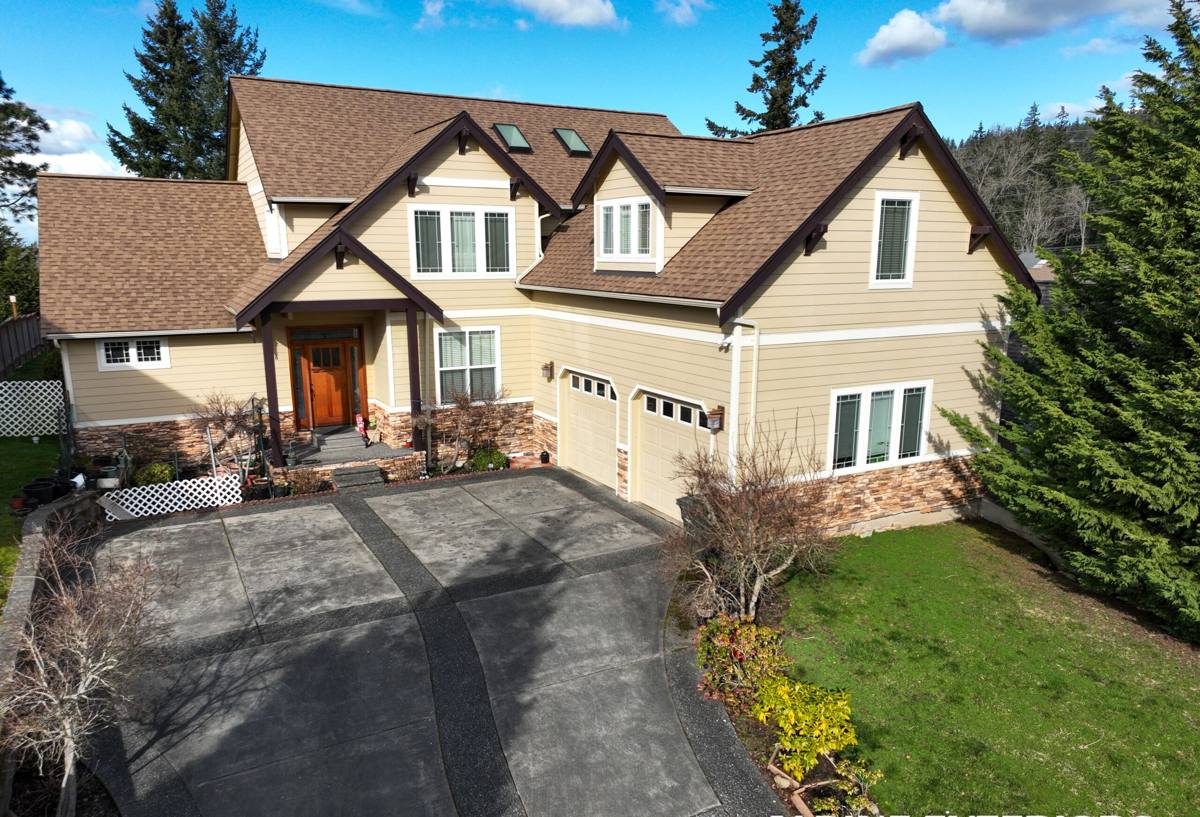
What a Correct Repair Actually Involves
A roof repair that holds up on an exposed peninsula site isn't just swapping out the shingles that are obviously damaged. The visible damage is usually the last symptom, not the first cause. A proper repair traces the problem back to its source — a flashing lap that's failed, an underlayment tear, a vent boot that's cracked and let water track sideways under the field of the roof before it ever showed up as a stain on the ceiling below.
Steps We Follow on Every Repair
- Inspect beyond the damaged area — check adjacent shingles, flashing, and decking for moisture that's traveled from the original point of entry
- Confirm the underlayment underneath is intact where it's exposed, and replace any section that's compromised
- Re-lap and properly seal flashing at valleys, chimneys, and wall transitions rather than just caulking over an existing gap
- Use fasteners and flashing rated for coastal/marine-adjacent exposure, not standard-grade hardware that corrodes faster in this air
- Match shingle color and profile as closely as possible so the repair doesn't stand out or create a new water-shedding seam
- Clear moss from the repaired area and the surrounding roof plane, since leaving it in place undermines the repair almost immediately
Skipping any of these steps doesn't necessarily cause an immediate failure — it just means the same repair call happens again in a year or two, usually for more money than it would have cost to do it right the first time.
Reading the Warning Signs Before They Become a Leak
Most roof damage on March Point doesn't announce itself with a dramatic leak. It shows up as smaller signals that are easy to write off, especially from ground level. Granules collecting in gutters mean the shingle surface is wearing down faster than it should. Dark streaking that isn't just surface moss can indicate algae or moisture retention that's been going on for a while. Soft spots near chimneys, vents, or skylights usually mean water has already reached the decking underneath, even if there's no visible stain inside the house yet.
| Sign | What It Usually Means | Urgency |
|---|---|---|
| Granules in gutters/downspouts | Shingle surface wearing down, reduced UV and rain protection | Schedule an inspection soon |
| Thick moss on north-facing slopes | Moisture held against shingles, tabs starting to lift | Address before next wet season |
| Rust streaking near flashing or fasteners | Metal corroding from salt air exposure | Inspect promptly, before it fails |
| Soft or spongy spot underfoot near a penetration | Decking has likely already absorbed water | Repair as soon as possible |
| Interior ceiling stain or musty odor | Water has reached the interior, damage is active | Urgent — schedule immediately |
Repair or Replace: What Actually Factors In
Not every roof problem on March Point needs a full replacement, and we're not going to tell you it does just because the location is a harder climate. The honest answer depends on the roof's age, how much of it is affected, and whether the damage is isolated or systemic.
What Points Toward a Repair
If the roof is under roughly 15 years old, the damage is confined to one section — a valley, a single flashing point, one area of moss-related lifting — and the decking underneath is still sound, a targeted repair is usually the right call. A well-executed repair on an otherwise healthy roof can add years of reliable service without the cost of a full tear-off.
What Points Toward Replacement
If a roof is already near or past its expected service life, if moisture has spread across multiple sections rather than staying isolated, or if we find decking that's soft or delaminating in more than one spot, patchwork repair stops making financial sense. At that point we'll say so directly, because continuing to repair a roof that's failing systemically usually costs more over a few years than doing the replacement once.
Materials That Hold Up on This Peninsula
When a repair calls for replacement shingles, flashing, or fasteners, what we use matters as much as how it's installed. On a site with this much salt air and wind-driven rain exposure, we lean toward heavier architectural shingles over basic three-tab product, corrosion-resistant flashing and fastener hardware, and underlayment rated for the sustained moisture this area sees. These aren't premium upsells — they're the baseline we think a March Point roof needs to actually last, and we'd rather spec it that way from the start than have a homeowner pay for the same repair twice.
Why Local Experience on This Peninsula Actually Matters
A roofing crew that mostly works drier, more sheltered neighborhoods can do fine work and still miss what's specific to March Point. Knowing to check valleys and wall transitions first because that's where wind-driven rain concentrates, knowing which fastener grade actually holds up against this air, knowing how aggressive the moss season gets on a shaded north slope out here — that comes from having worked this exact stretch of coastline repeatedly, not from a general roofing background applied to a new zip code. We work throughout Skagit County, and March Point is one of the areas where we've seen firsthand what a rushed or generic repair looks like a year later, and what a properly done one looks like instead.
What to Ask Before Hiring for Roof Repair Here
- Ask whether they've worked specifically on March Point or similarly exposed peninsula properties, not just Skagit County broadly
- Confirm they inspect beyond the visibly damaged area before quoting a repair
- Ask what fastener and flashing grade they use, and whether it's rated for salt air exposure
- Get a clear, written answer on whether they think the roof needs a repair or a replacement, and why
- Confirm licensing, bonding, and insurance for roofing work in Washington
- Ask how they handle moss removal as part of the repair, not as a separate upsell
What This Means for Your Roof
Every roof on March Point sits a little differently relative to wind exposure, tree shade, and how it's aged, so the right call — repair, partial replacement, or full replacement — depends on the actual condition of your specific roof, not a blanket rule for the area. We're not going to recommend a full replacement when a targeted repair will genuinely hold, and we're not going to patch a roof that's failing across multiple sections just to avoid a harder conversation. If you've noticed granule buildup, moss that's gotten ahead of you, or a soft spot near a vent or chimney, it's worth having it looked at before the next wind-driven rain event finds the gap.
If you'd like an honest read on what your March Point roof actually needs, reach out for a free, no-pressure estimate. We'll take a look, explain what we find in plain terms, and give you options that fit the roof and the budget — no pressure either way.