 Skagit County
 Why Mount Vernon Homes Are Hard on Siding
Mount Vernon sits in the middle of Skagit County's river valley, close enough to Puget Sound and the Skagit River delta that homes here deal with a specific combination of weather stresses most siding products were never designed around. There's salt-laden air moving in off the Sound, long stretches of driving rain through fall and winter, and a moss season that can run for months when temperatures stay cool and surfaces stay damp. None of these things alone is unusual for Western Washington. Together, applied year after year to the same wall assembly, they expose weaknesses in siding materials and installation shortcuts faster than a drier, milder climate would.
We've replaced siding on enough homes around Skagit County to see the pattern clearly: failures rarely come from one dramatic event. They come from small gaps in flashing, caulk used where a proper overlap should have been, or a siding product that swells, delaminates, or holds moisture against the wall. By the time a homeowner notices soft trim, peeling paint, or a musty smell near an exterior wall, the damage has usually been building for years.
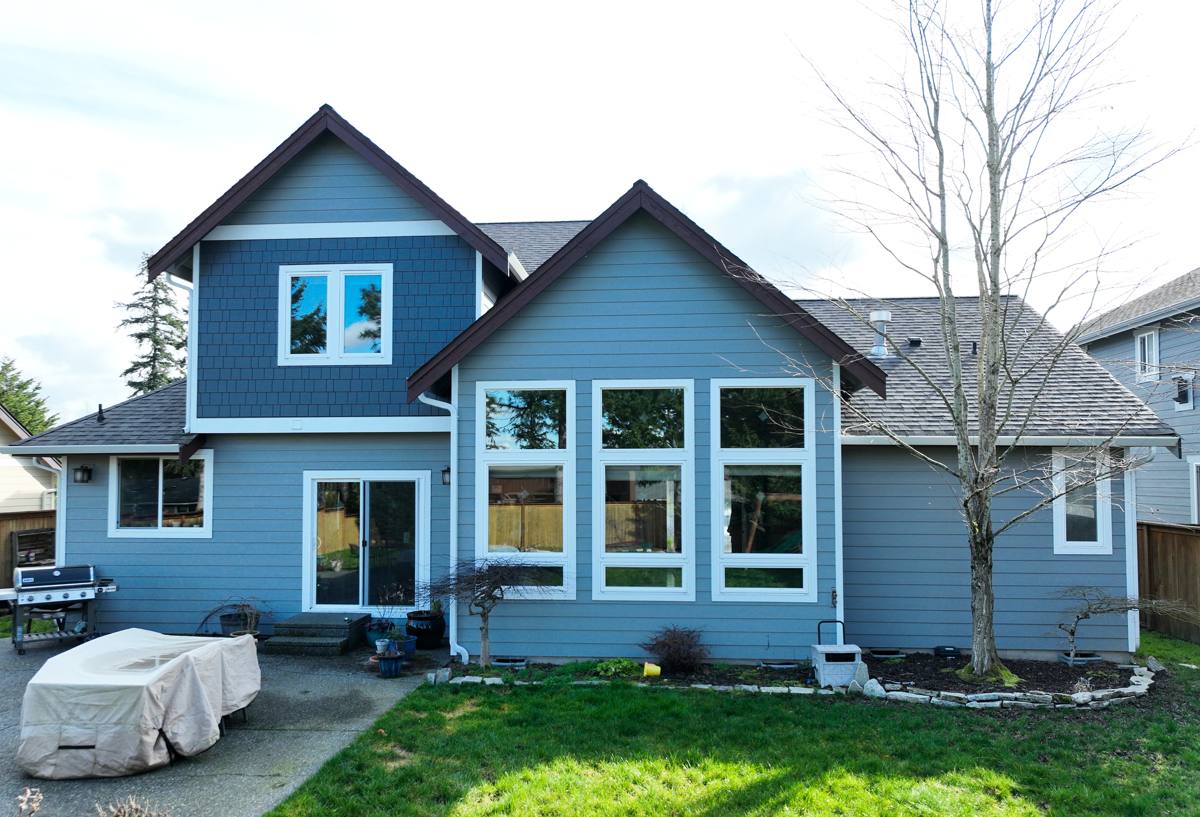
What This Climate Demands From a Siding System
Moisture Management, Not Just Moisture Resistance
Any exterior product will shed rain when it's brand new. What matters in Mount Vernon is what happens to the water that inevitably gets behind the surface layer, through a nail hole, a hairline crack, or wind-driven rain forced past a lap joint. A correctly built wall assembly needs a drainage plane, proper flashing at every penetration and transition, and a siding material that doesn't absorb and hold water against the sheathing.
Moss and Algae Tolerance
Skagit County's damp, shaded conditions favor moss and algae growth on north-facing walls and anywhere siding stays wet longer than it should. Some siding finishes are more prone to holding organic growth in their texture or seams. A dense, factory-cured finish resists this far better than a porous or field-finished surface.
Salt Air and Corrosion
Proximity to Puget Sound means fasteners, trim flashing, and any exposed metal components are exposed to a mild but constant corrosive element. Material choice and fastener selection both matter more here than they would further inland.
What a Correct Siding Replacement Actually Involves
Replacing siding is not just removing old boards and installing new ones. Done right, it's an opportunity to fix the water management of the entire wall, which is usually the actual source of long-term problems.
- Full removal of old siding and trim, not overlay installation on top of failing material
- Inspection of the sheathing underneath for rot, soft spots, or prior water damage
- Repair or replacement of any compromised sheathing before new siding goes on
- Installation or correction of a weather-resistant barrier (housewrap) as the drainage plane
- Proper flashing at every window, door, deck ledger, and roof-to-wall transition
- Correct fastener placement and spacing per manufacturer specification, not "close enough"
- Rain screen or furring where the wall assembly calls for one, to let the cladding dry from behind
- Caulking only where it belongs, not as a substitute for proper flashing or overlap
Skipping the sheathing inspection is one of the most common corners cut in siding replacement, because it's invisible once the new siding is up. It's also the single most expensive mistake to discover later, since it means removing the new siding to get at rot that was there all along.
Why We Install James Hardie Fiber Cement, and Nothing Else
We made the decision some years ago to standardize on James Hardie fiber cement siding for every home we work on, including here in Mount Vernon. We don't install vinyl, LP SmartSide, Cemplank, Allura, or unfinished wood siding like primed spruce or cedar. That's a deliberate professional standard, not a sales position, and it's worth explaining honestly.
Fiber cement is non-combustible, which matters in a state that takes wildfire risk seriously even on the wet side of the Cascades. It doesn't swell, rot, or delaminate the way wood-based or wood-fiber products can when they take on moisture over time. James Hardie's ColorPlus factory finish is baked on under controlled conditions rather than field-applied, which gives it better color retention and adhesion than a job-site paint job, and it stands up well to the kind of damp, low-light conditions that promote moss and mildew growth on lesser finishes.
James Hardie also engineers specific product lines (their HZ5 designation, for example) for regions with more moisture and temperature swing, which fits Skagit County's climate better than a one-size-fits-all product. Combined with a strong, transferable manufacturer warranty and a track record of holding up when installed to spec, it's the product we're willing to put our name behind. We'd rather turn down a job than install something we don't believe will perform here for the long haul.
Honest Trade-offs of the Alternatives
| Material | What It Gets Right | Where It Struggles Locally |
|---|---|---|
| Vinyl | Low upfront cost, low maintenance in mild climates | Can warp or crack in temperature swings; seams and J-channels are common water entry points; doesn't hold up as well aesthetically over decades |
| LP SmartSide | Engineered wood strand product, easier to work with than solid wood | Still wood-based, so edge and cut-end moisture intrusion is a real risk if caulking and flashing aren't perfect and maintained |
| Cemplank / Allura | Also fiber cement, similar base material to Hardie | We standardized on one manufacturer's engineered product line and factory finish system rather than mixing brands across our crews |
| Primed spruce / cedar | Natural look many homeowners like | Requires ongoing painting and sealing maintenance; most exposed to moss, rot, and moisture damage in this climate without diligent upkeep |
Our Process for Mount Vernon Projects
Every siding replacement starts with an on-site walk of the house, not a phone estimate. We look at the current siding condition, check for soft spots or signs of past water intrusion, and talk through what the homeowner has noticed, whether that's a specific problem area or general age and wear.
From there we put together a written scope and estimate that covers removal, any sheathing repair we anticipate (with a clear process for handling surprises found once old siding comes off), the Hardie product line and profile selected, color, and trim details. We don't build estimates around vague allowances that turn into change orders later.
During installation, our crews follow James Hardie's published installation instructions for fastener spacing, clearances, and flashing details, because those instructions are also what keeps the manufacturer warranty valid. We inspect flashing and housewrap work before siding closes it up, since that's the point where problems are cheapest to fix and hardest to find later.
Cost Factors Homeowners Should Understand
We don't publish fixed prices because every home is different, but the real cost drivers are consistent from house to house.
| Factor | Why It Moves the Price |
|---|---|
| Sheathing condition | Rot or damage found during tear-off adds repair scope that can't be fully known until old siding is off |
| Home size and wall complexity | More corners, dormers, and transitions mean more flashing detail and labor time |
| Siding profile and accessories | Lap width, trim style, and accent details all affect material cost |
| Access and site conditions | Multi-story sections, tight lot lines, or landscaping to work around add time |
| Existing paint or coatings | Some tear-off and disposal considerations depend on what's currently on the wall |
Why It Matters to Hire a Crew That Already Works This Area
Siding installation instructions are the same on paper everywhere, but judgment calls on site aren't. A crew that regularly works Skagit County homes knows to pay extra attention to north-facing walls where moss takes hold first, understands how wind-driven rain off the Sound behaves against certain elevations, and doesn't need to relearn local permitting or inspection expectations on every job. That familiarity shows up in the small decisions, like where to add extra flashing attention or how to sequence work around a wet forecast, that don't show up on an estimate but matter to how the siding performs ten and twenty years out.
It also means a company that's still going to be reachable if a warranty question comes up down the line, rather than a crew that passed through the area for one job and moved on.
Signs Mount Vernon Homeowners Should Watch For
- Soft or spongy spots when pressing on siding, especially near the bottom courses or under windows
- Visible moss or algae buildup that returns quickly after cleaning
- Peeling, bubbling, or chalking paint on wood-based siding
- Warped, cracked, or buckled panels, particularly on sun-exposed or wind-exposed walls
- Musty odor or visible staining on interior walls that share an exterior wall with problem siding
- Gaps opening up at trim, corners, or seams
Any one of these on its own may not mean full replacement is needed yet, but they're worth a professional look before they become bigger repairs.
If you're seeing any of these signs on your Mount Vernon home, or your siding is simply reaching the end of its useful life, we're happy to come take a look and walk you through what we find. There's no pressure and no cost for the estimate.