 Skagit County
 Why Installation Quality Matters More in Mount Vernon
Mount Vernon sits in the Skagit River valley, close enough to Skagit Bay and Puget Sound that homes here deal with a steady mix of salt-laden air, wind-driven rain, and long stretches of gray, damp weather that can run from October well into spring. Add the moss and mildew that thrive in that kind of moisture, and you have a climate that is genuinely hard on exterior siding — not because any one storm is severe, but because the exposure is constant and cumulative. A siding job that looks fine on installation day can fail in three to five years if the details underneath were rushed. In this climate, the installation itself matters as much as the material.
That's the core problem we see when we inspect other contractors' work around Skagit County: the siding on the surface looks acceptable, but the flashing, gaps, and moisture management behind it were never done to spec. Water finds those shortcuts eventually, and by the time it shows up as a stain, a soft spot, or peeling paint, there's often damage to the sheathing or framing underneath.
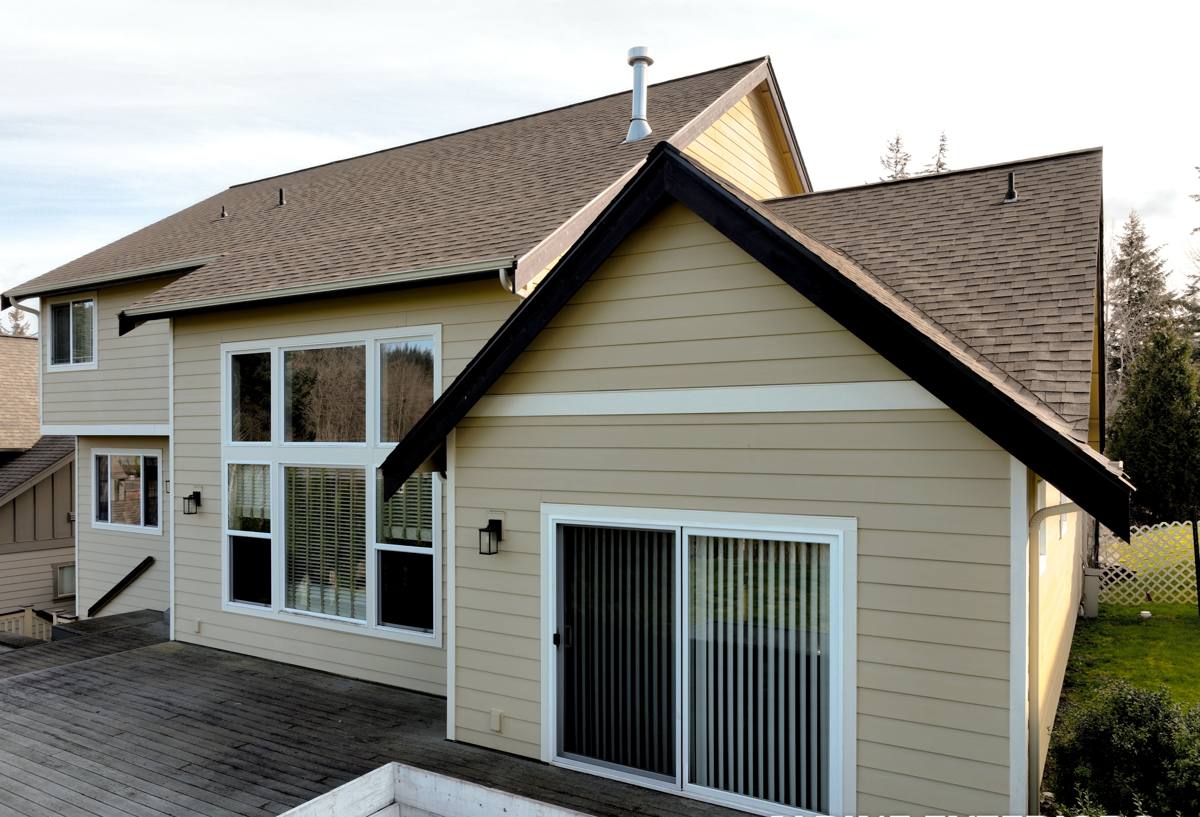
What Mount Vernon Homes Actually Need From Their Siding
Siding on a Skagit Valley home has three jobs, in order of importance: keep bulk water out, let any water that does get behind the cladding drain and dry, and hold up cosmetically against salt air and moss growth. A lot of siding failures we're called out to inspect trace back to the second point — a wall assembly with no way for trapped moisture to escape. That's a bigger factor here than in drier parts of the state, because the drying window between rain events is shorter.
- A continuous weather-resistive barrier behind the siding, lapped correctly so water sheds outward and down
- Proper flashing at every window, door, and roofline intersection — the majority of leaks start at these transitions, not in the field of the siding
- A drainage gap or rainscreen strategy so incidental moisture can drain and the wall can dry between storms
- Correct fastener type, spacing, and penetration depth for the specific siding product
- Minimum ground and roof clearances so splashback and roof runoff don't sit against the bottom course
- A factory or field finish that resists the moss, algae, and mildew that Skagit Valley's damp winters encourage
Why We Install Only James Hardie Fiber Cement
We standardized on James Hardie fiber cement siding for every home we work on, including here in Mount Vernon, and we don't install vinyl, LP SmartSide, or other fiber cement brands. That's a deliberate call, not a sales preference. Fiber cement is non-combustible, dimensionally stable in wet-dry cycling, and holds paint and factory finishes far better over time than wood-based or vinyl alternatives — all things that matter more, not less, in a climate like this one. Hardie's ColorPlus factory finish is baked on and warranted separately from the substrate, which means the finish that has to stand up to salt air and constant moisture isn't relying on a field-applied coat.
James Hardie also engineers specific product lines by climate zone (HZ5 for the Pacific Northwest), which affects the moisture and freeze-thaw performance of the board itself. We'd rather install one product system correctly, with a crew that knows its installation requirements cold, than offer a menu of options where quality depends on which line item the homeowner picked.
What This Looks Like on a Mount Vernon Job
In practice, that means every siding installation we do in this area uses HZ5-engineered lap or panel siding, factory-primed or ColorPlus-finished trim, and stainless or hot-dip galvanized fasteners rated for coastal-influenced air. We don't substitute a cheaper fastener or trim package to hit a lower bid — in this climate, that's exactly where premature failures start.
How Fiber Cement Handles the Skagit Valley Climate
| Climate Factor | What It Does to Siding | How Correctly Installed Hardie Responds |
|---|---|---|
| Salt-influenced air off Skagit Bay / Puget Sound | Accelerates corrosion of fasteners and trim, degrades some paints faster | Fiber cement doesn't corrode; factory ColorPlus finish resists salt-driven fading and chalking |
| Driving, wind-blown rain | Pushes water past poorly lapped siding and weak flashing details | Correct lap, flashing, and drainage plane keep water out of the wall assembly |
| Extended moss and algae season | Organic growth holds moisture against the surface, staining and softening some materials | Fiber cement's dense composition resists moisture absorption that feeds growth |
| Freeze-thaw swings in winter | Cracks or delaminates materials that trap moisture internally | HZ5-rated board is engineered for wet climate dimensional stability |
Our Installation Process for Mount Vernon Homes
1. On-Site Assessment
We walk the exterior, check existing siding and trim for hidden moisture damage, and look at roofline, window, and grade details that will affect flashing and clearance. Skagit Valley lots vary — some are close to grade, some have mature landscaping pressed against the walls — and that changes the drainage and clearance plan.
2. Tear-Off and Sheathing Check
Old siding comes off and we inspect the sheathing underneath. This step catches problems before they're covered up again — soft sheathing, prior water damage, or missing house wrap are far cheaper to fix now than to discover in five years.
3. Weather-Resistive Barrier and Flashing
We install a continuous weather barrier and flash every penetration, window, and door per manufacturer and code requirements. This is the step that determines whether the wall assembly actually keeps water out, and it's the step that's easiest to shortcut on a rushed job.
4. Hardie Installation to Spec
Boards are installed with correct fastener spacing, clearances, and lap, following James Hardie's published installation guidelines for our climate zone. We don't deviate from spec to save time.
5. Trim, Caulk, and Final Finish
Trim is installed and sealed at the joints that need it — not over-caulked in places that should be left to drain. Final touch-up matches the ColorPlus finish where field cuts require it.
6. Walkthrough
We walk the finished job with the homeowner, point out what was done and why, and answer questions about long-term care.
Signs a Mount Vernon Home Needs New Siding
Not every siding problem means a full replacement, but a few signs point strongly in that direction, especially given how this area's climate accelerates wear:
- Soft or spongy spots when you press on the siding, especially near the bottom courses or under windows
- Persistent moss or algae staining that comes back quickly after cleaning
- Paint that's peeling, bubbling, or chalking heavily rather than just fading evenly
- Visible gaps, warping, or buckled boards, particularly on walls facing prevailing weather
- Interior signs — stained drywall, musty smell near exterior walls — that suggest moisture is already getting through
- Siding that's original to a home built more than 20-25 years ago, especially wood-based or older vinyl products
If you're seeing one or two of these, an inspection can usually tell you whether you're looking at a repair or a full re-side. If you're seeing several at once, especially combined with interior moisture signs, that's usually a sign the wall assembly itself has been compromised and repair is a temporary fix at best.
Why a Local Crew Matters for This Job
Siding installation is weather-dependent work, and Mount Vernon's rain patterns mean scheduling and sequencing matter. A crew that works this area regularly knows how to plan around wet weeks, how to protect open wall sections during a job, and how local permitting and inspection processes work in Skagit County. That local familiarity also shows up in smaller ways — knowing which older subdivisions tend to have particular sheathing or moisture issues, or which parts of town see harder wind-driven rain off the valley.
A contractor from outside the area isn't incapable of doing good work, but a crew that installs siding in this specific climate week after week has already worked out the details that matter here — flashing sequencing in wet weather, drying time between steps, and product handling in damp conditions.
What to Ask Before Hiring a Siding Installer
- Are you a certified or factory-trained installer for the product you're proposing?
- Will you show me the flashing and weather barrier details before they're covered by siding?
- What fastener type and spacing will you use, and is it rated for coastal-influenced air?
- What's your plan for protecting open walls if weather turns during the job?
- What warranty covers the material, the finish, and your labor separately?
- Can you explain why you're recommending this specific product for this specific home?
If you're planning a siding project in Mount Vernon and want a straight answer about what your home actually needs, we're glad to take a look. Reach out for a free, no-pressure estimate — we'll walk the exterior with you, explain what we find, and give you a clear picture of the work involved before anything is decided.