 Skagit County
 Storm Damage Is Different in the Skagit Valley
Burlington sits low in the Skagit Valley, close enough to Puget Sound to catch salt-laden air and open enough to take the full force of wind coming off the water and down the valley corridor. When a storm rolls through, it rarely does just one kind of damage. Wind lifts and cracks shingles, driving rain finds its way under anything that's even slightly loose, and the moisture that follows sets up months of slow rot if it isn't caught. Add in a moss season that runs long here — often eight or nine months out of the year with our mild, wet winters — and a roof that took storm damage in November can be hiding real trouble by spring.
We work on roofs in Burlington and the surrounding Skagit County area regularly, which means we're not guessing at how local weather behaves. We know what a wind-driven rainstorm off the Sound does to a roof versus what a slow, soaking Pacific system does, and we repair accordingly rather than applying a one-size-fits-all fix.
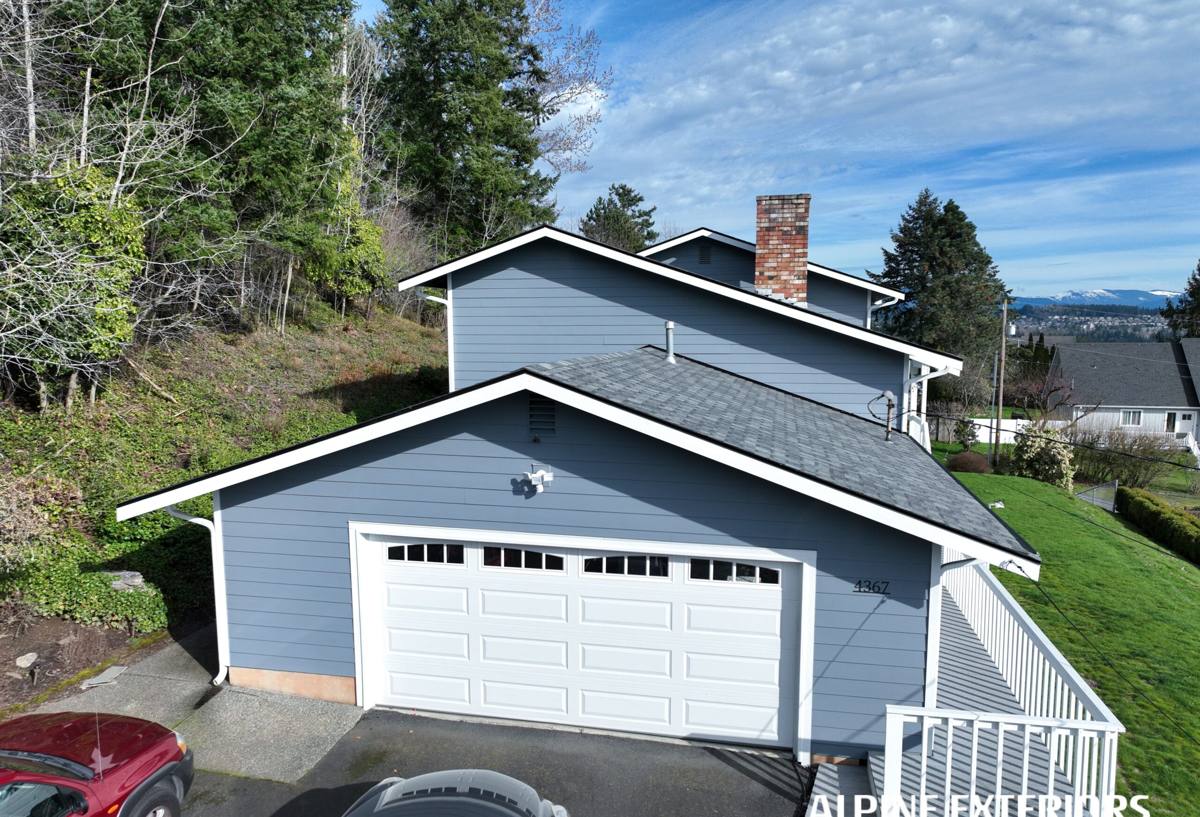
Signs Your Roof Took Storm Damage
What You Can See From the Ground
Not every storm-damaged roof announces itself. Some signs are obvious after a bad wind event; others take weeks to show up. From the ground, look for:
- Shingles that look curled, cracked, or noticeably lighter in one area (missing granules)
- Shingles or ridge cap pieces in the yard or gutters after a windstorm
- Gaps or unevenness along roof edges and ridgelines
- Sagging sections, especially near valleys or where two roof planes meet
- Heavy moss buildup that's lifted shingle edges, holding moisture against the roof deck
- Flashing around chimneys, vents, or skylights that looks bent, pulled loose, or rusted through
What Shows Up Inside
By the time damage is visible inside the house, water has usually been getting in for a while. Watch for ceiling stains that appear or grow after a storm, a musty smell in an upstairs closet or attic, visible daylight through the roof deck in the attic, or damp insulation. None of these mean the whole roof needs to be replaced — but they do mean it needs a real inspection, not a guess.
What a Correct Storm Damage Repair Actually Involves
A lot of "storm damage repairs" are really just a few replacement shingles nailed over a problem that's still underneath. That might stop a leak for a season, but it doesn't address why the damage happened or what's already been affected under the surface. A repair done right starts with finding the actual extent of the damage, not just the part you can see.
Assessment Before Any Work Starts
We check the roof deck itself for soft spots or water staining, not just the shingles on top of it. Wind and water damage often extends past the visibly broken shingles — a section that looks fine at the edges can still have a compromised underlayment a few feet in. We also check flashing, vent boots, and any penetrations, since these are usually where storm-driven water actually gets into a house, more often than through the shingle field itself.
Matching Materials, Not Just Patching
When we replace damaged shingles, we match the existing product as closely as possible — profile, color, and where possible, manufacturer — so the repair doesn't stand out as a patch job and the roof keeps a consistent warranty where that applies. If your roof is old enough that exact matches aren't available anymore, we'll tell you that plainly and talk through the closest reasonable option rather than quietly using whatever's on the truck.
Underlayment and Decking
If water has been getting under the shingles, the underlayment beneath is often compromised even in spots where the shingles themselves still look okay. We replace underlayment in the affected area, not just the shingles on top of it, and if the plywood decking has soft or delaminated spots from prolonged moisture, we replace that too. Shingling over a soft deck is a shortcut that fails — it just fails later, and usually after the warranty period on the labor has passed.
Common Storm Damage Types We See in Skagit County
Different storms cause different problems, and the right repair approach depends on which one you're dealing with. Here's how the main types typically show up and get addressed:
| Damage Type | Typical Cause | How It Usually Shows Up | Repair Approach |
|---|---|---|---|
| Wind lift / missing shingles | Gusts off the Sound catching shingle edges, especially on older or under-nailed roofs | Bald patches, exposed nail lines, shingles in the yard | Replace missing/damaged shingles, check adjacent courses for loosened nails |
| Wind-driven rain intrusion | Horizontal rain forced under shingle edges or around flashing during storms | Interior staining, damp insulation, no visible exterior damage | Trace entry point, reseal or replace flashing, replace saturated underlayment/decking |
| Moss-related lifting | Long wet season allowing moss to establish and grow under shingle edges | Lifted shingle tabs, dark streaking, granule loss | Moss removal, treatment, shingle repair or replacement where lifted too long |
| Debris impact | Branches or limbs coming down in wind events, common near mature trees | Cracked or punctured shingles, dented flashing or vents | Localized shingle and flashing replacement, deck inspection at impact point |
| Flashing failure | Age, corrosion from salt air, or storm impact loosening seals | Leaks concentrated around chimneys, skylights, vent pipes | Flashing replacement and reseal, not just caulk over the old flashing |
Our Repair Process, Step by Step
When you call us after a storm, here's what to expect:
- Inspection. We get on the roof (or use a camera where access is unsafe) and check the deck, flashing, and shingles — not just the spot you noticed damage.
- Honest assessment. We tell you what's actually damaged, what's at risk if left alone, and what can reasonably wait. We won't invent problems to pad a job.
- Written estimate. You get a clear scope of work and price before anything starts — no surprise add-ons mid-job.
- Repair. We replace damaged shingles, underlayment, decking, and flashing as needed, matching materials where possible.
- Final check. We walk the repair with you (or send photos if you're not on site) so you know exactly what was done.
Most storm damage repairs in Burlington are completed in a day, weather permitting. Larger jobs involving deck replacement or multiple damaged sections can take longer, and we'll give you a realistic timeline up front rather than an optimistic one.
Repair or Replace? How We Help You Decide
Not every storm-damaged roof needs to be replaced, and we don't push replacement when a repair will genuinely hold. As a general guide:
- Repair usually makes sense when damage is localized, the roof is under 15-20 years old, and the deck underneath is sound.
- Replacement is worth considering when storm damage is widespread, the roof was already near the end of its service life, or repeated moss and moisture issues have compromised multiple sections of decking.
- A hybrid approach — repairing the storm-damaged section now and planning full replacement in the next year or two — is sometimes the most cost-effective path, and we'll say so if that's what the roof actually needs.
The honest answer depends on the roof's age, material, and how much of the deck is affected — which is exactly why we inspect before we quote, rather than pricing off a phone description.
Working With Insurance on Storm Damage Claims
Many storm damage repairs in Skagit County are covered, at least in part, by homeowners insurance, particularly for wind and impact damage from a specific storm event. We're not an insurance company and won't promise a claim outcome, but we can document the damage clearly — photos, a written scope, and a straightforward description of cause — which is what most adjusters need to process a claim. If you're filing a claim, it helps to have that documentation done before repairs begin, so ask us about it when you call.
One thing worth knowing: moss-related and long-term moisture damage is treated differently by most insurers than sudden storm damage. If your roof has both an acute storm event and pre-existing moss or wear issues, we'll be clear about which is which so you're not caught off guard by a claim denial on the maintenance-related portion.
Why Hire a Crew That Already Works in Burlington
A roofer who doesn't work this area regularly can still do competent work, but there's real value in familiarity with local conditions. We know how quickly moss establishes on north-facing roof sections here, how salt air affects metal flashing and fasteners over time, and which storm patterns tend to cause wind damage versus which ones drive rain intrusion at flashing points. That means less time spent diagnosing and more time spent on the actual fix — and a repair that accounts for what's likely to happen to this roof again next storm season, not just what happened this time.
We also know that a damaged roof isn't something you want to sit with while you wait on scheduling. We prioritize storm damage calls, especially when there's active water intrusion, because a small leak left alone for a few weeks can turn into a much bigger repair.
Get a Free, No-Pressure Estimate
If your Burlington home took storm damage — or you're just not sure whether that lifted shingle or damp spot in the attic is something to worry about — we're glad to take a look. There's no cost and no pressure to move forward; you'll get an honest assessment and a clear estimate, and you can decide from there. Use the form below to request your free estimate.