 Skagit County
 Why Alger Homes Are Tougher on Windows Than Most
Alger sits in that stretch of Skagit County where the timber cover thickens and the air carries a noticeable edge of salt off the Samish Bay and Puget Sound shoreline nearby. That combination is rough on window systems in ways that inland homes never have to deal with. Salt-laden moisture works into hardware, finishes, and any gap in a seal. Add in driving rain that comes sideways during winter storms, and any window with a weak seal, poor flashing, or worn weatherstripping is going to let water find its way in eventually.
Then there's the shade. Heavy tree cover keeps a lot of Alger properties damp longer after a storm than homes out in open farmland closer to Mount Vernon or Burlington. That extra dwell time on wet siding, sills, and window frames is exactly what feeds the moss and algae that show up on the north and west faces of houses here every year. Windows that aren't sealed and finished correctly become one more surface where that moss gets a foothold, and once organic growth is holding moisture against wood or trim, deterioration speeds up fast.
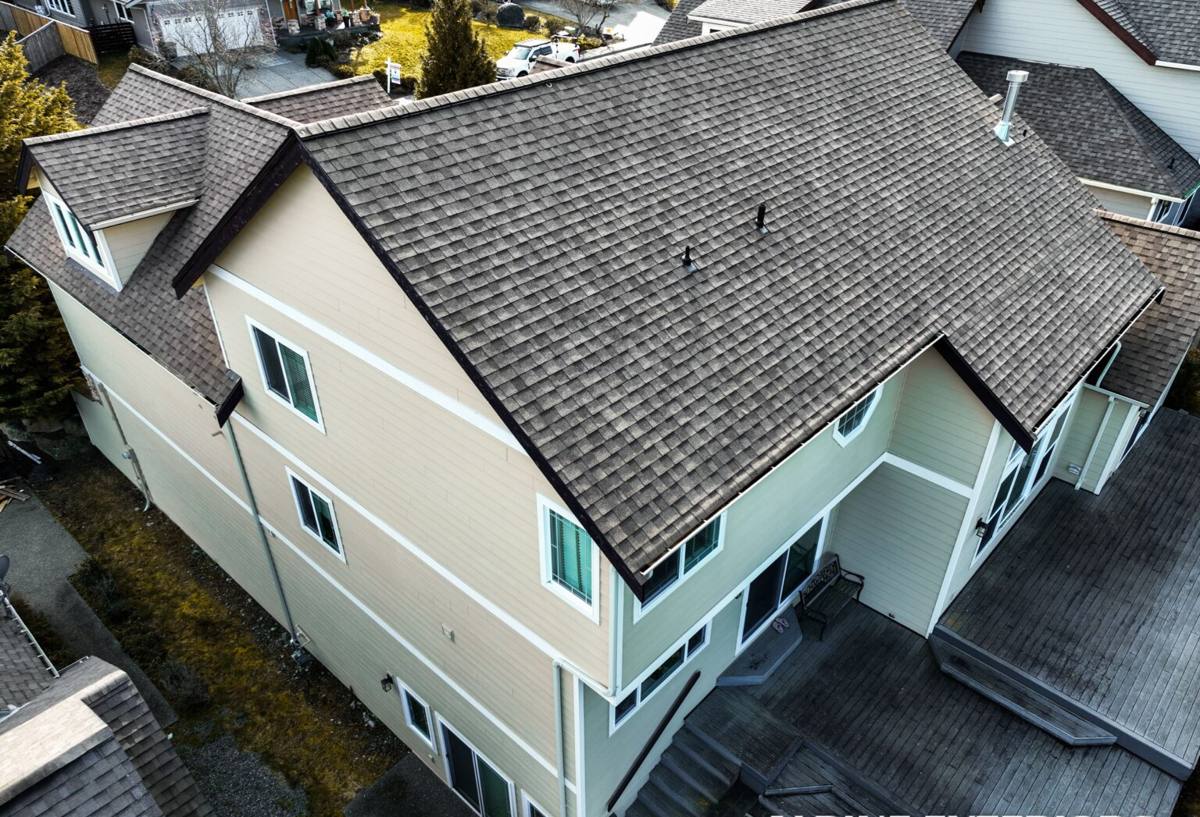
Signs Your Alger Home's Windows Are Losing the Fight
Most window failures in this climate don't happen overnight. They show up gradually, and homeowners often live with the early signs for a year or two before calling anyone. Worth checking for:
- Fogging or a cloudy haze between panes of a double-pane window (the seal has failed and the gas fill is gone)
- Soft or discolored wood at the sill or lower frame corners — a sign moisture has been sitting there
- Visible green or black growth on the sill, frame, or trim, especially on shaded sides of the house
- Drafts you can feel near the frame even when the window is fully latched
- Windows that stick, won't stay open, or are hard to lock — often a sign the frame has swollen or shifted
- Paint or finish that's peeling or bubbling on the interior sill, which usually points to condensation or a slow leak, not just old paint
Any one of these on its own isn't an emergency. Several at once, or wood that's gone soft, means the window and possibly the framing around it needs real attention, not just a caulk touch-up.
What a Correct Custom Window Job Actually Involves
"Custom windows" doesn't just mean a nicer style — it means the window is built and installed to fit the actual rough opening and wall assembly of your specific house, rather than forcing a stock size to work. That matters more in a wet climate than people expect, because a window that's shimmed and packed to fit an opening it wasn't sized for is far more likely to have gaps in its seal.
The details that separate a correct install from a shortcut
A proper installation in this climate includes a sloped sill pan so any water that does get past the exterior seal drains back out instead of pooling against the framing, correctly lapped flashing tape integrated with the house wrap (not just caulked over the top), and weatherproof sealant rated for sustained wet exposure — not a generic caulk that hardens and cracks within a couple of seasons. It also means checking the framing underneath for rot before the new window ever goes in. Installing a beautiful new window over compromised framing just hides the problem for a while.
Choosing Window Materials for Skagit County's Weather
There's no single "best" window material — the right choice depends on your home's exposure, your maintenance appetite, and your budget. Here's how the common options hold up in a salt-air, high-moisture, moss-prone environment like Alger's:
| Material | How it handles this climate | Maintenance |
|---|---|---|
| Vinyl | Good moisture and corrosion resistance; won't rot or rust from salt air | Low — occasional cleaning |
| Fiberglass | Excellent dimensional stability in temperature and moisture swings; strong long-term performer near salt air | Low |
| Wood (unclad) | Classic look but vulnerable to rot and moss growth if finish isn't maintained | High — refinishing on a regular cycle |
| Wood-clad (aluminum or vinyl exterior) | Wood interior warmth with a weather-resistant exterior shell; good option where exposure is moderate | Moderate |
| Aluminum | Durable but conducts cold and can corrode over time in salt-influenced air unless properly coated | Moderate |
For homes closer to the water or under heavy tree canopy where moss and moisture are a constant fight, we typically steer customers toward vinyl or fiberglass because they simply give up less ground to rot and corrosion over the years — not because wood or aluminum are bad products, but because they demand more upkeep than most homeowners want to keep pace with.
Our Process for Alger Custom Window Projects
- On-site assessment — we look at the existing windows, the framing behind them, and how that side of the house has been holding up against rain and shade
- Precise measurement — every opening gets measured individually; older homes especially rarely have perfectly uniform openings
- Material and glass selection — we walk through the tradeoffs in plain terms based on your home's exposure, not a one-size pitch
- Removal and inspection — old windows come out carefully so we can check the sill and framing for hidden rot or moisture damage before anything new goes in
- Installation with proper flashing and sealing — sill pan, flashing integration, and weatherproof sealant rated for this climate
- Final walkthrough — we test operation, check seals, and clean up before we call the job done
Energy Efficiency and Moisture Control
Beyond keeping water out, a correctly chosen window also cuts down on condensation and heat loss — both of which matter through Skagit County's damp, cool stretch of the year. Low-E glass coatings reduce heat transfer without darkening the room noticeably, and double- or triple-pane units with an inert gas fill (typically argon) improve insulation and reduce the interior condensation that fogs up glass on cold mornings. Condensation on the inside of a window isn't just annoying — over time it can feed mold growth on nearby trim and drywall, so it's worth taking seriously rather than wiping it down every morning and moving on.
Maintenance Checklist for Alger's Salt Air and Moss Season
Even a well-installed window benefits from a little seasonal attention in this environment. A short checklist worth running once or twice a year:
- Rinse frames and sills to clear salt residue and organic debris, especially on shaded or north-facing windows
- Check weatherstripping for cracking or compression and replace if it's no longer sealing tight
- Look for early moss or algae spotting on sills and trim and clean it off before it spreads or holds moisture
- Test that operable windows still open, close, and lock smoothly — sticking is often the first sign of frame movement
- Inspect exterior caulk lines for cracking or gaps and have them addressed before winter storms arrive
- Check interior sills after heavy rain events for any sign of moisture intrusion
What Custom Windows Typically Run
Exact pricing depends on size, material, glass package, and how many openings are involved, but a general sense of where budgets land can help with planning:
| Factor | Effect on cost |
|---|---|
| Material (vinyl vs. fiberglass vs. wood-clad) | Vinyl is typically the most budget-friendly; fiberglass and wood-clad run higher |
| Glass package (standard vs. low-E, double vs. triple pane) | Upgraded glass adds cost but pays back in comfort and efficiency |
| Number and size of openings | Larger picture windows or full-house replacement scale up total cost |
| Condition of existing framing | Rot repair behind old windows adds labor beyond the window itself |
| New construction vs. retrofit | Retrofitting into an existing opening is usually more cost-effective than a full frame-out |
Why It Matters to Hire a Crew That Already Works in Alger
A window installer who mostly works drier climates east of the Cascades can put in a technically fine window and still miss what this specific environment demands — the sill pan detail that handles driving rain, the flashing sequence that keeps salt-laden moisture out of the wall cavity, the material choice that won't be fighting moss within a couple of years. We work throughout Skagit County, including Alger and the surrounding communities near the Samish Bay corridor, and that means we're not guessing at how a window will hold up here — we're building to what we already know this climate does to a house.
If your windows are drafty, fogged, or showing early signs of moisture damage, or you're planning ahead for a full replacement, we're glad to take a look and walk you through honest options for your home. Use the form below to request a free, no-pressure estimate.