 Skagit County
 Why Board & Batten Suits Mount Vernon Homes
Board and batten has become one of the most requested siding styles in Mount Vernon, and it's easy to see why. The vertical lines read as clean and modern on newer builds, but the same profile also has deep roots in Skagit Valley's farmhouse and barn architecture, so it sits comfortably on older homes too. It works well on full exteriors, on a single accent wall or gable, or paired with lap siding to break up a large facade. That flexibility is a big part of why we get so many board and batten requests from homeowners in this area specifically — it's a style that fits both the working-farm history of the valley and the newer neighborhoods that have grown up around Mount Vernon.
But board and batten is not just a look. The wide flat boards and narrow battens covering the seams create a different water-management system than standard lap siding, and in Skagit County's climate, getting that system right is what separates a wall that lasts decades from one that starts failing at the seams within a few years.
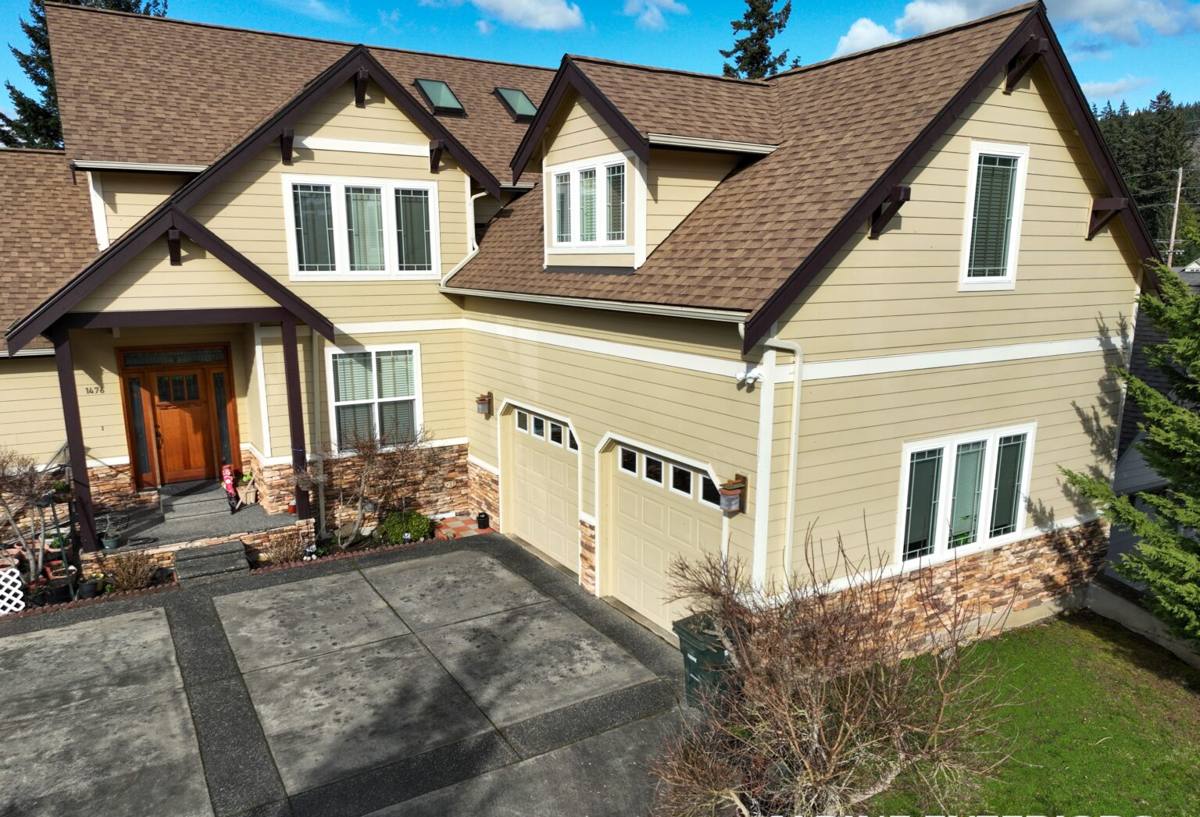
What Skagit County's Climate Does to Board & Batten Siding
Mount Vernon sits inland in the Skagit River valley, but it still gets the full benefit — and the full punishment — of western Washington's marine-influenced weather. Homes here deal with a long, wet season of driving rain that comes in sideways during storms, a extended stretch of low light and dampness that lets moss and algae take hold on north-facing and shaded walls, and enough proximity to Puget Sound and Padilla Bay that salt-laden air is part of the mix, especially on homes closer to the water or exposed to prevailing westerly winds.
Board and batten siding has more vertical seams than standard lap siding, and every one of those seams is a potential path for water if it isn't detailed correctly. Add in Skagit Valley's moss season, which can run for months on shaded elevations, and you have a siding style that rewards correct installation and punishes shortcuts more than most.
The specific failure points we watch for
- Battens installed tight to the substrate with no drainage path behind them, trapping moisture against the wall
- Butt joints in the field boards that aren't flashed or properly gapped, letting water track behind the siding
- Bottom edges too close to grade, hardscape, or roof lines, which keeps the lowest boards wet longer than the rest of the wall
- Fastener patterns that split boards or miss framing, creating loose panels that flex and open seams over time
What a Correct Board & Batten Installation Actually Involves
Done right, board and batten is a system, not just a decorative pattern nailed to the wall. A few pieces matter more here than they do in a drier climate.
Drainage plane and rainscreen gap
A weather-resistant barrier goes over the sheathing first, and on most Mount Vernon installations we build in a small rainscreen gap behind the siding. That gap lets any moisture that does get past the outer boards drain and dry instead of sitting against the wall — which matters a lot more here than in a low-rainfall climate, because Skagit County homes rarely get a long dry stretch to let a wall fully dry out on its own.
Board spacing and batten placement
Fiber cement expands and contracts with temperature and moisture, so boards need consistent gaps at panel joints and correct batten overlap to accommodate that movement without cracking or popping fasteners loose. Batten spacing also needs to land on structural framing, not just be eyeballed for looks.
Flashing at every transition
Windows, doors, roof-to-wall intersections, and the bottom termination of the siding all need proper flashing and clearances. This is where a lot of subpar board and batten jobs fail first, because these transition points are the ones most exposed to wind-driven rain.
Fastening for the substrate, not just the eye
Battens and boards need the correct fastener type, length, and spacing for James Hardie's specifications — corrosion-resistant fasteners matter in a marine-influenced climate where standard hardware corrodes faster.
Why We Install This Style Only in James Hardie Fiber Cement
Board and batten shows up in vinyl, engineered wood, and fiber cement, and we understand why some of those options look appealing on price. We don't install any of them except James Hardie, and for this particular style in this particular climate, the reasoning is even more direct than usual.
The narrow battens and flat field boards in this profile create more edges, seams, and fastener points than lap siding. Vinyl board and batten relies on plastic locking channels that can warp or gap as temperatures shift, and those gaps become entry points for wind-driven rain during a Skagit Valley storm. Engineered wood products use wood fiber that can swell and deteriorate at cut edges and fastener points if moisture gets in and isn't given a chance to dry — a real risk in a region where the wet season runs long. James Hardie's fiber cement doesn't have that vulnerability. It's dimensionally stable, doesn't rot, and is engineered specifically for the Pacific Northwest's wet, mixed climate through its HZ5 product line.
The factory-applied ColorPlus finish also matters more on a board and batten wall than people expect, because the vertical boards and battens show shadow lines and color differences more visibly than a horizontal lap profile. A consistent, baked-on finish that resists fading and moss growth better than field-applied paint keeps that clean vertical look from turning patchy after a few Skagit winters.
How the common board & batten material options compare
| Material | How it handles Skagit Valley rain | Moss & algae resistance | Typical lifespan here |
|---|---|---|---|
| James Hardie fiber cement | Non-combustible, dimensionally stable, engineered for wet climates | Factory finish resists growth better than field-painted surfaces | 30+ years with correct install and normal care |
| Vinyl board and batten | Locking channels can gap or warp with temperature swings | Moss and algae adhere readily to the surface texture | 15-25 years, often less on wind-exposed walls |
| Engineered wood (LP-type) | Vulnerable at cut edges and fastener points if moisture intrudes | Requires consistent maintenance to prevent surface breakdown | Highly dependent on maintenance and detailing |
| Cedar or primed spruce | Natural material, needs consistent sealing to resist swelling | Prone to moss and mildew without regular treatment | Shorter without an active maintenance schedule |
Our Process for a Mount Vernon Board & Batten Project
- On-site assessment — we look at wall orientation, shade exposure, drainage around the foundation, and any existing moisture or moss issues before recommending a scope.
- Removal and substrate check — old siding comes off and we inspect the sheathing underneath for rot or existing water damage, which is common on homes that have gone years without a full re-side.
- Weather barrier and rainscreen installation — the drainage plane goes on first, sized and gapped for this climate.
- Board and batten installation to spec — correct fastening, spacing, and flashing at every transition, following James Hardie's published installation requirements.
- Final detailing — caulking, trim, and touch-up work at cut edges, done with products rated for exterior use in this climate.
- Walkthrough — we go over the finished work with you and explain what routine care, if any, the finish needs going forward.
Realistic Maintenance Expectations
One of the appeals of James Hardie board and batten in a climate like this is how little upkeep it asks for compared to wood-based alternatives. It doesn't need repainting on a fixed schedule the way primed wood or field-finished products do, and it won't swell or rot at the edges the way engineered wood can if water gets in. That said, no siding in Skagit County is entirely maintenance-free. An annual rinse to knock off pollen, dust, and early moss growth — particularly on shaded, north-facing walls — keeps the finish looking sharp and prevents organic growth from getting a foothold in the vertical seams where battens meet field boards.
What to Look for When Hiring for This Job
Board and batten is more sensitive to installation quality than plain lap siding, so the contractor matters more here than it does for a simpler job. Before hiring anyone for this work in Mount Vernon, it's worth confirming:
- They can explain how they'll handle drainage behind the battens, not just how the finished wall will look
- They're installing to the manufacturer's published specifications, not a generalized "how we always do it" approach
- They carry proper licensing and insurance for exterior work in Washington State
- They can speak specifically to how they detail flashing at windows, doors, and roof lines
- They're willing to show you the fastening and spacing plan before boards go up, not just after
Why Local Experience in Mount Vernon Matters
A crew that already works throughout Skagit County has already seen how homes in this specific area age — which walls stay damp longest through the winter, where moss takes hold first, how driving rain off the valley behaves against different home orientations. That's the kind of pattern recognition that doesn't come from a spec sheet; it comes from doing this work on Mount Vernon homes season after season. It also means straightforward scheduling around local weather windows and a crew that isn't learning the region's quirks on your project.
If you're weighing board and batten for a Mount Vernon home, we're happy to walk the property with you, talk through what your specific walls and exposure would need, and give you a straightforward, no-pressure estimate using the form below.