 Skagit County
 Anacortes Roofs Take a Different Kind of Beating
Anacortes sits out on Fidalgo Island, with saltwater on multiple sides and weather that rolls in off the Salish Sea before it ever reaches the rest of Skagit County. That means an asphalt shingle roof in Anacortes is dealing with a different set of stresses than the same roof would face a few miles inland in Mount Vernon or Sedro-Woolley. Salt-laden air, near-constant humidity, driving rain off the water, and long stretches of shade and moisture that feed moss growth all add up over the life of a roof. None of that means asphalt shingles are the wrong choice for this area — they're still the most practical, cost-effective option for the large majority of homes here. It means the installation has to account for the conditions, not just meet a generic code minimum.
This page covers what an asphalt shingle roof needs to hold up in Anacortes specifically, what a correct installation actually involves, and how our process works from first estimate to final walkthrough.
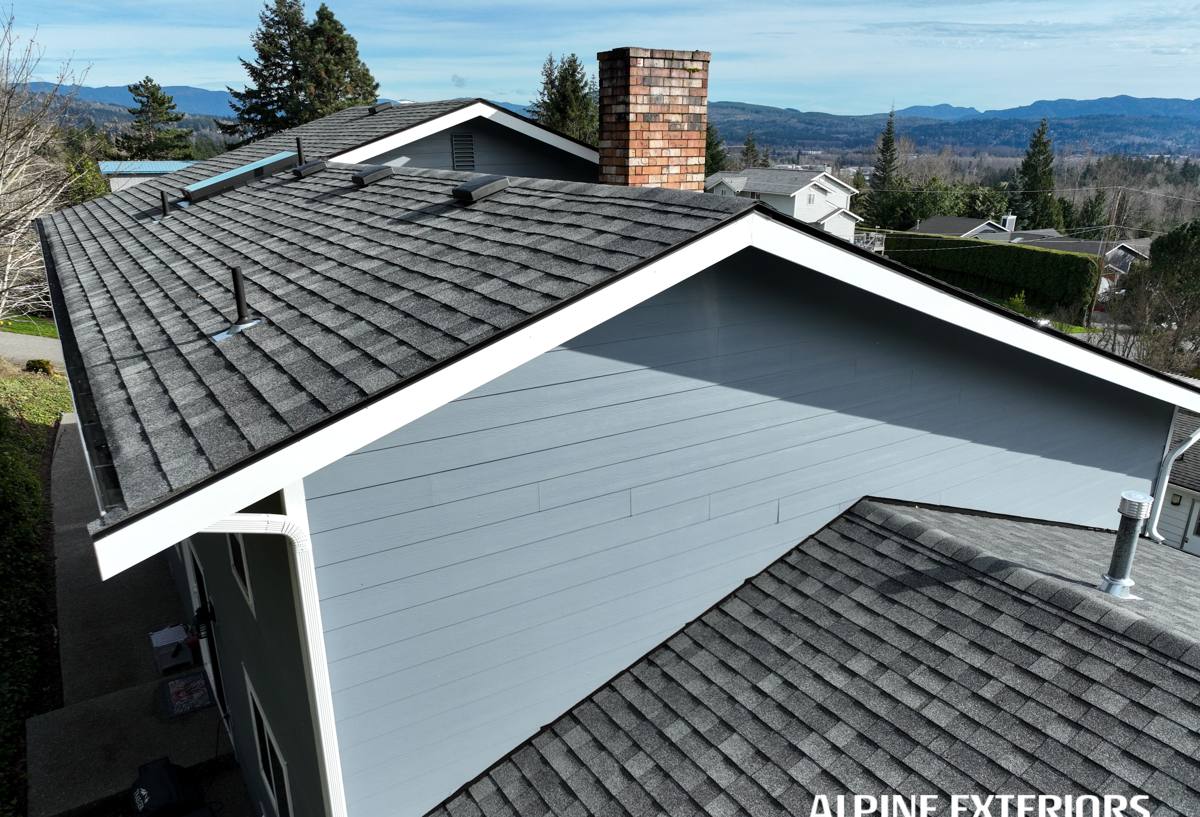
What Salt Air, Rain, and Moss Actually Do to a Shingle Roof
Salt Air and Metal Components
Asphalt shingles themselves aren't particularly sensitive to salt, but the metal components tied into a shingle roof are: flashing, drip edge, roof vents, nail heads, and gutter hardware. Standard galvanized steel corrodes faster in a marine environment than it does inland, and once flashing starts to rust and pit, it stops shedding water the way it should. That's a slow failure — it doesn't show up as a leak on day one, it shows up two or three years later as a stain on a ceiling that traces back to a flashing detail nobody thought twice about.
Driving Rain and Wind-Driven Water
Anacortes gets its share of wind off the water, and wind-driven rain behaves differently than rain falling straight down. It can push up under shingle tabs, work sideways at valleys and wall-to-roof transitions, and find any gap in the underlayment or flashing that a calmer climate would never expose. A roof that would perform fine in a low-wind inland setting can leak here if the underlayment layers and flashing laps aren't sequenced correctly.
Moss, Shade, and Trapped Moisture
Skagit County's long wet season is moss-friendly everywhere, but shaded, north-facing, and tree-covered roof sections in and around Anacortes tend to stay damp longer between dry spells, which is exactly what moss needs to establish. Moss holds moisture against the shingle surface, works its way under tab edges, and lifts granules over time. It's rarely dramatic — it's a slow degradation that shortens the roof's useful life if it's never addressed.
What a Correctly Installed Shingle Roof Includes
A shingle roof is a system, not a single product. In a marine climate, every layer underneath the visible shingle matters as much as the shingle itself.
Underlayment and Water Barrier
Synthetic underlayment across the full roof deck, with self-adhering ice-and-water barrier at the eaves, valleys, and any roof-to-wall transition, gives the roof a real second line of defense if wind-driven rain gets past the shingles. This is the layer that matters most when weather turns sideways.
Ventilation
Balanced intake and exhaust ventilation keeps the attic from trapping the moisture that comes with a humid coastal climate. Poor ventilation shortens shingle life from underneath — trapped heat and moisture cook the shingles and the deck at the same time, regardless of how good the shingle itself is.
Flashing Details
Step flashing at walls, proper valley metal, and corrosion-resistant materials at chimneys, skylights, and vent penetrations are where most roof leaks actually start. This is also where the salt-air exposure matters most, so we don't cut corners on flashing grade or installation sequence just because it's out of sight once the shingles go down.
Fastening and Nailing Pattern
Correct nail count, placement, and fastener length hold shingles down through wind events and keep manufacturer warranties valid. Under-nailed shingles are one of the most common causes of blow-off damage in coastal wind, and it's a defect you can't see once the roof is finished — it only shows up the first time the wind picks up.
Picking a Shingle That Actually Suits a Marine Climate
Not every asphalt shingle product is built the same way, and the differences matter more here than in a drier, calmer climate.
| Shingle Type | Wind Performance | Algae/Moss Resistance | Best Fit For |
|---|---|---|---|
| Standard 3-tab | Lower wind rating | None unless treated | Budget projects, low-exposure roof sections |
| Architectural (laminate) | Higher wind rating, better tab adhesion | Available with algae-resistant granules | Most Anacortes homes — best balance of cost and durability |
| Impact-rated / high-wind class | Highest wind rating available in asphalt | Available with algae-resistant granules | Fully exposed roofs, waterfront-facing slopes |
For most homes in and around Anacortes, we steer people toward architectural shingles with algae-resistant (copper-infused) granules as the baseline, not an upsell. The granule treatment specifically slows the growth that causes those dark streaks and helps limit moss establishment, which matters more here than in a drier inland market. It's not a moss-proof guarantee, but it measurably extends the time between cleanings.
Our Process, Start to Finish
Inspection and Estimate
We walk the roof, check the deck condition where accessible, look at flashing, ventilation, and moss or moisture patterns, and give a written estimate that spells out materials, scope, and price — no vague allowances.
Tear-Off and Deck Check
Old roofing comes off down to the deck. Any soft, rotted, or delaminated sheathing gets flagged and replaced before anything new goes down — no covering up a bad deck with new shingles.
Underlayment and Flashing First
Ice-and-water barrier, synthetic underlayment, and new flashing go in before a single shingle is installed. This is the step that determines how the roof handles the next big wind-driven rain event, so it doesn't get rushed.
Shingle Installation
Shingles go down to manufacturer nailing specs, with valleys, penetrations, and edges detailed correctly rather than just covered. Ventilation components are installed or upgraded as part of the same job, not treated as a separate add-on.
Cleanup and Walkthrough
Job site and yard get cleaned of debris and nails, and we walk the finished roof with the homeowner before calling it done.
Maintenance That Extends a Shingle Roof's Life Here
A well-installed roof still benefits from basic upkeep in this climate. Between full inspections, homeowners can reasonably handle:
- Clearing gutters and downspouts at least twice a year, more often under overhanging trees
- Watching for moss or dark streaking on shaded or north-facing sections
- Keeping overhanging branches trimmed back to reduce shade, debris, and physical contact with the roof surface
- Checking attic spaces occasionally for musty smells, staining, or visible daylight, which can signal a ventilation or flashing issue
- Avoiding pressure washing shingles directly — it can strip granules and shorten the roof's life
- Scheduling a professional look after any major wind event, even if nothing looks obviously wrong from the ground
Signs an Anacortes Roof Needs Attention Now
Some warning signs are worth acting on before they become an interior repair:
- Granules collecting in gutters or at downspout outlets
- Shingle tabs that look curled, cracked, or lifted at the edges
- Visible moss growth or persistent dark streaking on shaded slopes
- Rust staining running down from flashing or vent stacks
- Any ceiling stain, even a small one, especially after a windy, rainy stretch
None of these guarantee a full replacement is needed — plenty of these issues are repairable if caught early. Waiting is what turns a repair into a replacement.
Why Hiring a Crew That Already Works Anacortes Matters
A roofing crew that regularly works Anacortes and the surrounding Skagit County waterfront already understands how differently these roofs age compared to homes further inland. That shows up in small but real ways: knowing to spec corrosion-resistant flashing and fasteners as standard rather than an upgrade, recognizing moss and moisture patterns on shaded lots before they become bigger problems, and understanding local permitting through the county or the city. It also means we're not learning the area's weather behavior on your roof — we already build for it.
If you're weighing a repair against a full replacement, or just want a straight answer on what your current roof actually needs, we're glad to take a look. Reach out for a free, no-pressure estimate using the form below — we'll walk the roof, give you an honest assessment, and lay out your options in plain terms.