 Skagit County
 Why Anacortes Windows Wear Differently Than Windows Inland
Anacortes sits out on Fidalgo Island, surrounded by saltwater on three sides, which means the windows on most homes here take a beating that windows in Mount Vernon or Sedro-Woolley never see. Salt-laden air corrodes hardware and metal components faster than plain rain does. Wind-driven rain off the water pushes water sideways into gaps that would stay dry in a calmer climate. And the long gray stretch from fall through spring — what we just call "moss season" around here — keeps everything damp for months at a time, which is exactly the condition mold, wood rot, and failed seals need to take hold.
None of that means Anacortes needs exotic windows. It means the ordinary stuff — flashing, sealant, frame material, glass spec — has to be done right, because there's very little margin for a sloppy install in this climate. A window that would limp along for twenty years in a dry inland town can fail in five here if it was installed wrong or built for a milder environment.
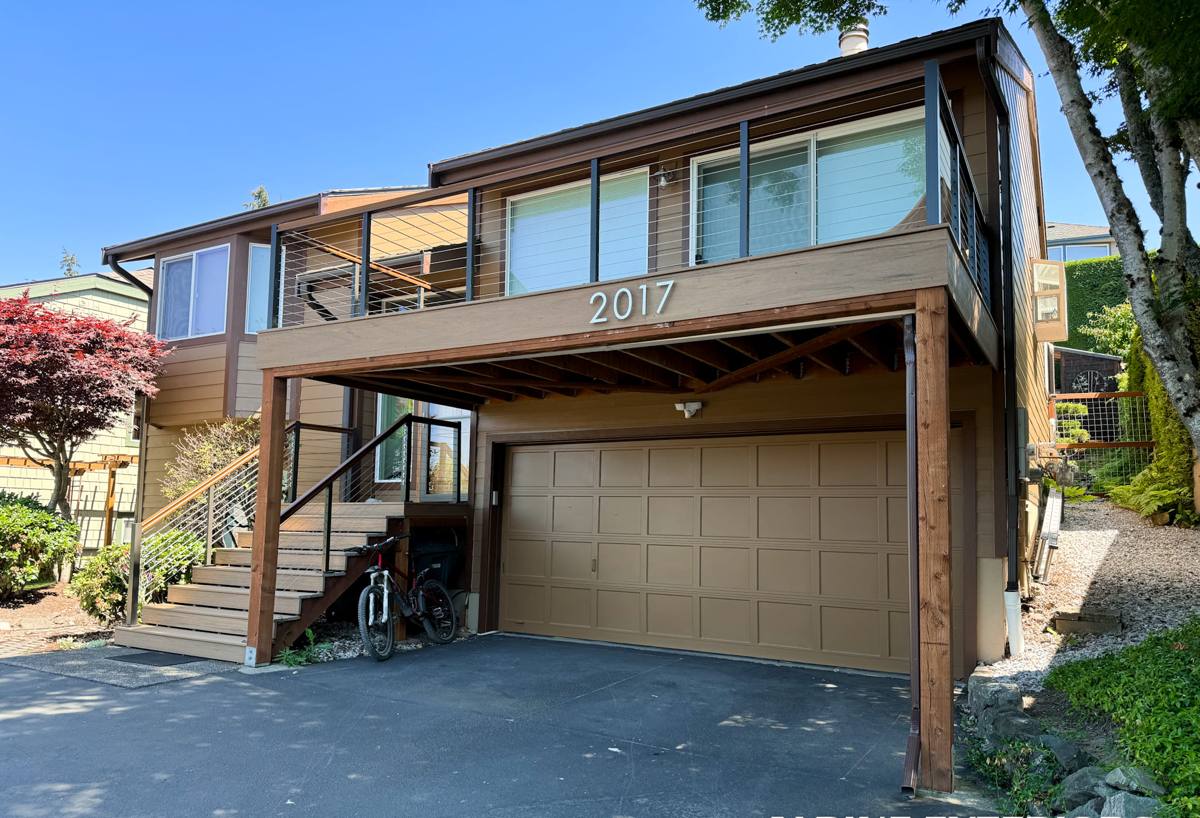
What "Energy-Efficient" Actually Means for a Home Like Yours
Energy-efficient windows aren't just about a lower heating bill, though that's the part homeowners usually ask about first. In Skagit County's marine climate, an energy-efficient window is also a window that manages moisture and air infiltration well — the same features that cut your energy use are usually the ones keeping wind-driven rain and condensation out of your wall cavity.
The Three Numbers That Actually Matter
Every legitimate replacement window comes with an NFRC label listing performance ratings. You don't need to memorize the whole label, but three numbers are worth understanding before you buy anything:
- U-factor — how well the window resists heat loss. Lower is better. For our climate, we generally look for U-factor around 0.28 or lower.
- SHGC (Solar Heat Gain Coefficient) — how much solar heat passes through. In a cloudy, mild climate like Skagit County, this matters less than it would in a sunny hot climate, but it still affects west- and south-facing rooms.
- Air leakage (AL) — how much air passes through the assembled window. Lower matters a lot here, since wind off the water can drive air (and moisture) through a leaky seal.
A window with a great U-factor but a sloppy install will still leak air and water around the frame. The rating on the label describes the window unit — it says nothing about the flashing and sealant job around it, which is where most real-world failures actually start.
Glass Packages: What's Worth Paying For Here
Most manufacturers now offer several glass packages, and the right one depends on the exposure of each wall, not a blanket choice for the whole house.
Double-Pane vs. Triple-Pane
Standard double-pane with a good low-E coating and argon fill covers most Anacortes homes just fine, especially on walls that aren't taking direct wind off the water. Triple-pane adds real value on exposed, water-facing elevations and in rooms where condensation has been a recurring problem — the extra pane and airspace cuts both heat loss and interior condensation noticeably. It costs more and the sash is heavier, which matters on larger operable windows, so we look at it case by case rather than specifying it across the board.
Low-E Coatings
Low-E coatings are a microscopically thin metallic layer that reflects heat while still letting light through. In our climate, a low-E coating tuned for heat retention (rather than solar heat rejection, which matters more in hot climates) is usually the better call, since Skagit County's challenge is holding heat in through a long damp winter, not keeping it out during a short summer.
Frame Material: The Comparison That Actually Matters in Salt Air
Frame material decisions matter more here than in a lot of the country, because salt air and constant moisture punish some materials faster than others. Here's how the common options actually compare for an Anacortes install, based on how they perform in maintenance and moisture exposure rather than marketing claims:
| Material | Salt air / moisture behavior | Maintenance | Typical lifespan expectation |
|---|---|---|---|
| Vinyl | Doesn't corrode or rot; welded corners can be vulnerable if not detailed well | Low — occasional cleaning | 20–30 years |
| Fiberglass | Excellent — expands/contracts close to glass, resists corrosion, holds paint well | Low | 30+ years |
| Aluminum (non-thermally-broken) | Poor near saltwater without a thermal break — conducts cold and can corrode/pit over time | Moderate | Highly variable |
| Wood / wood-clad | Attractive but needs disciplined upkeep — exposed wood or failed cladding invites rot in a wet climate | High | Depends heavily on maintenance |
Our default recommendation for most Anacortes homes is vinyl or fiberglass, specifically because they hold up with the least ongoing maintenance in a climate that stays damp for months. We're not against wood-clad windows — they look great and plenty of homes have them — but we're upfront that they carry a real maintenance obligation in this climate, and we'd rather tell you that before the sale than after a callback.
What a Correct Installation Actually Involves
The window unit itself is maybe half the job. The other half — the part that decides whether it leaks in year three — is the installation detailing around it. In a driving-rain climate, we treat every opening like it's going to get hit with sideways water, because on plenty of Anacortes lots, it will.
- Remove the old window and inspect the rough opening — this is where hidden rot or old flashing failures show up, and it has to be dealt with before anything new goes in.
- Repair or rebuild the opening if there's any soft wood, failed sheathing, or old caulking standing in for real flashing.
- Install flashing in the correct shingle-lap order — sill pan first, then side flashing, then head flashing lapped over the top — so water is directed out and down, never trapped behind the siding.
- Set the window plumb, level, and square, shimmed correctly so the frame isn't stressed and the sash operates smoothly for years, not just on install day.
- Seal and insulate the gap between the frame and rough opening with the right materials — not just a bead of caulk over a gap.
- Finish the exterior trim and siding tie-in so water sheds past the window rather than pooling at the top or sides.
- Test operation and check the seal before we consider the job done.
Skip step three and it doesn't matter how good the window's U-factor is — wind-driven rain will eventually find the gap.
Problems We Commonly Find on Older or Poorly Installed Windows
When we're called out to look at an older window or one installed by someone else, a handful of issues show up again and again in this climate:
- Fogging between panes — a sign the seal has failed and the insulating gas has escaped, which means the window is no longer performing even though the glass looks fine
- Soft or discolored trim and sheathing around the frame — usually a sign flashing was missing, reversed, or never lapped correctly
- Moss or dark staining building up on sills and lower sashes — a byproduct of Skagit County's long damp season more than a defect, but worth cleaning before it holds moisture against the frame
- Hardware that's stiff, corroded, or won't latch — common on aluminum and lower-grade hardware exposed to salt air
- Visible daylight or a draft felt around the frame on a windy day — usually poor shimming or missing insulation in the gap, not a bad window unit
Maintenance That Actually Matters in a Marine Climate
New windows still need a little seasonal attention here, especially through the wet months. A short annual check catches small issues before they become expensive ones:
- Clear weep holes on the exterior sill — these are the small drainage openings the window uses to shed water, and they clog easily with moss growth and debris in Skagit County's wet season
- Wipe down and inspect exterior sealant/caulk lines once a year for cracking or separation
- Clean tracks and hardware to keep salt-air corrosion from seizing moving parts
- Check interior sills after heavy storms for any sign of moisture intrusion
- Trim back vegetation or clean gutters upstream of window openings so runoff isn't dumping directly onto the frame
What It Costs, and What Actually Drives the Price
We don't publish fixed prices because every home's opening count, sizes, and access are different — but the factors that move the estimate up or down are consistent, and knowing them helps you compare quotes honestly.
| Cost factor | Why it matters |
|---|---|
| Frame material | Fiberglass typically costs more upfront than vinyl but needs less long-term upkeep |
| Glass package | Triple-pane and specialty low-E coatings add cost per unit, worth it mainly on exposed elevations |
| Opening condition | Rot repair or resized openings add labor beyond a straightforward same-size swap |
| Number and size of openings | Large picture windows and sliders cost more per unit than standard double-hungs |
| Access and site conditions | Second-story or hard-to-reach windows take more time and equipment |
We'll always walk you through where your money is going line by line rather than handing over a single lump number and calling it done.
Why Hiring a Crew That Already Works in Anacortes Matters
A lot of window problems we get called to fix weren't caused by a bad window — they were caused by an installer who does most of their work somewhere drier and didn't detail the flashing for a climate that gets sustained, wind-driven rain. Anacortes and the rest of Skagit County's shoreline communities demand a different level of attention to sealing and flashing than towns further inland get away with.
A crew that regularly works Anacortes also knows the practical stuff that isn't on any spec sheet: which product lines actually hold up locally, how to sequence work around the wetter months, and what local permitting and inspection expects on a straightforward window swap versus a resize. That local track record is worth more than any brochure claim about a product's rating.
If you're weighing a window replacement or want a second opinion on windows another contractor installed, we're happy to take a look and give you a straight, no-pressure estimate — just fill out the form below.