 Skagit County
 Why Clear Lake Roofs Take a Different Kind of Beating
A roof in Clear Lake doesn't fail the same way a roof in a dry inland climate fails. Skagit County sees long stretches of driving rain that drives water sideways into flashing and fastener lines, marine air that carries fine moisture into attic spaces and roof decking almost year-round, and a moss season that can run from early fall through spring. None of these things destroy a roof overnight. They work slowly, underneath the shingles, until a homeowner notices a stain on a ceiling and realizes the damage has been building for years.
That's the argument for treating a new roof installation as more than "put new shingles on." In this climate, the materials underneath the surface layer — the decking, the underlayment, the flashing, and the ventilation — do more work protecting the house than the shingles themselves. A crew that understands how Clear Lake weather actually behaves builds those layers correctly the first time.
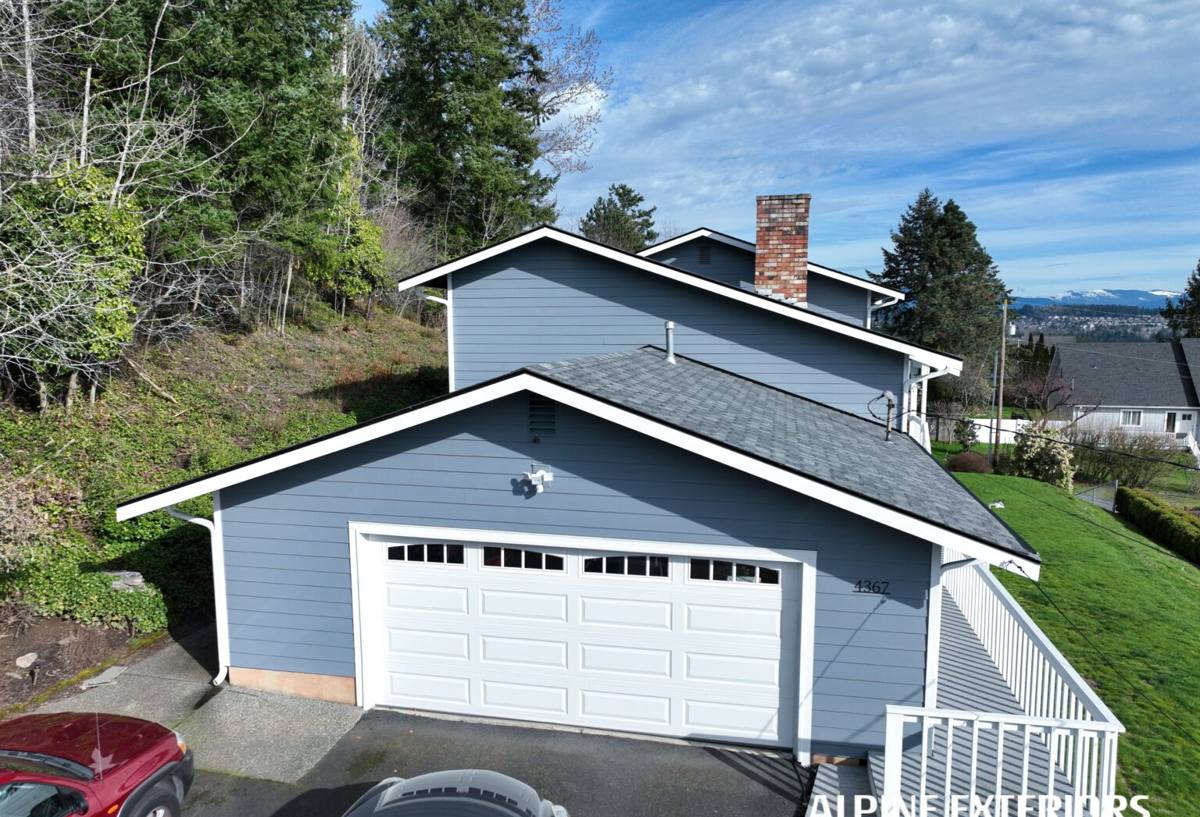
Repair or Replace? Reading the Signs Correctly
Not every aging roof needs full replacement, and not every leak means the whole system has failed. Before recommending a new roof, a straightforward contractor should be able to explain why a repair won't hold up. Some signs that point toward replacement rather than another patch:
- Granules collecting in gutters or at downspout outlets, which signals the shingles are wearing thin
- Moss colonies established across large sections of the roof rather than isolated patches
- Shingles that are curling, cupping, or cracking, especially on south- and west-facing slopes
- Soft or spongy decking felt underfoot during inspection, or daylight visible through the sheathing from the attic
- Repeated leak repairs in different spots over the past few years instead of one recurring issue
- A roof at or past the manufacturer's expected service life for its material and local exposure
If a roof is showing two or three of these at once, patching individual spots usually just delays a bigger problem — and in a wet climate, delayed roof problems tend to become deck rot problems, which cost more to fix.
What a Correct New Roof Installation Actually Involves
Tear-Off and Deck Inspection
A proper installation starts with a full tear-off down to the decking, not an overlay on top of old shingles. Overlays trap moisture and hide problems, which is exactly the wrong approach in a climate where moisture is already the enemy. Once the old roofing is off, every section of decking gets inspected. Any wood that's soft, delaminated, or water-stained gets replaced before anything new goes down — installing new roofing over compromised decking just resets the clock on the same failure.
Underlayment and Water Protection
Underlayment is the roof's backup layer, and in a county that sees this much driving rain, it matters as much as the shingles do. Self-adhered ice-and-water barrier goes at eaves, valleys, and any low-slope transitions where water is most likely to back up or linger, with synthetic underlayment covering the rest of the field.
Flashing Details
Flashing around chimneys, skylights, sidewalls, and roof-to-wall transitions is where most leaks actually start — not in the open field of shingles. Correct flashing means new metal formed to the specific detail, properly stepped and counter-flashed, not caulk smeared over old flashing to save a step. Caulk is a maintenance item, not a flashing system.
Ventilation
Balanced intake and exhaust ventilation keeps the attic close to outdoor temperature and lets moisture escape instead of condensing on the underside of the decking. This is covered in more detail below because it's one of the most commonly overlooked parts of a roof job.
Choosing a Roofing Material for Skagit County Conditions
Material choice affects how a roof handles moss, moisture, and driving rain over its lifetime. There's no single "best" choice for every home — it depends on budget, roof pitch, and how much long-term maintenance a homeowner wants to take on.
| Material | Moss & Moisture Resistance | Typical Lifespan | Maintenance Level |
|---|---|---|---|
| Architectural asphalt composition shingle | Good, especially with zinc/copper strips at the ridge | 25–30 years | Low to moderate |
| Standing seam metal | Excellent — moss struggles to root on smooth metal | 40–50+ years | Low |
| Cedar shake | Requires active upkeep to resist moss and rot in this climate | 20–30 years with maintenance | High |
| Synthetic/composite shingle | Good, resists moisture absorption well | 30–50 years | Low |
Cedar shake can look excellent on the right home, but we're honest with homeowners about the trade-off: in a climate with this much sustained moisture, shake needs regular treatment and inspection to keep moss and rot from getting a foothold, or its lifespan drops well below its potential. That's a maintenance-commitment conversation, not a knock on the material itself. For most Clear Lake homeowners who want a straightforward, lower-upkeep roof, architectural asphalt or metal tends to be the better long-term fit.
Our Installation Process, Step by Step
- On-site inspection and estimate — we walk the roof, check the decking where accessible, and look at ventilation, flashing, and any problem areas before quoting anything.
- Material selection — we go over the options above in terms of your roof's pitch, sun exposure, and budget, not a one-size answer.
- Permitting — new roof installations in Skagit County typically require a permit; we handle that paperwork so it doesn't fall on you.
- Tear-off and haul-away — full removal of the old roofing material, with the property protected and debris hauled off, not left in a pile.
- Deck repair — any compromised sheathing found during tear-off gets replaced before underlayment goes down.
- Underlayment, ice-and-water barrier, and flashing — installed per manufacturer specification at every eave, valley, and penetration.
- Shingle or panel installation — installed to the manufacturer's nailing and exposure pattern, which affects both wind rating and warranty validity.
- Ventilation tie-in — ridge and soffit vents installed or connected so the attic can actually breathe.
- Cleanup and magnetic sweep — yard and driveway cleared of debris and stray fasteners.
- Final walkthrough and warranty paperwork — we review the finished roof with you and register manufacturer warranty coverage where applicable.
Ventilation and Moisture Control Matter as Much as the Shingles
It's easy to focus on what a new roof looks like from the street and overlook what's happening underneath it. In a marine climate like Skagit County's, warm, moist household air rises into the attic year-round. Without enough intake venting at the soffits and exhaust venting at the ridge, that moisture condenses on the underside of the decking instead of escaping outside. Over time, that trapped moisture leads to rot, mold, and premature failure of the decking — problems that show up years after installation and are easy to blame on the shingles when the real cause was never given a way out. Correct ventilation sizing is calculated from attic square footage, not eyeballed, and it's one of the details worth asking a contractor about directly before signing a contract.
What Drives the Cost of a New Roof in Clear Lake
Every roof is priced individually, but the same handful of factors move the number up or down on most jobs:
| Cost Factor | Why It Matters |
|---|---|
| Roof size and pitch | Steeper roofs take longer to work safely and use more material per square |
| Material choice | Asphalt, metal, and synthetic products carry different material and labor costs |
| Number of existing layers | Tearing off multiple layers of old roofing adds labor and disposal cost |
| Deck condition | Rotted or soft sheathing found during tear-off requires replacement before installation continues |
| Roof complexity | Valleys, dormers, skylights, and chimneys add flashing work and time |
| Access | Difficult site access or tall roofs can affect equipment and staging costs |
We're generally talking a broad mid-to-upper five-figure range for a typical single-family home once material and labor are factored in, though the only accurate number comes from an on-site look at your specific roof. Anyone quoting a firm price without walking the roof and checking the decking is guessing.
Why Hiring a Crew That Already Works Clear Lake Matters
A roofing crew that regularly works Skagit County properties has already seen how moss patterns develop on north-facing slopes shaded by tall trees, how driving rain finds its way into poorly detailed valleys, and how local permitting and inspection processes actually run. That familiarity shows up in small decisions — where to add extra ice-and-water protection, which flashing details need reinforcing, how to schedule tear-off around the wetter months so decking isn't exposed longer than necessary. It also means a crew that's still local and reachable if a question comes up during the first few seasons after installation, rather than a traveling outfit that's moved on to the next region by the time weather tests the work.
Keeping Your New Roof Performing for Its Full Lifespan
A correctly installed roof still needs basic upkeep to reach its expected lifespan in this climate. A simple annual routine goes a long way:
- Clear gutters and downspouts before the fall rains start
- Have moss growth treated before it spreads across a full slope, not after
- Trim back tree limbs that keep sections of the roof shaded and damp
- Do a visual check after major windstorms for lifted or missing shingles
- Have flashing around chimneys and skylights checked periodically rather than waiting for a leak
- Keep attic ventilation paths clear of stored items or insulation blocking soffit vents
None of this requires climbing on the roof yourself — most of it is a five-minute visual check from the ground or a quick attic look.
If your roof in Clear Lake is showing its age or you're planning ahead rather than waiting for a leak, we're happy to take a look and walk you through what we find. Reach out for a free, no-pressure estimate using the form below.