 Skagit County
 Roofing in Concrete: What This Corner of Skagit County Asks of a Roof
Concrete sits where the Skagit River valley starts climbing into the North Cascades, and that setting shapes what a roof has to deal with here. Heavy evergreen cover keeps many homes in partial shade for much of the year, rainfall totals run higher than in the flatter parts of Skagit County, and the combination of moisture and shade is exactly what moss, lichen, and algae need to take hold on a roof. Add in the freeze-thaw swings that come with cooler nights near the foothills, and an asphalt shingle roof in Concrete works harder than the same roof would on an open, dry lot.
None of that makes asphalt shingles a poor fit for Concrete. They remain one of the most practical, cost-effective roofing systems available, and most homes in town are shingled for good reason. It means the installation details and the maintenance that follows matter more here than they would somewhere drier. A roof installed correctly for this climate, with the right underlayment, ventilation, and algae-resistant materials, holds up well. A roof installed to a generic spec shows its age early, with curling edges, dark streaking, and soft spots where moisture has worked its way underneath.
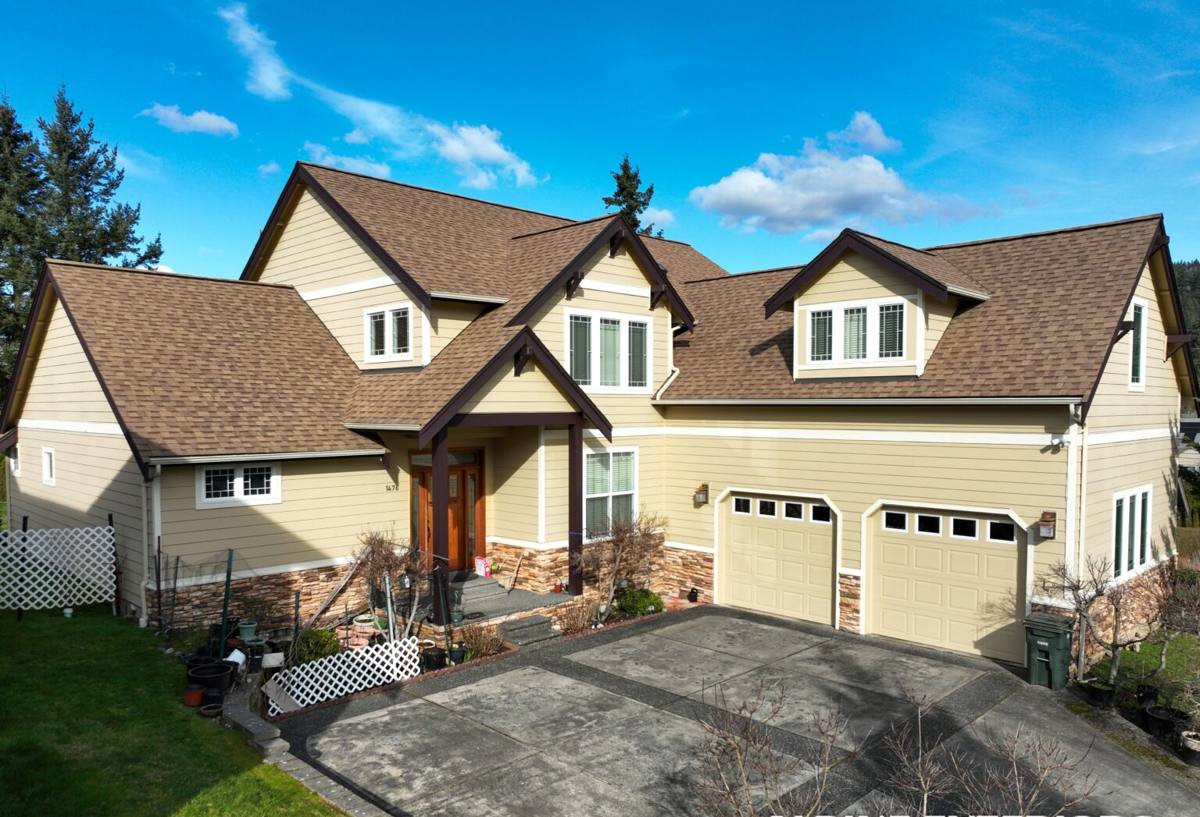
Why Asphalt Shingles Still Make Sense Here
Homeowners sometimes ask whether a shaded, damp property like theirs needs something other than standard shingles. In most cases, the answer is no. Asphalt shingles are engineered, weather-tested products with decades of field performance behind them, and modern algae-resistant formulations are specifically built for exactly the kind of moss and lichen pressure Concrete sees. The bigger factor in how long a shingle roof lasts here isn't the shingle itself - it's whether the roof underneath it (deck, underlayment, flashing, ventilation) was built to shed and dry out water quickly.
Shingles also make sense financially. They cost less to install than metal or specialty products, they're easier to repair in sections rather than replacing an entire slope, and most manufacturers back them with warranties long enough to cover a typical ownership period. For a working town like Concrete, where roofs need to perform without demanding a premium budget, asphalt shingles hit a sensible middle ground between cost and durability.
Where Shingles Are Not the Right Call
There are a few situations where we'll steer a homeowner toward a different product instead - very low-slope roof sections where standard shingles can't shed water fast enough, or roofs with unusual heat or fire-exposure requirements. We'll flag those cases plainly during an inspection rather than install something that isn't suited to the roof.
What a Correct Asphalt Shingle Roof Install Involves
A shingle roof is only as good as the layers underneath it. In a climate like Concrete's, a few of those layers matter more than they would in a drier region:
Underlayment and Ice and Water Protection
We install a synthetic underlayment across the full deck as the primary water barrier beneath the shingles, and we add self-adhering ice and water shield membrane at the eaves, valleys, and around any roof penetration - chimneys, vents, skylights - where water is most likely to find a way in. In a valley town with cool nights and regular heavy rain, these are the spots that fail first on a corner-cut installation.
Ventilation
Balanced intake and exhaust ventilation keeps the attic space close to outdoor temperature and lets moisture escape instead of condensing against the roof deck. Under heavy tree cover, a poorly ventilated attic stays damp longer after a storm, which shortens the life of both the decking and the shingles above it. We check existing ventilation on every re-roof and correct it rather than shingle over a system that's undersized.
Flashing
Step flashing at walls and dormers, and properly formed flashing at chimneys and valleys, does more to prevent leaks than the shingles themselves. We replace flashing rather than reuse it during a full re-roof, since bent or rusted flashing is one of the most common causes of a "new roof" leak.
Fastening and Exposure
Shingles nailed with the wrong pattern, too high, or with too few fasteners are the leading cause of early wind damage. We follow manufacturer nailing specifications exactly, which also keeps the warranty valid if it's ever needed.
Moss, Shade, and Roof Longevity
Moss is the issue Concrete homeowners bring up more than any other. It's not just cosmetic - moss holds moisture against the shingle surface, and over time that moisture works into the granule layer and shortens the shingle's life. Heavily shaded, north-facing slopes are usually the first to show it.
A few things help meaningfully:
- Algae- and moss-resistant shingles with built-in copper or zinc granules, which discourage growth as the shingle weathers
- Zinc or copper control strips installed near the ridge, which release trace metal ions with every rain and slow moss regrowth across the whole slope
- Keeping overhanging branches trimmed back so more light and air reach the roof surface
- Clearing needles, cones, and leaf debris from valleys and gutters before they compost in place and hold moisture against the shingles
- Gentle, low-pressure moss removal rather than pressure washing, which can strip protective granules and shorten shingle life faster than the moss itself
None of these steps are complicated, but skipping them is the single biggest reason a shingle roof in a shaded Skagit County property ages faster than the same roof on an open lot.
Choosing the Right Shingle for Concrete's Conditions
Not every asphalt shingle is built the same way, and the differences matter more in a climate that combines moisture, shade, and occasional wind gusts funneling through the valley.
| Shingle Type | Typical Lifespan | Best Fit For |
|---|---|---|
| 3-tab (standard) | 15-20 years | Budget-conscious re-roofs on simpler roof lines |
| Architectural / dimensional | 25-30 years | Most homes in Concrete - better wind and impact resistance, heavier mat |
| Algae-resistant (SBS or granule-treated) | 25-30 years | Shaded, moss-prone lots - the most common upgrade we recommend locally |
| Impact-rated / Class 4 | 30+ years | Properties wanting extra durability against falling branches and debris under tree cover |
For most Concrete homes, we recommend an algae-resistant architectural shingle. It costs somewhat more than a basic 3-tab up front, but the extended lifespan and reduced moss pressure typically make it the better value over the life of the roof, especially on shaded lots.
Our Process, From Estimate to Cleanup
We keep the process straightforward and try not to surprise homeowners partway through:
- On-site inspection of the existing roof, deck, ventilation, and flashing - not just a look from the ground
- A written estimate that spells out materials, scope, and any deck repair contingencies before work starts
- Scheduling that accounts for Skagit County's wetter stretches, so we're not opening a roof ahead of a multi-day rain system
- Tear-off, deck inspection, and repair of any soft or rotted sections found underneath the old shingles
- Installation of underlayment, ice and water shield, flashing, and shingles to manufacturer specification
- Full site cleanup, including a magnetic sweep for stray nails around the property
- A final walkthrough so the homeowner can see the finished work before we consider the job done
Repair or Replace: What Actually Drives That Decision
Not every roof problem in Concrete means a full replacement. The right call usually comes down to a handful of factors:
| Factor | Leans Toward Repair | Leans Toward Replacement |
|---|---|---|
| Age of roof | Under 12-15 years | Past 20-25 years or manufacturer's rated life |
| Extent of damage | Isolated to one slope or area | Spread across multiple slopes |
| Deck condition | Solid, no soft spots | Soft decking or signs of rot underneath |
| Moss/algae history | First occurrence, treatable | Recurring despite cleaning, granule loss visible |
| Interior signs | None | Staining, sagging, or active leaks inside |
We'll always tell a homeowner honestly when a repair is the right call, even though a full replacement is a bigger job for us. A roof that only needs a section of flashing corrected or a handful of damaged shingles replaced doesn't need to come off entirely.
Why Hiring a Crew That Already Works in Concrete Matters
Roofing crews unfamiliar with this stretch of Skagit County sometimes treat every job the same way they would in a drier, more open part of the state - standard underlayment, standard ventilation, no real plan for moss. That approach isn't wrong everywhere, but it leaves gaps in a town where shade and rainfall are the norm rather than the exception.
A crew that regularly works in and around Concrete knows to check ventilation before shingling over it, knows which slopes typically need extra moss protection based on tree cover and orientation, and schedules around the area's weather patterns instead of racing a storm system. That local familiarity shows up less in any one dramatic decision and more in a dozen small ones - the kind that determine whether a roof needs attention again in five years or holds up for its full rated life.
Maintenance Homeowners Can Do Between Service Visits
A well-installed shingle roof in Concrete still benefits from light, regular attention:
- Clear gutters and valleys of needles and debris at least twice a year, more often under heavy conifer cover
- Trim back branches that overhang the roofline to reduce shade and debris buildup
- Watch for dark streaking or green growth and address it early with gentle cleaning methods
- Check the attic occasionally for musty odors or visible moisture, which can signal a ventilation or flashing issue before it reaches the ceiling
- Have the roof looked at after any significant windstorm or heavy snow load, even if nothing looks obviously wrong from the ground
If you're weighing a repair, a replacement, or just want an honest read on where your roof stands, we're happy to take a look. The estimate is free, there's no pressure attached to it, and you'll get a straight answer either way - just fill out the form below to get started.