 Skagit County
 Deck Repair Built for Avon's Skagit Valley Climate
Avon sits low in the Skagit River valley, close enough to the tidal flats and Skagit Bay that salt-laden air is a regular visitor, and close enough to the river and surrounding farmland that fog, standing moisture, and shade linger longer here than they do a few miles inland. That combination is hard on a deck. Wood and even the metal fasteners holding it together are dealing with three things at once: salt air that speeds up corrosion, driving rain that gets pushed sideways into joints and seams, and a moss season that can stretch from late fall well into spring. A deck repair that doesn't account for all three usually fails again within a couple of years. This page is about doing that repair correctly, specifically for homes in and around Avon.
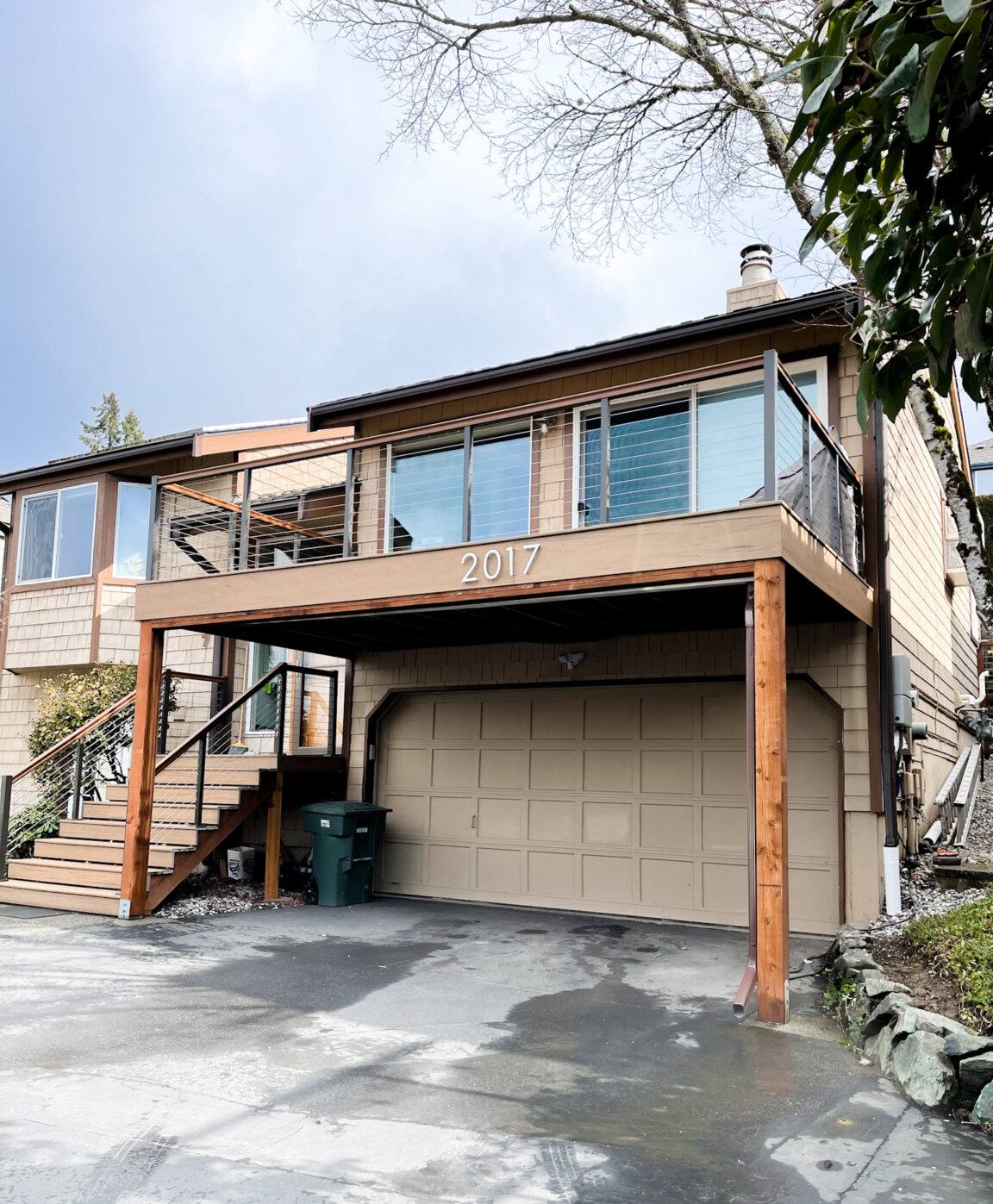
What Skagit County Weather Does to an Unmaintained Deck
Moss and Trapped Moisture
Moss doesn't just make a deck slippery — it holds water against the wood surface long after a storm has passed. Once moss establishes itself in the grain of a board or in the gaps between boards, that section of decking stays damp far longer than the rest of the structure, which is exactly the condition wood rot needs. In Skagit County, where overcast, damp stretches can run for weeks at a time, moss left untreated for a season or two is one of the most common reasons we get called out to look at "soft spots" in decking.
Salt Air and Metal Fatigue
Homes closer to the bay and the lower river valley deal with a slow, steady corrosive effect on anything metal — nails, screws, joist hangers, and structural brackets. Corrosion doesn't announce itself; a fastener can look fine on the surface while it's lost most of its holding strength underneath. This is why the hardware inside a deck often fails before the visible decking boards do, and why a proper repair has to include an inspection of what's holding the structure together, not just what you can see from the top.
Driving Rain and Wind-Driven Water
Rain in this part of Washington rarely falls straight down. Wind off the valley pushes it sideways, which drives water into places it was never meant to reach — behind ledger boards, under flashing, into end-grain cuts, and around post bases. Over time this creates hidden rot pockets that can be well advanced before any surface sign shows up. A deck that looks fine from the yard can still have a compromised ledger connection or a post base that's been sitting in wet soil contact for years.
Signs Your Avon Deck Needs Repair, Not Just Cleaning
Some problems can be solved with a good cleaning and a fresh coat of sealant. Others need structural attention. Here's how to tell the difference before you call anyone:
- Boards that flex, bounce, or feel spongy underfoot, especially near the house or along the outer edge
- Persistent moss or dark staining that comes back within weeks of cleaning
- Visible gaps, rust streaks, or pulled fasteners around joist hangers and ledger connections
- Railings that wiggle or shift when pushed — a safety issue, not a cosmetic one
- Stairs that feel uneven or where the stringers show cracking
- Water pooling in the same spots after every rain instead of draining off
- Any gap or daylight visible where the deck ledger meets the house siding or rim joist
If you're seeing any of the structural items on that list — flexing, rusted hardware, loose railings, pooling water at the ledger — that's a repair call, not a cleaning appointment.
What a Correct Deck Repair Actually Involves
A repair that only replaces the boards you can see is a temporary fix. A repair that holds up in Avon's climate starts underneath:
Ledger and flashing check. The ledger board — where the deck attaches to the house — is the single most common source of hidden rot because it's the hardest spot for water to escape once it gets behind the flashing. We check this connection on every repair, not just when a homeowner mentions it.
Joist and beam inspection. We probe suspect joists and beams for soft wood rather than assuming a board looks fine because the surface paint or stain is intact. Rot in structural framing is a different repair than rot in a surface board, and it needs to be caught before new decking goes down over it.
Fastener and hardware condition. Given the salt air this area sees, we look specifically for corroded joist hangers, pulled nails, and fasteners that have lost their grip — and we replace them with hardware rated for this environment, not whatever happens to be on the shelf.
Post and footing stability. Posts sitting in ground contact or in perpetually damp soil are a common weak point. We check for movement, base rot, and whether the original footing is still doing its job.
Drainage and slope. A deck that doesn't shed water properly will keep creating the same problems no matter how many boards get replaced. Part of a real repair is correcting slope, gaps, or blocked drainage paths that are letting water sit where it shouldn't.
Repair or Replace? How We Help You Decide
Not every deck problem calls for a full rebuild, and not every deck is worth patching. We look at the age of the structure, how much of the framing is affected, and how the repair cost compares to a partial or full replacement before recommending anything.
| Situation | Typical Recommendation | Why |
|---|---|---|
| Isolated soft boards, sound frame underneath | Board replacement | Framing is doing its job; only the wearing surface has failed |
| Rot at the ledger or rim joist connection | Targeted structural repair | This is a safety-critical connection and usually isolated to one area |
| Widespread rust on hangers and fasteners throughout | Hardware replacement across the structure | Corrosion rarely stops at one joist once it starts |
| Multiple posts or beams showing rot | Partial to full rebuild | Framing failure at this scale usually costs more to patch piecemeal than to redo |
| Deck is 20+ years old with recurring problems | Full replacement evaluation | Older framing and fasteners were often not built for today's moisture and code standards |
We'll always tell you honestly which category your deck falls into, even if that means recommending less work than you expected.
Materials and Fasteners We Choose for This Climate
Wood decking is a reasonable, budget-friendly choice, but in a salt-air, high-moisture environment like Avon it needs consistent maintenance — cleaning, moss treatment, and resealing on a schedule — to keep performing. Composite and PVC decking cost more up front but shed moisture and resist moss buildup with far less ongoing upkeep, which matters when a deck sits in a shaded, damp spot much of the year. Neither is automatically "wrong" — it depends on your budget, how much upkeep you want to do, and how the deck is oriented and shaded on your specific lot.
Where we don't compromise is fasteners and hardware. Standard galvanized hardware can corrode faster than expected this close to the bay, so we specify stainless steel or high-grade coated fasteners and connectors for repairs in this area as our standard practice, not an upsell.
| Factor | Wood Decking | Composite/PVC Decking |
|---|---|---|
| Upfront cost | Lower | Higher |
| Moss and moisture resistance | Requires regular cleaning/sealing | Sheds moisture, resists moss better |
| Maintenance routine | Annual cleaning and periodic resealing | Occasional washing, no sealing |
| Repair approach | Individual boards easily replaced | Matching older material can be harder over time |
| Typical lifespan with upkeep | Shorter without consistent maintenance | Longer with minimal upkeep |
Our Deck Repair Process
- On-site inspection. We walk the full structure — top, underside, and connections — and probe any area that looks or feels suspect.
- Honest assessment. You get a plain explanation of what's failing, what's still sound, and which repair category it falls into.
- Written scope and estimate. No vague line items — you know exactly what's being replaced and why before work starts.
- Structural work first. Ledger, framing, hardware, and post issues get corrected before any surface decking goes back down.
- Surface repair or replacement. Boards, railings, and stairs are repaired or replaced to match as closely as possible.
- Final walkthrough. We check the repair with you, including how the deck now handles drainage and slope.
Why Hire a Crew That Already Works in Avon
A contractor who mostly works drier, inland areas can miss what's actually going on with a deck near the Skagit Bay flats — because the failure patterns here are different. Rot shows up in different spots, hardware corrodes faster, and moss comes back on a different schedule than it would a few miles away from the water. Working regularly in Skagit County, including Avon and the surrounding valley, means we're not guessing at how this specific climate behaves on a deck — we're accounting for it from the first inspection.
If you're noticing soft boards, rusted hardware, or a deck that just doesn't feel as solid as it used to, we're happy to come take a look. The estimate is free, there's no pressure to move forward, and you'll get a straight answer about what your deck actually needs — use the form below to get started.