 Skagit County
 Deck Replacement in Big Lake: Built for What This Area Actually Does to Wood
Big Lake sits in a pocket of Skagit County where tree cover, lake humidity, and long stretches of gray, wet weather combine to age a deck faster than most homeowners expect. A deck that would hold up fine in a dry, open lot in eastern Washington can start showing rot, moss buildup, and soft spots years earlier here — especially on the shaded side of a house or under overhanging cedars and firs near the water. Deck replacement in this area isn't just about swapping old boards for new ones. It's about building a structure that's designed, from the framing up, to shed water and dry out between rain events instead of holding moisture against the wood.
We've worked on homes throughout Skagit County long enough to know that a deck built to a generic spec sheet doesn't last here the way it might somewhere drier. The combination of driving rain, humid lake-adjacent air, and a moss season that can run from fall through spring means every decision — decking material, fastener type, ledger flashing, footing depth — has to account for moisture that doesn't let up for months at a time.
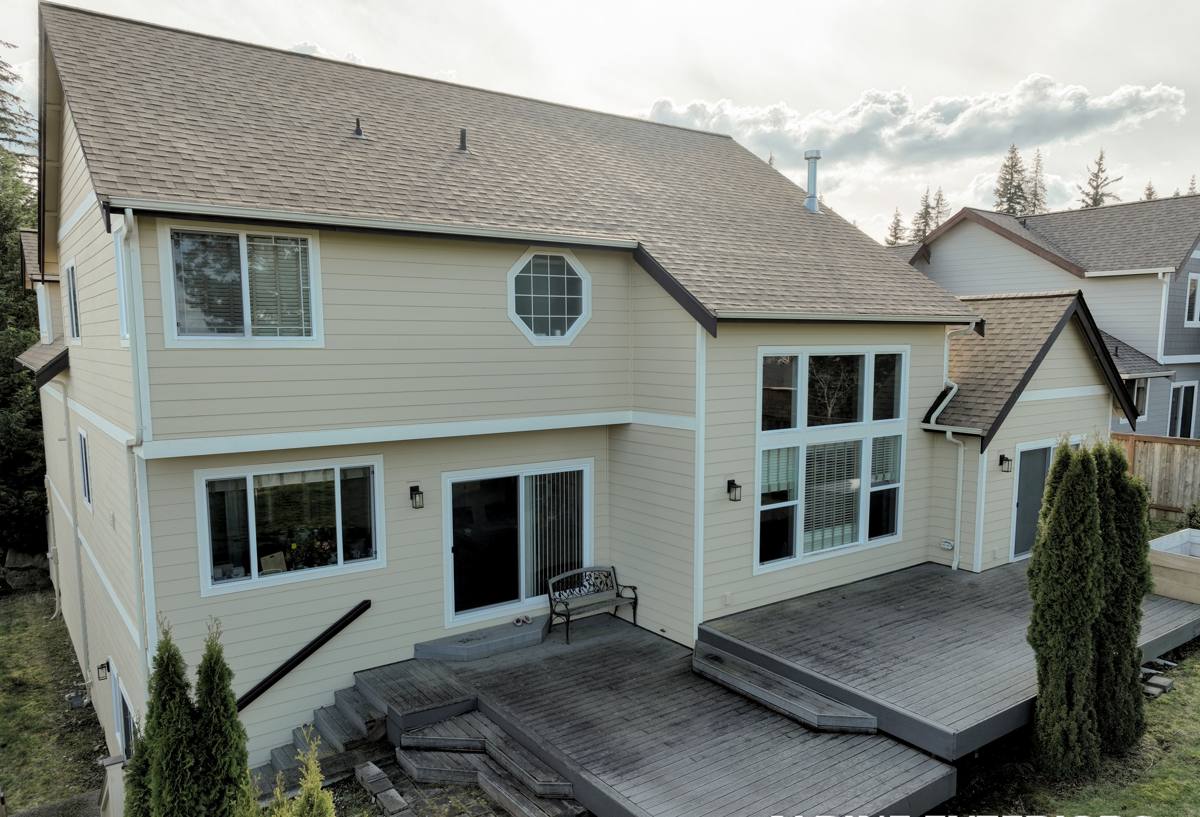
Signs a Big Lake Deck Needs Replacing, Not Just Patching
Homeowners often call us thinking they need a few boards swapped, and sometimes that's true. But there are signs that point to a full replacement being the more honest recommendation:
- Soft, spongy decking that flexes underfoot, especially near the house or lake-facing edge
- Visible rot or dark staining at the ledger board where the deck meets the house
- Persistent moss or algae film that regrows within weeks of cleaning, even in summer
- Rust streaking from fasteners, a sign the hardware itself is failing, not just the finish
- Wobbly railings or posts that move when pushed, which often points to compromised footings or connections below the surface
- A deck more than 15-20 years old built with older fastening methods or undersized framing by today's code
If the surface boards are the only problem and the frame underneath is sound and dry, resurfacing can make sense. But once rot has reached the joists, ledger, or posts, patching the top layer just hides a structural problem instead of fixing it.
What a Correct Deck Replacement Actually Involves
Starting With the Frame, Not the Boards
The part of a deck that fails first in Skagit County's climate usually isn't the visible decking — it's the framing underneath. Joists, beams, and posts that sit in damp shade for most of the year need proper spacing for airflow, correctly sized lumber for the span, and hardware rated for ground contact and moisture exposure. We build the frame to current code span tables rather than guessing based on what was there before, since older decks in this area were often framed lighter than they should have been.
Ledger Flashing: The Single Most Important Detail
Most of the rot we find in Skagit County decks traces back to one spot: where the deck ledger board attaches to the house. If that connection isn't flashed correctly, water gets behind the ledger and into the house's rim joist, and it can sit there for years before anyone notices a problem — sometimes not until siding or interior finishes are affected. A correct replacement means proper flashing, a drainage gap or barrier between the ledger and the house wall, and fasteners rated for the moisture exposure. This is not a place to cut corners, and it's the detail we check first on every replacement.
Footings and Posts
Footings need to be set to the proper frost depth and diameter for the load they're carrying, and posts need a base connection that keeps end-grain wood from sitting in standing water. On lake-adjacent lots with heavier clay or saturated soil, we pay close attention to drainage around footings so water doesn't pool against the post base year-round.
Decking Material Options for a Lake-Area Home
There's no single right answer for every home, but each material comes with real trade-offs worth understanding before you decide — especially given how much moss and moisture exposure this area sees.
| Material | Moisture & Moss Behavior | Maintenance | Typical Lifespan |
|---|---|---|---|
| Pressure-treated wood | Absorbs moisture, needs sealing to resist moss and staining | Annual cleaning and periodic sealing/staining | 10-15 years before major repair |
| Cedar | Naturally rot-resistant but still needs upkeep in shaded, damp spots | Regular cleaning, occasional oil or sealant | 15-20 years with upkeep |
| Composite decking | Doesn't absorb water like wood, but moss and algae can still grow on the surface film in shaded areas | Periodic washing, no sealing or staining needed | 25+ years, board warranty dependent |
| PVC/capped composite | Best moisture resistance of the group; least prone to sustained algae growth | Occasional washing | 25+ years, board warranty dependent |
Composite and PVC products cost more upfront, but for a deck that sits in shade near the lake for much of the year, the reduced maintenance burden is often worth it to homeowners who don't want to be out there scrubbing moss every spring. That said, wood still has a place — it's more forgiving to repair in sections, and some homeowners simply prefer the look and feel. We'll walk through the honest trade-offs for your specific lot and sun exposure rather than pushing one product line.
Fasteners and Hardware Matter More Than People Think
Skagit County's mix of marine-influenced air moving in off Puget Sound and the sustained humidity around Big Lake itself is hard on metal hardware. Standard fasteners can corrode and stain decking, and worse, weakened fasteners are a structural problem, not just a cosmetic one. We use fastener and hardware ratings appropriate for the wood treatment and moisture exposure on each project — this is a small line-item cost that prevents a much bigger problem five or ten years down the road.
Permits and Site Considerations Around Big Lake
Most attached deck replacements in Skagit County require a building permit, and any deck platform above a certain height typically needs code-compliant guardrails and stair railings. If your property is close to the water's edge, shoreline regulations can also come into play and may affect what's allowed for setbacks or footprint changes — this is worth checking before finalizing a design rather than after materials are ordered. We handle the permit process as part of the job so you're not left guessing what applies to your specific lot.
Our Deck Replacement Process
- On-site assessment of the existing deck, framing, ledger connection, and soil/drainage conditions
- Honest recommendation: full replacement, partial rebuild, or resurfacing, based on what we actually find underneath
- Design and material selection walk-through, including trade-offs for your home's sun/shade exposure
- Permit handling and scheduling
- Demolition and disposal of the old structure
- Framing, ledger flashing, and footing work, inspected before decking goes down
- Decking, railing, and stair installation
- Final walkthrough and care guidance specific to your deck's material and exposure
We don't cover framing mistakes with new boards. Every step above the frame gets checked before it's hidden, because that's the part of the deck you can't easily inspect again once it's finished.
Keeping a Big Lake Deck Ahead of Moss and Moisture
Even a well-built deck needs some seasonal attention in this climate. A few habits go a long way toward avoiding a repeat of the problems that led to needing a replacement in the first place:
- Sweep leaves and needles off the deck regularly in fall — trapped debris holds moisture against boards and speeds up moss growth
- Rinse or lightly wash decking a couple of times a year, more often in heavily shaded areas
- Keep gutters and downspouts near the deck clear so runoff isn't dumping directly onto or under the structure
- Check the ledger flashing area annually for any staining or gaps, especially after a hard winter
- Trim back tree limbs that keep sections of the deck in constant shade, if practical
- Reseal wood decking on the manufacturer's recommended schedule rather than waiting until it looks obviously weathered
Why Hiring a Crew That Already Works Big Lake Matters
A deck built to a generic national spec can still fail here if it doesn't account for how much moisture this specific area holds onto through fall, winter, and spring. Crews who work Skagit County regularly know which details — ledger flashing, footing drainage, fastener choice, decking material behavior in shade — actually matter for a deck's lifespan here, because we've seen what happens when those details get skipped. That local pattern recognition is worth as much as any product brochure.
If your Big Lake deck is showing rot, persistent moss, soft spots, or you're just planning ahead before a small problem becomes a bigger one, we're happy to take a look and give you a straightforward assessment. Reach out for a free, no-pressure estimate using the form below — we'll tell you honestly whether you need a full replacement or something less.