 Skagit County
 Siding Built for Life Around Big Lake
Big Lake sits in a pocket of Skagit County where the climate works against a house in ways that aren't always obvious from the road. The lake itself keeps humidity higher than you'd find on more open, breezy ground, the surrounding tree cover holds moisture close to exterior walls, and the low-lying terrain means water doesn't always drain away as fast as it should. Add in Skagit County's long, wet winters and the salt-tinged air that drifts inland from Puget Sound, and you've got a recipe for siding that fails early if it wasn't the right material or wasn't installed correctly in the first place.
We install siding around Big Lake regularly enough to know which sides of a house take the worst of the weather, where moss gets a foothold first, and which failure patterns show up on homes that got a rushed or under-spec job. This page is about what a correct siding installation looks like for a Big Lake home specifically — not a generic overview of siding in general.
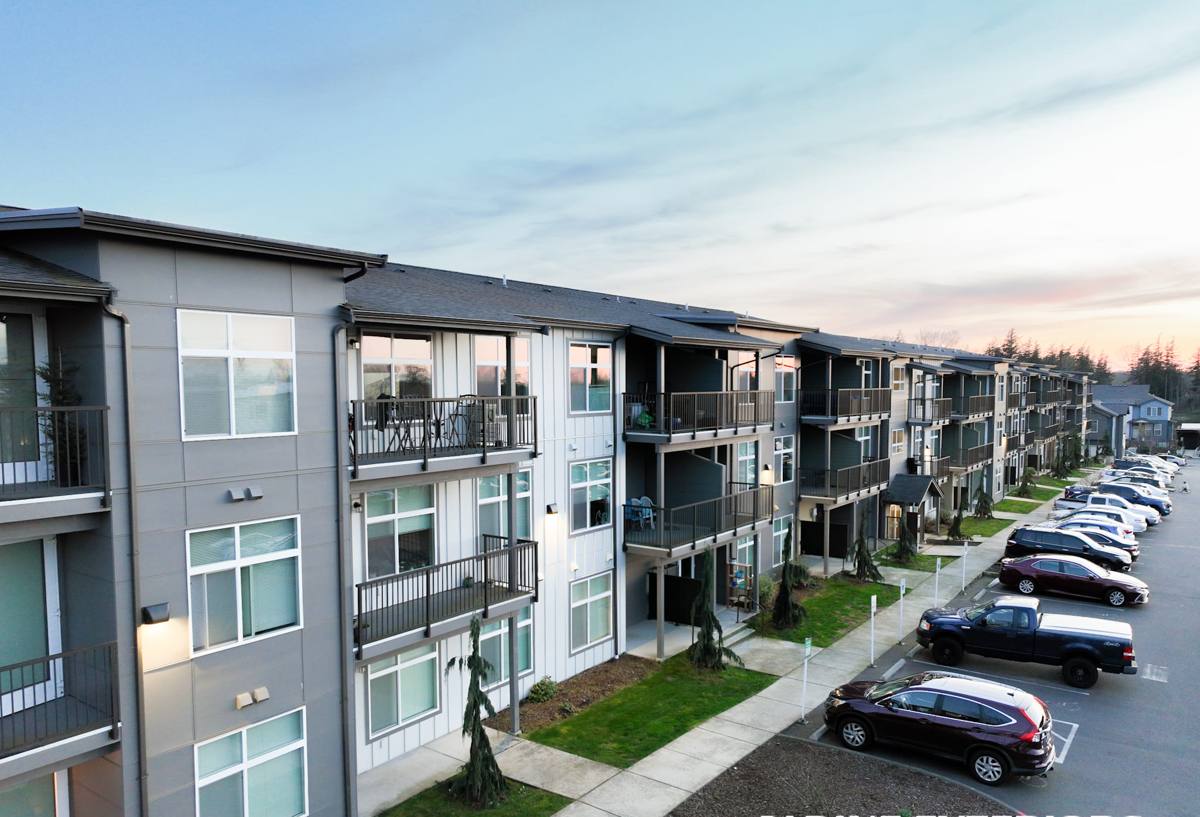
What Big Lake's Climate Actually Does to Siding
Moisture That Doesn't Let Up
Skagit County gets a long stretch of the year where the air stays damp and the sun doesn't get much chance to dry things out. Around Big Lake, tree cover and proximity to the water make that worse. Siding on the shaded, lake-facing side of a house can stay wet for days after a storm passes, which is exactly the condition that lets moss, algae, and mildew take hold on surfaces that can't handle sustained dampness.
Moss Season Is Real and It's Long
Moss doesn't just grow on roofs here — it works its way onto siding too, especially in shaded areas, behind shrubs, and near ground level where splashback keeps a wall damp. Once moss gets established on a porous or poorly finished surface, it holds moisture against the material and accelerates whatever damage the climate was already causing. Correct siding choice and installation details (proper clearance, drainage, and a factory finish that doesn't give moss much to grip) matter more here than in drier parts of the state.
Driving Rain and Wind-Driven Water
Storms coming off the Sound don't always arrive straight down — wind pushes rain sideways into walls, and that's when flashing, house wrap, and butt joint details either do their job or don't. A siding installation that looks fine on a dry day can leak for years before anyone notices water intrusion behind the wall, which is why the installation details matter as much as the material.
Why We Only Install James Hardie Fiber Cement
We don't install vinyl, LP SmartSide, Cemplank, Allura, primed spruce, or cedar. That's not a marketing position — it's a standard we hold because of what we've seen these products do (and not do) in exactly this kind of damp, moss-prone environment. James Hardie fiber cement is non-combustible, dimensionally stable in swings of moisture, and comes from the factory with a baked-on ColorPlus finish rather than a coat of field-applied paint that has to fight Skagit County's humidity from day one.
Hardie's HZ5 product line is engineered specifically for climates like ours — freeze-thaw cycling, sustained moisture exposure, and the kind of weather Big Lake sees most of the year. It doesn't absorb water the way wood-based products can, it doesn't need the same maintenance cycle vinyl eventually demands once it chalks or warps, and it carries a strong transferable warranty that actually means something when it's backed by correct installation.
How the Products Compare on the Issues That Matter Here
| Factor | James Hardie Fiber Cement | Vinyl / Wood-Based Alternatives |
|---|---|---|
| Moisture behavior | Dimensionally stable, doesn't swell or rot | Wood-based products can absorb moisture and swell; vinyl can warp under heat/cold cycling |
| Moss and algae resistance | Factory finish resists buildup; less porous surface | More porous or textured surfaces can hold moisture and encourage growth |
| Finish durability | Baked-on ColorPlus finish, factory-controlled | Field-applied paint or factory color that can fade, chalk, or need repainting sooner |
| Fire resistance | Non-combustible core material | Combustible in the case of wood-based products |
| Long-term maintenance | Periodic cleaning and caulk checks | Repainting cycles, more frequent repair of swelling or cracking |
What a Correct Siding Installation Involves
The siding material is only half the equation — how it goes on the wall determines whether it lasts. On Big Lake homes, we pay particular attention to a handful of details that get skipped on rushed jobs:
- Weather-resistive barrier: A continuous, properly lapped house wrap behind the siding, with no gaps where wind-driven rain can find its way in.
- Flashing at every penetration: Windows, doors, hose bibs, and vents all need flashing detailed so water sheds outward, not behind the cladding.
- Proper clearance from grade and roof lines: Siding held at the manufacturer's minimum clearance from soil, decks, and roofing keeps splashback and trapped moisture away from the bottom courses — the first place we see moss and staining start.
- Correct fastening pattern: Hardie specifies fastener type, spacing, and placement for a reason; blind-nailing or over-driving fasteners voids the warranty and creates entry points for water.
- Sealed and caulked joints done right: Butt joints, corners, and trim intersections sealed with a product rated for exterior movement, not a bead of whatever caulk was on the truck.
- Ventilation behind the cladding: A drainage plane that lets any moisture that does get behind the siding find its way back out instead of sitting against the wall sheathing.
Our Process for a Big Lake Home
1. On-Site Assessment
We walk the whole exterior, not just the side that's visibly failing. On lake-adjacent homes we pay close attention to the shaded and water-facing elevations, the condition of existing flashing, and any signs of moisture that have made it behind the current siding.
2. Scope and Product Selection
We talk through which Hardie product and profile fits the home — lap siding, panel, shingle-style — and where HZ5 specification makes the most sense given sun exposure and moisture exposure on each elevation.
3. Tear-Off and Substrate Check
Once old siding comes off, we inspect the sheathing underneath. This is often where hidden damage from years of trapped moisture shows up, and it needs to be addressed before new siding goes on — covering a compromised wall with new material just hides the problem.
4. Weather Barrier and Flashing
New house wrap goes on correctly lapped, and flashing gets installed at every window, door, and penetration before a single piece of siding is hung.
5. Installation to Manufacturer Spec
Hardie siding goes up following the manufacturer's fastening, clearance, and joint-sealing requirements — not a shortcut version of them. This is what keeps the warranty valid and what actually holds up to Skagit County winters.
6. Final Walkthrough
We go over the finished job with the homeowner, point out maintenance basics, and make sure everything meets both our standard and Hardie's installation requirements.
What to Ask Before Hiring Any Siding Crew Near Big Lake
A lot of siding problems trace back to who installed it, not what was installed. Before hiring anyone for a siding project on a Big Lake property, it's worth asking a few direct questions:
- Are they factory-certified or trained on the specific product they're installing?
- Will they inspect and address the sheathing underneath, not just cover it?
- Do they follow the manufacturer's published fastening and clearance specs, and can they explain them?
- Who handles the warranty if something goes wrong five or ten years down the road?
- Have they worked in this specific area and dealt with lake-adjacent moisture and moss conditions before?
Maintenance Once Your New Siding Is Up
James Hardie siding is low-maintenance compared to the alternatives, but "low-maintenance" isn't "no-maintenance," especially this close to the lake. A rinse-down once or twice a year knocks back any early moss or algae before it gets established, especially on shaded elevations. Keeping gutters clear so water isn't sheeting down the wall, trimming back vegetation that holds moisture against the siding, and a quick visual check of caulking at joints and trim after the wet season are the main things that keep a correctly installed system performing for decades.
Signs Your Current Siding Is Already Behind the Curve
| What You're Seeing | What It Usually Means |
|---|---|
| Persistent moss or dark staining that returns after cleaning | Surface is porous or clearance/drainage details are inadequate |
| Soft spots or visible swelling | Moisture has reached wood-based substrate or siding material |
| Paint peeling or finish chalking heavily | Field-applied finish is failing under sustained humidity |
| Gaps opening at joints or trim | Material movement or original caulking has failed |
| Musty smell near exterior walls indoors | Possible moisture intrusion behind the cladding |
Why a Local Crew Matters for Big Lake Specifically
Siding work near Big Lake isn't identical to siding work in a drier, more exposed part of Skagit County or a totally different climate zone. Knowing which elevations of a lake-adjacent home take the worst moisture load, how long moss season really runs here, and how driving rain off the water behaves against a wall comes from working in this specific area repeatedly — not from a generic install checklist. That local familiarity shows up in the details: where we pay extra attention to flashing, which clearance issues we check for first, and how we sequence a job around Skagit County's wet stretches so materials and substrate aren't compromised before the siding even goes up.
If you're planning a siding project on a Big Lake home, we're glad to walk the property, look at what your current siding is telling you, and put together a straightforward plan built around James Hardie fiber cement. Reach out for a free, no-pressure estimate using the form below.