 Skagit County
 Siding Repair Built for How Big Lake Homes Actually Age
Big Lake sits inland from the saltwater shoreline, but that doesn't mean the siding on homes here has it easy. Mature tree cover, close proximity to the water, and lots that stay shaded for much of the day create a damp microclimate that's different from a home sitting in the open a few miles away. Add in the driving rain and long moss season that define Skagit County winters generally, and you get siding that can look fine from the curb while quietly failing underneath. Siding repair around Big Lake isn't a one-size-fits-all job — it has to account for how moisture actually moves through a shaded, lake-adjacent property.
This page is specifically about repairing existing siding on Big Lake homes, not full replacement. If your siding is fundamentally sound but showing damage, wear, or moisture problems in specific areas, repair is usually the right call — done correctly, by someone who understands the difference between a cosmetic fix and a real one.
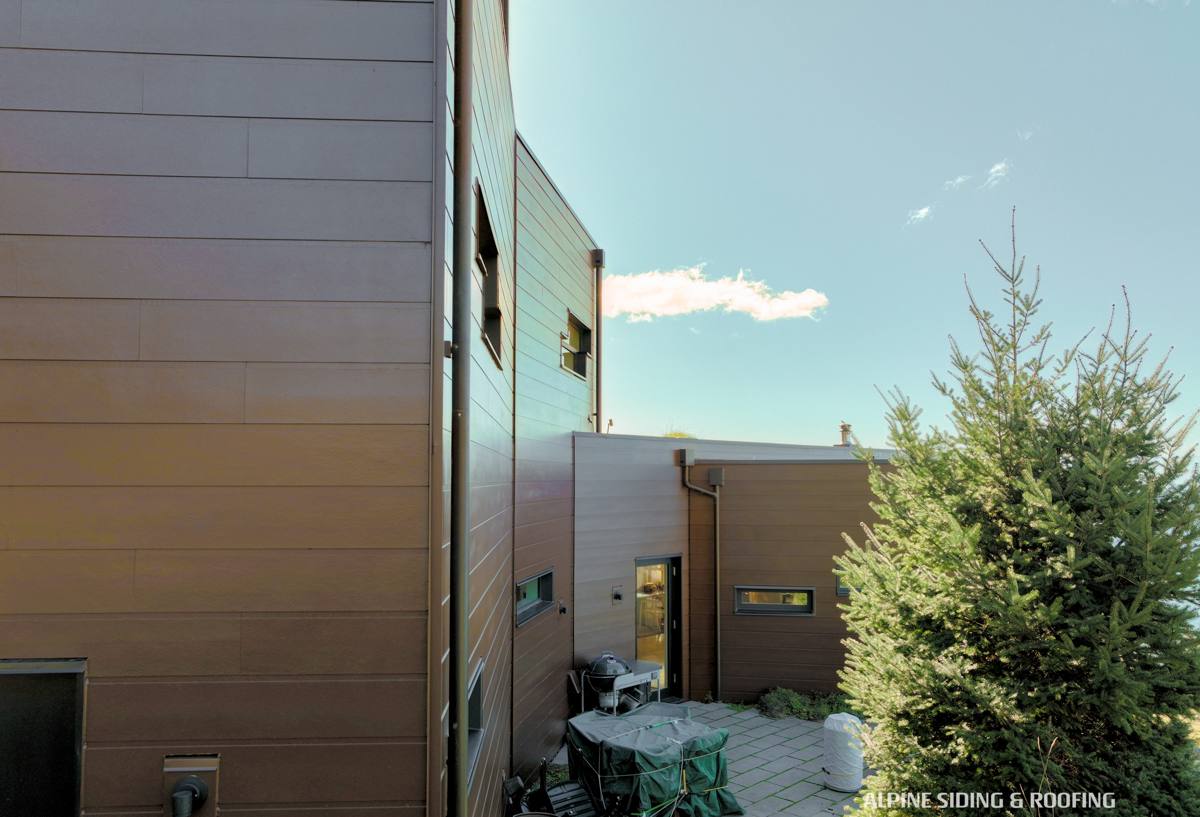
What Shade, Moss, and Rain Do to Siding Over Time
The Moss and Algae Problem
Homes tucked under tree canopy near Big Lake often hold moisture on north-facing and shaded walls far longer than sun-exposed sides of the same house. That extra dry time is exactly what moss, algae, and mildew need to establish. Left alone, these organisms hold water directly against the siding surface, which accelerates rot in wood-based products and can degrade paint film and caulking on almost any material over time.
Driving Rain and Wind-Driven Moisture
Skagit County's marine weather pattern brings sustained, wind-driven rain rather than short bursts. That matters for siding because wind-driven rain pushes water sideways into laps, seams, and trim joints — areas that a light, straight-down rain would never reach. Over years, that pattern finds every weak seam, gap, or failed caulk joint in a siding system.
Freeze-Thaw and Humidity Cycling
Even in a mild coastal winter, Skagit County sees enough freeze-thaw cycling to matter. Moisture trapped in a compromised siding panel or trim board expands when it freezes, widening cracks and splits that started small. Combined with the near-constant humidity a lakeside, shaded lot holds onto, this is a slow but steady process — which is why siding problems here tend to get discovered later than they should.
Signs a Big Lake Home Needs Siding Repair
Most siding repair calls we get start with one visible symptom that turns out to have a larger cause underneath. Walk your exterior — especially shaded and lake-facing walls — and look for:
- Soft or spongy spots when you press on siding, especially near the bottom courses or under windows
- Visible moss, algae, or black staining that keeps coming back after cleaning
- Cracked, bubbling, or peeling paint concentrated in one area rather than spread evenly
- Gaps opening up at seams, corners, or where siding meets trim, window frames, or the roofline
- Warped or bowed panels, particularly on walls that get the least direct sun
- Water stains or discoloration on interior walls or ceilings near an exterior wall
- Increased pest activity — carpenter ants and similar pests are drawn to damp, softened wood
Any one of these can be minor. Several together, especially clustered on a shaded or lake-facing wall, usually mean water has been getting behind the siding for a while.
What an Honest Siding Repair Actually Involves
A lot of "siding repair" in this climate is done wrong — caulk smeared over a symptom, a patch nailed over rot, paint applied to hide staining without solving the moisture source. None of that holds up through another wet Skagit County winter. A repair worth doing includes:
Finding the Actual Water Path
Before anything gets replaced, we trace where water is actually getting in. That might be a failed piece of flashing above a window, a gap where trim meets siding, a gutter dumping water against a wall, or simple age-related seam failure. Replacing siding without fixing the entry point just buys a year or two before the same spot fails again.
Checking What's Behind the Siding
Once damaged siding is removed, we check the sheathing and weather-resistive barrier underneath. If water has been getting in for a while, there may be soft sheathing or compromised house wrap that needs to be addressed before new siding goes back on — patching over a wet wall assembly doesn't fix anything, it just hides it again.
Matching Material and Finish
Repairs should blend in, not stand out as an obvious patch. That means matching plank width, reveal, and — where the existing siding is James Hardie ColorPlus finish — using compatible product so the repaired section weathers the same way as the rest of the house instead of aging differently and becoming a visible mismatch years down the road.
Repair or Replace? Weighing It Honestly
Not every damaged section means the whole house needs new siding, and not every "small" repair is actually small once the wall is opened up. Here's how we think through it:
| Factor | Repair Usually Makes Sense | Full Replacement Usually Makes Sense |
|---|---|---|
| Extent of damage | Isolated to one or two walls or sections | Recurring problems across most of the exterior |
| Underlying material | Siding is a durable product (like fiber cement) with a specific localized failure | Original material has known widespread moisture or warranty issues (older LP, cedar, primed spruce) |
| Sheathing condition | Sheathing checks out sound once opened up | Sheathing is soft or rotted in multiple areas |
| Age of siding | Siding is well within its expected service life | Siding is at or past the end of its realistic lifespan |
| Cosmetic match | Product and color are still available or close enough to match | Discontinued color/profile makes a seamless patch impossible |
We'll give you a straight answer on which category your home falls into — including telling you when repair is the right, more cost-effective call, not just upselling toward replacement.
Why We Repair With James Hardie Fiber Cement
This company installs only James Hardie fiber cement siding — we don't install vinyl, LP SmartSide, Cemplank, Allura, or unfinished wood siding, and that standard applies to repair work too. When we're patching into existing Hardie siding, that's straightforward: matching product, matching ColorPlus finish where possible.
When we're repairing a section of a different material, we'll be honest with you about the trade-off: patching cedar, primed wood, or vinyl with more of the same material keeps the repair invisible in the short term, but it doesn't change the underlying moisture sensitivity or maintenance burden of that material in a shaded, damp environment like Big Lake. Fiber cement is non-combustible, engineered specifically for wet Pacific Northwest climates, and holds a factory finish far longer than field-painted alternatives — which is why, when a homeowner is open to it, a repair is often a good opportunity to convert a problem section of the wall to Hardie rather than replace like-for-like.
How We Approach Siding Repair Jobs in Big Lake
- Full exterior walk-through — we assess every elevation, not just the spot you called about, since shaded and lake-facing walls often have problems that haven't surfaced yet.
- Moisture and sheathing check — where siding is opened up, we confirm what's happening underneath before quoting the repair.
- Honest scope and pricing — you get a clear explanation of what's failing, why, and what fixing it correctly requires.
- Repair matched to your siding — product, profile, and finish selected to blend with what's already on the house wherever possible.
- Clean, weather-sealed finish work — proper flashing, caulking, and paint or ColorPlus touch-up so the repaired area performs as well as it looks.
Maintenance That Keeps Repairs From Repeating
A good repair can still fail again if the conditions that caused it aren't managed. For Big Lake properties specifically, that usually means:
- Trimming back tree cover where it keeps a wall permanently shaded and damp
- Keeping gutters clear so roof runoff isn't dumping directly onto a siding wall
- Rinsing moss and algae off siding before it establishes rather than after it's thick
- Re-checking caulk at trim and window joints every couple of years, since it's usually the first thing to fail
None of this is complicated, but it's the difference between a repair that lasts and one you're calling us about again in three years.
Why a Local Crew Matters for This Kind of Work
Siding repair is diagnostic work as much as it's installation work — the value is in correctly identifying why a section failed, not just swapping boards. A crew that already works Big Lake and the surrounding Skagit County area has seen how homes in this specific setting age: which walls fail first, what the shade and lake humidity do over a decade, and what a correct repair needs to hold up against another wet season. That local pattern recognition is hard to replace with a crew passing through from out of the area.
If you've got a section of siding on your Big Lake home that's showing damage, staining, or softness, we're happy to take a look and give you a straightforward assessment — no pressure, no upsell, just an honest read on what's actually needed. Reach out below for a free estimate.