 Skagit County
 Board & Batten Siding in Big Lake, Washington
Board and batten siding has a long history in the Skagit Valley, from old farmhouses along the flats to newer homes going up around Big Lake. The vertical lines, deep shadow reveals, and simple, honest look work well on everything from a lake cabin to a full-size custom home. But board and batten is not just lap siding turned sideways — it moves water differently, it fastens differently, and when it's done wrong it fails in ways that are expensive to fix. If you're considering board and batten for a home near Big Lake, it's worth understanding what the style actually needs to hold up here before you sign a contract.
We install James Hardie fiber cement exclusively, including Hardie's board and batten and vertical panel systems. This page covers what correct board and batten installation looks like on a Big Lake property, what our local climate does to vertical siding over time, and why we standardized on one product system instead of offering the full menu of vinyl, engineered wood, and fiber cement options.
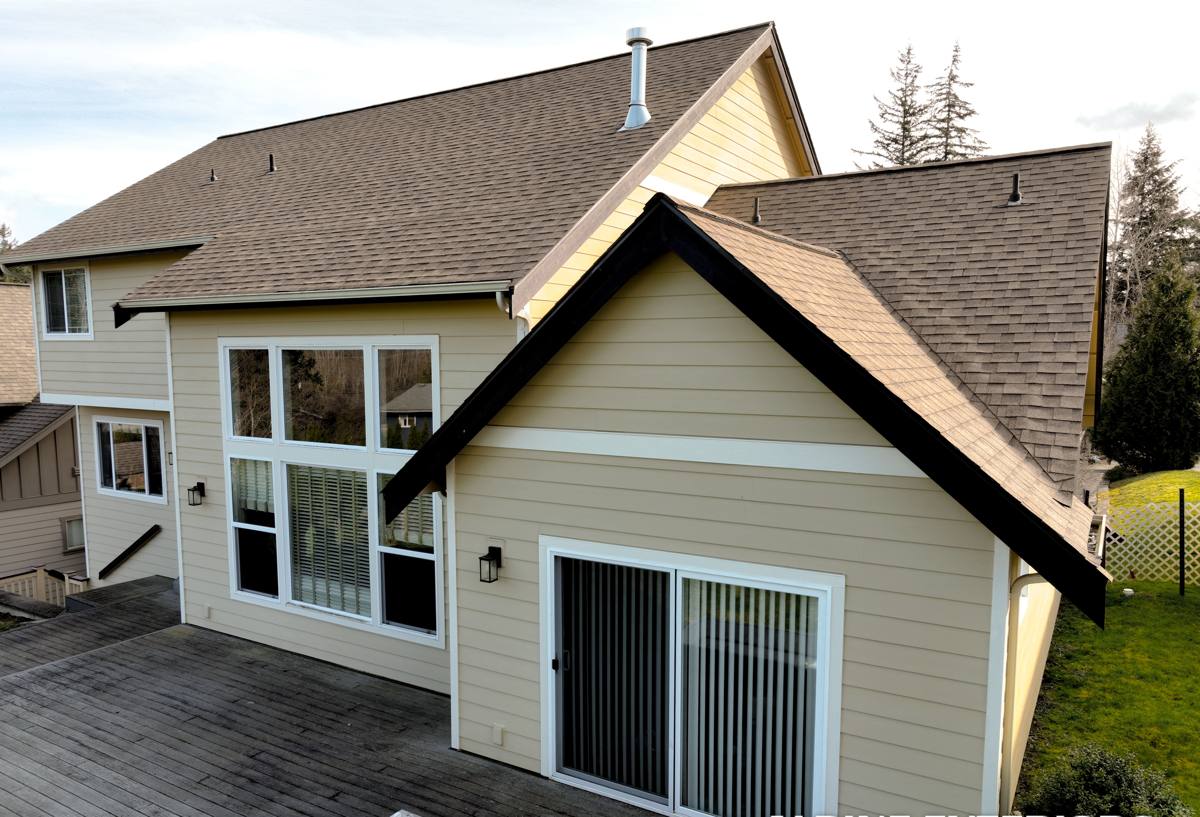
What Big Lake's Climate Does to Vertical Siding
Big Lake sits inland from Puget Sound but still gets the combined effects of Skagit County's marine-influenced weather: long stretches of driving rain off the water, humid air that keeps siding damp for days at a time, and a moss and algae season that can run most of the year on north- and shade-facing walls. Add the salt air that reaches inland across the county on windier days, and you have a climate that is genuinely hard on exterior materials, even ones that look fine from the curb.
Vertical siding is more exposed to this than horizontal lap in a few specific ways:
- Battens create hundreds of vertical seams per wall, each one a potential path for water if it isn't fastened and sealed correctly.
- Wind-driven rain travels sideways, and vertical grooves can funnel it downward against the wall rather than shedding it outward the way horizontal laps do.
- Moss and algae take hold fastest in the shaded, slower-drying pockets behind battens, especially on north walls near trees or close to the water.
- Freeze-thaw cycles in the shoulder seasons stress any moisture trapped behind the battens, which is where cheaper or poorly installed materials start to swell, crack, or pull away from the wall.
None of this means board and batten is a bad choice for a Big Lake home — it means the installation has to account for these conditions from the start, not patch them later.
Why Board and Batten Needs Different Engineering Than Lap Siding
Horizontal lap siding is designed around gravity: each course overlaps the one below it, so water runs down and off. Board and batten works differently. The vertical boards or panels carry the water load, and the battens cover the seams between them, so the whole system depends on a correctly built drainage plane behind the siding, not just the visible face.
The Parts That Actually Keep Water Out
On a properly built board and batten wall, the siding itself is almost the last line of defense, not the first. Behind it should be:
- A weather-resistant barrier (housewrap) installed shingle-style, lapped correctly at every seam
- Furring strips or a rainscreen gap in wetter, less-ventilated locations, so any moisture that gets behind the siding can drain and dry rather than sitting against the sheathing
- Properly flashed windows, doors, and any wall penetrations before the first board goes up
- Correct fastener placement and spacing so panels and battens can expand and contract without splitting or pulling loose
Skip any of these steps and the siding might look correct for a year or two before problems show up — usually as staining, soft spots, or battens working loose, by which point the fix involves opening up the wall, not just recaulking.
James Hardie Board and Batten: The System We Install
We install James Hardie exclusively — no vinyl, no LP SmartSide, no primed cedar or spruce, no other fiber cement brand. For board and batten specifically, that means Hardie's vertical panel and batten trim system, factory-finished with ColorPlus Technology.
Why We Standardized on One Product
We used to see the tradeoffs of the alternatives play out on real homes across Skagit County, and board and batten makes those tradeoffs sharper because of how exposed the seams are:
- Vinyl board and batten is lightweight and affordable, but it flexes in wind, can warp in direct sun, and the seams and battens are typically snapped or nailed on in ways that are harder to keep watertight long-term than a fiber cement system.
- Engineered wood (LP SmartSide) board and batten performs reasonably well when it's kept sealed, but any breach in the factory coating — a cut edge, a scratch, a nail pop — lets moisture into the wood substrate, and that's a real risk in a climate as wet as ours.
- Primed cedar or spruce board and batten gives you the most traditional look but demands the most upkeep: repainting on a cycle, checking for rot at the base of boards and around battens, and dealing with the moss and mildew that untreated wood attracts fastest in shaded, damp spots.
James Hardie fiber cement is non-combustible, dimensionally stable in wet climates, and holds its factory finish far longer than field-painted wood or engineered wood products. It costs more up front than vinyl. We think that's the honest tradeoff, not a hard sell — and it's why it's the only system we put our name behind.
Board and Batten Options Compared
| Material | How It Handles Big Lake's Rain | Moss/Algae Resistance | Typical Maintenance |
|---|---|---|---|
| James Hardie fiber cement | Dimensionally stable, factory-sealed edges when installed to spec | Factory finish resists staining; periodic gentle washing recommended | Low — no repainting cycle with ColorPlus finish |
| Vinyl | Can flex and gap at seams in wind-driven rain | Prone to algae streaking, especially on shaded walls | Low cost but panels can crack or fade over time |
| LP SmartSide / engineered wood | Good if coating stays intact; vulnerable at cuts and fastener points | Moderate; depends on coating condition | Moderate — inspect edges and touch up coating |
| Primed cedar/spruce | Traditional but absorbs moisture without diligent upkeep | Most prone to moss/mildew in shaded, damp areas | Highest — repainting and rot checks on a regular cycle |
What a Correct Board and Batten Job Involves in Big Lake
Because of how much this style depends on what's happening behind the visible surface, we treat every board and batten project as a full wall-assembly job, not a facelift. That includes:
Before the First Panel Goes Up
- Inspecting and, where needed, repairing the sheathing underneath the existing siding
- Installing or replacing the weather-resistant barrier correctly, with attention to every seam and penetration
- Flashing windows, doors, and trim details so water is directed out and away from the wall, not behind it
- Deciding whether a rainscreen gap is warranted for the specific wall, orientation, and shade exposure
During Installation
- Panel and batten spacing set to manufacturer specification, allowing for expansion
- Fasteners placed at the correct depth and location — overdriven nails are one of the most common causes of early siding failure
- Consistent batten reveal and alignment, which matters more visually on board and batten than almost any other siding style since the vertical lines are the whole design
- Careful treatment of inside and outside corners, which take the brunt of wind-driven rain on a lake-adjacent property
Our Process, Start to Finish
A board and batten project on a Big Lake home typically follows the same sequence:
- On-site assessment — we look at the existing siding and sheathing condition, wall exposure to prevailing wind and rain direction, and any moss or moisture issues already present.
- Written estimate — a clear scope covering removal, sheathing repair if needed, weather barrier and flashing work, and the Hardie board and batten installation itself, with color and reveal options.
- Prep and tear-off — removing old siding and addressing anything found underneath before it gets covered up again.
- Weather barrier and flashing — the unglamorous part of the job that determines whether the siding lasts 10 years or 40.
- Installation — panels and battens installed to spec, with consistent spacing and properly placed fasteners.
- Final walkthrough — checking reveal consistency, trim details, and caulking before we call it finished.
Why a Crew That Already Works Big Lake Matters
Board and batten mistakes are often invisible for a year or two, which is exactly why hiring locally-experienced installers matters more here than in a drier climate. A crew that regularly works Skagit County properties near the water already accounts for things that aren't obvious from a spec sheet: which wall orientations near Big Lake tend to hold moisture longest, how much of a rainscreen gap is worth the extra cost on a given exposure, and where moss tends to establish first so it can be planned around rather than discovered later. That local pattern recognition is hard to get from a crew that mostly works drier inland areas or does one board and batten job a year.
Maintenance After Installation
James Hardie board and batten with a ColorPlus finish needs far less upkeep than wood or engineered wood alternatives, but "low maintenance" isn't "no maintenance," especially in a moss-prone climate like Skagit County's.
- Rinse the siding periodically with a garden hose, focusing on shaded or north-facing walls where moss and algae take hold first
- Keep gutters clear and downspouts directed away from the wall base to avoid concentrated splash-back
- Trim back vegetation and tree cover that keeps a wall section shaded and slow to dry
- Have caulking at trim and corner joints checked every few years and refreshed if it's cracking or pulling away
- Avoid pressure washing directly into seams and battens, which can force water behind the siding instead of removing it
Questions to Ask Before You Hire
Board and batten hides installation shortcuts well for the first year or two, which makes vetting a contractor before the work starts more important than with most siding styles. Before hiring anyone for a board and batten project near Big Lake, it's worth asking:
- Will you inspect and repair the sheathing before installing new siding, not just cover what's there?
- What weather-resistant barrier do you use, and how are the seams and penetrations handled?
- Will you install a rainscreen gap, and if not, why not for this specific wall?
- What fastener spacing and reveal will you use, and does it match the manufacturer's published installation guide?
- Can you walk me through how corners and window/door flashing will be handled?
If you're weighing board and batten for a home near Big Lake, we're happy to walk the property, look at your walls' exposure, and give you a straightforward, no-pressure estimate for a James Hardie installation built for this climate.