 Skagit County
 Board & Batten Siding Built for Lyman's River Valley Climate
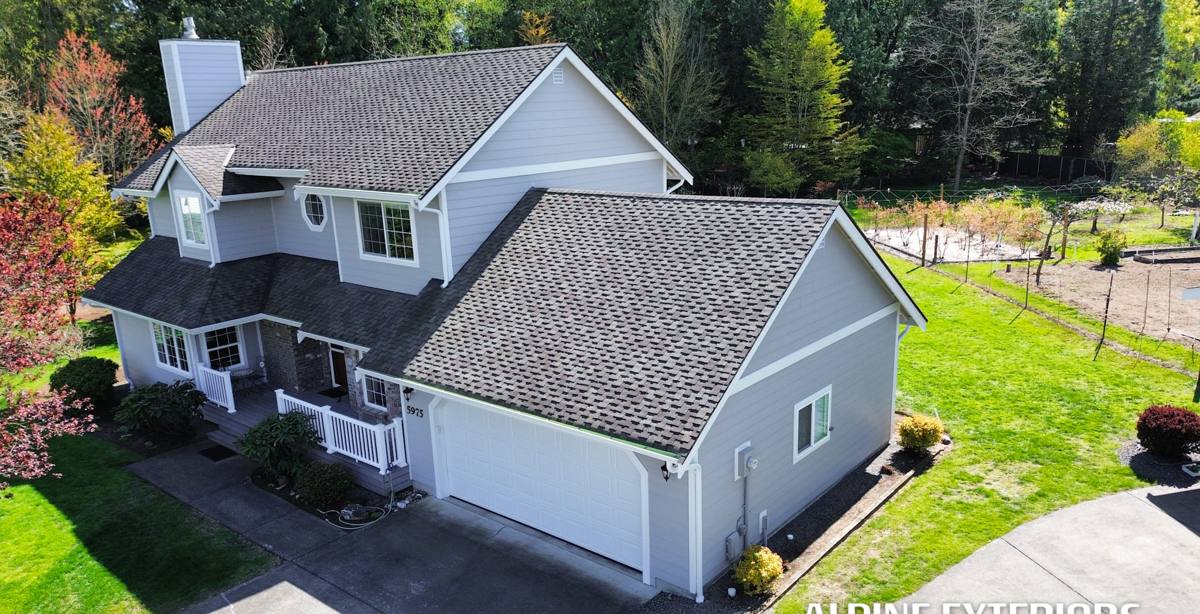
Lyman sits in the Skagit River valley, tucked against the foothills where dense evergreen tree cover, low-lying terrain, and long stretches of shade are just part of daily life. That combination is exactly why board & batten siding has stayed popular here for generations — the strong vertical lines read well against the wooded backdrop, and the style has deep roots in the barns, outbuildings, and farmhouses that still dot this part of Skagit County. But the look only holds up if what's underneath it is built to handle what this climate actually does to a house: salt-tinged air moving up the valley from Puget Sound, driving rain that hits siding sideways during fall and winter storms, and a moss season that can stretch most of the year on shaded, north-facing walls.
This page covers what board & batten siding needs to succeed on a Lyman home specifically — not board & batten in general — including how we build it, why we only build it in James Hardie fiber cement, and what to look for in a contractor who actually knows this area.
What Lyman's Climate Does to Siding Over Time
Moisture and Driving Rain
Skagit County gets a lot of rain, and Lyman's position in the river valley means that rain often arrives with wind behind it. Driving rain doesn't just wet a wall — it pushes water sideways and upward into laps, seams, and fastener points. Board & batten siding has more vertical seams than lap siding, and every one of those seams is a place where water can find its way behind the cladding if the batten spacing, fastening, and flashing details aren't done correctly. Get those details wrong and you're not looking at a cosmetic problem — you're looking at trapped moisture working on the sheathing and framing behind the siding.
Shade and Moss
Lyman's wooded, low-light lots are beautiful, but they're also close to ideal growing conditions for moss and algae. Walls that stay damp longer because they're shaded by trees or hillsides will grow moss faster than walls that get regular sun and airflow. Moss holds moisture against the siding surface, and on the wrong material that constant dampness accelerates rot, delamination, or coating failure. On the right material, it's a maintenance item — not a structural one.
Salt Air and General Weathering
Skagit County's proximity to Puget Sound means homes throughout the region, including inland communities like Lyman, deal with some degree of salt-laden air moving through on prevailing winds. Combined with year-round moisture, that's a steady, low-grade assault on fasteners, coatings, and any siding material that isn't dimensionally stable. Over a decade or two, the difference between a siding system engineered for this and one that wasn't becomes very visible.
What a Correctly Installed Board & Batten Job Actually Involves
Board & batten looks simple from the street — vertical panels with battens covering the seams — but the installation has more places to get wrong than standard lap siding. A correct install includes:
- A properly lapped and sealed weather-resistive barrier behind the siding, with all penetrations flashed before the first panel goes up
- A rainscreen gap (furring strips or a drainable house wrap) so any moisture that does get behind the cladding can drain and dry instead of sitting against the sheathing
- Correct batten spacing and layout planned before install, not adjusted on the fly, so reveals stay even across the whole elevation
- Fasteners placed and spaced to manufacturer specification — through both the panel and the batten where required — using corrosion-resistant fasteners suited to a coastal-influenced climate
- Proper flush-mounted or J-channel trim details at windows, corners, and roof lines so water is directed out, not into, the wall assembly
- Factory-primed or factory-finished cut edges sealed in the field, since raw cut edges are the fastest way moisture gets into a panel
Skip any one of these steps and the siding can still look right for a year or two. The problems that show up later — soft spots, staining, panels that have started to cup or separate at the seams — almost always trace back to one of these details being rushed or skipped during install.
Why We Only Install This in James Hardie Fiber Cement
Board & batten is achievable in several materials — wood, vinyl, engineered wood, and fiber cement all offer a board & batten profile. We've made a deliberate call to install James Hardie fiber cement exclusively, and it's worth explaining why rather than just stating it.
Wood board & batten has genuine appeal and a long history in this region, but solid wood or primed spruce panels are organic material in a climate that stays damp for much of the year. They need consistent repainting and caulking to keep water out, and in a shaded, moisture-heavy setting like Lyman, that maintenance schedule tends to compress. Vinyl board & batten is low-maintenance in one sense, but it's a thin plastic product that expands and contracts significantly with temperature swings, can distort in direct heat, and doesn't hold paint if a color change is ever wanted — and it doesn't offer the crisp, substantial board profile that board & batten is supposed to deliver. Engineered wood products close some of those gaps but are still wood-based at the core, meaning edge moisture protection is critical and any breach in the factory coating creates a path for water into the substrate.
James Hardie fiber cement is cement, sand, and cellulose fiber — it doesn't rot, it isn't attractive to insects, and it's non-combustible, which matters in a state with real wildfire exposure most years. Hardie's ColorPlus factory finish is baked on under controlled conditions and backed by its own finish warranty, which means the color holds up against UV and moisture without homeowners needing to repaint on the schedule wood siding demands. It's a heavier, more dimensionally stable material, so it holds tight, straight batten lines over time instead of shifting with the seasons. That's the combination we want standing behind a board & batten look for the next several decades, not just the next few years.
Design Options That Work Well in Lyman
Board & batten doesn't have to mean one look. James Hardie's product lines give homeowners real choices in board width, reveal spacing, and finish, so the style can be dialed in to fit anything from a rural farmhouse-style build to a more modern cabin aesthetic — both common in and around Lyman.
| Design Choice | What It Affects | Consideration for Lyman Homes |
|---|---|---|
| Panel/board width | Overall visual scale, how "bold" the vertical lines read | Wider boards read well on larger elevations; narrower spacing suits smaller cottage-style homes common in the valley |
| Batten reveal spacing | Shadow lines and rhythm across the wall | Even spacing matters more on shaded walls where low light emphasizes shadow lines |
| Color/finish | Heat absorption, UV fade resistance, moss visibility | Factory ColorPlus finish resists the fading and staining that shaded, damp walls accelerate on field-painted materials |
| Full board & batten vs. accent use | Cost and where the eye is drawn | Many homes here use board & batten as a gable or accent treatment over a lap-sided main body, which controls cost while keeping the look |
Our Process, Start to Finish
We approach every board & batten job in Lyman the same deliberate way:
- Walk-through and assessment — we look at existing siding condition, shading, drainage patterns around the home, and any moisture or moss issues already present before quoting anything
- Layout planning — batten spacing and reveal widths are planned on paper against the actual elevations, not eyeballed once material is on site
- Tear-off and sheathing check — old siding comes off and the sheathing underneath gets inspected for hidden rot or moisture damage before anything new goes up
- Weather barrier and rainscreen installation — the drainage plane goes in correctly the first time, since this is the layer that determines how the whole system performs over the next 20+ years
- Panel and batten installation — installed to James Hardie's fastening and spacing specifications, with all cut edges sealed
- Trim, flashing, and final detailing — windows, corners, and transitions get finished so water is directed away from the wall assembly at every point
- Final walk-through — we go over the finished job with the homeowner before calling it done
What to Ask Before Hiring Anyone for This Job
Board & batten's clean look hides a lot of installation detail, which makes it easy for a homeowner to end up with a job that looks fine at handoff and causes problems two winters later. Before hiring any contractor for board & batten siding, ask:
- Do you install a rainscreen/drainage gap behind the siding, or does the panel go straight against the house wrap?
- How do you handle batten fastening — through the panel and furring strip both, per manufacturer spec?
- Who inspects the sheathing once old siding is removed, and what happens if rot is found?
- What's your plan for flashing at window and door openings specifically?
- Is the material factory-finished, and what does that finish warranty actually cover?
- Have you worked in Lyman or similar shaded, damp Skagit County settings before?
Why Hiring a Crew That Already Works in Lyman Matters
Lyman isn't a big market, and that's exactly the point — a crew that regularly works this part of Skagit County has already seen how shaded lots hold moisture, how the valley's rain moves, and where moss tends to establish first on a home. That experience shows up in small decisions during install: extra attention to drainage on north-facing walls, batten spacing that accounts for how shadows fall under tree cover, flashing details sized for the driving rain this valley actually sees rather than a generic specification. A contractor unfamiliar with the area is starting from zero on all of that. We're not.
If you're weighing board & batten siding for a home in Lyman, we're happy to walk the property, look at your existing siding and drainage conditions, and give you a straightforward, no-pressure estimate for what a correctly built James Hardie board & batten system would look like on your house. Use the form below to get started.