 Skagit County
 Building Decks in Bow: A Different Set of Rules
Bow sits close to the water along Skagit County's shoreline and farm country, which means a deck here lives a harder life than one built twenty miles inland. Salt-laden air off the Sound accelerates corrosion on fasteners and connectors. Driving rain off the water pushes moisture into places a calmer climate would never test. And a long, damp moss season keeps every horizontal wood surface wet for months at a time. None of this makes a deck impossible to build well — it just means the details that get skipped on a cheaper job are exactly the details that matter most out here.
We've built and repaired decks throughout this corner of Skagit County long enough to know which shortcuts show up as callbacks two winters later. This page walks through what a Bow deck actually needs, what our process looks like, and why local experience isn't just a marketing line — it changes real decisions on the job.
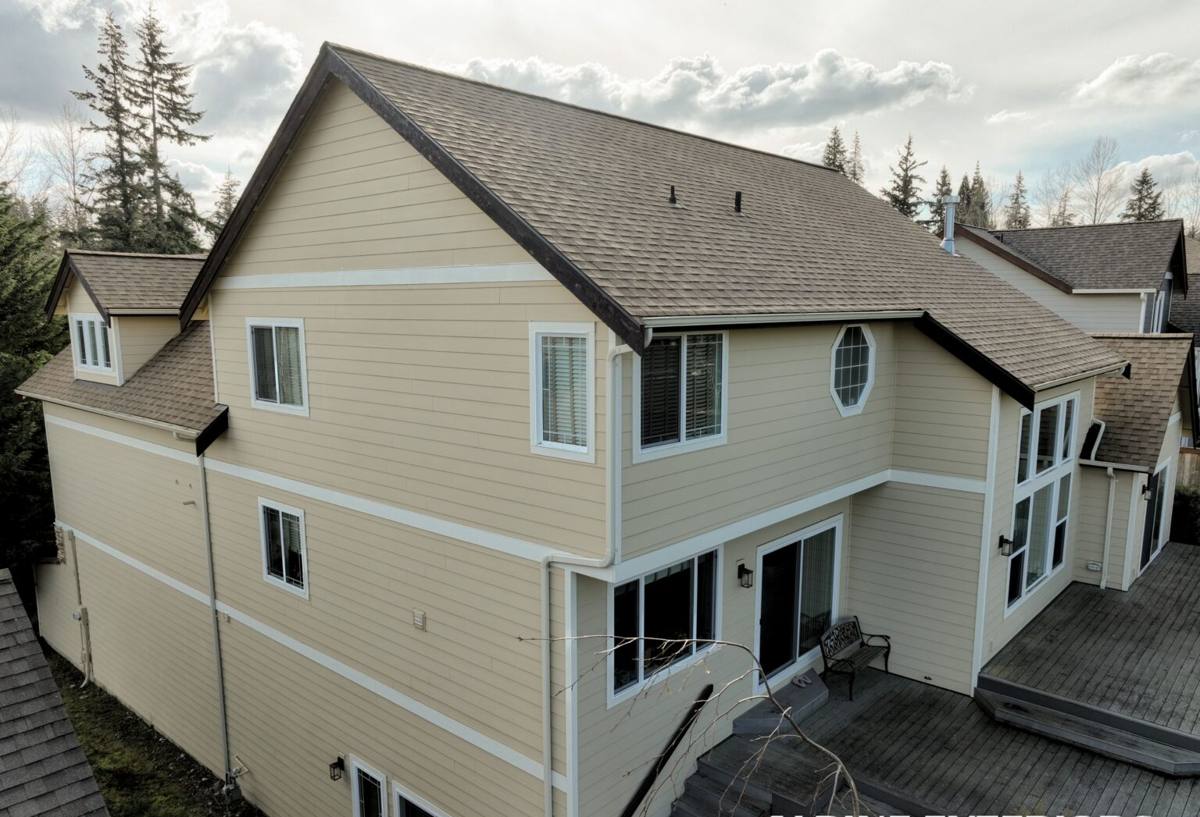
What Bow's Climate Does to an Ordinary Deck
Salt Air and Corrosion
Proximity to salt water doesn't just affect boats and railings — it works on every piece of metal in a deck's structure. Standard zinc-coated fasteners and connectors that hold up fine in drier parts of the state can start rusting at the head within a few seasons this close to the shoreline. Once a fastener corrodes, it loses grip strength long before it looks obviously bad, which is part of why deck failures often surprise homeowners.
Driving Rain and Wind-Driven Moisture
Rain in this part of Skagit County doesn't always fall straight down. Wind off the water pushes it sideways, up under rail caps, behind ledger boards, and into any gap a builder left "close enough." A deck built to a dry-climate standard of flashing and sealing will let water in here — it's just a matter of time.
The Long Moss Season
Shade, moisture, and mild temperatures are exactly what moss and algae need, and this region gives them most of the year to work. Moss holds water against decking boards, slowly breaking down wood fibers and turning a walking surface slick and dangerous. Material choice, board spacing, and even deck orientation all affect how much of a moss problem you're signing up for.
What a Correctly Built Deck Involves Here
Framing and Fasteners
We build the structural frame — posts, beams, joists — with hardware rated for the exposure it's actually going to face, not the minimum a plan set allows. In practice that means stainless steel or hot-dip galvanized fasteners and connectors near the shoreline, proper joist hangers at every connection, and hardware that's tightened and inspected, not just installed.
Ledger Attachment and Flashing
The ledger board — where the deck attaches to the house — is the single most common failure point on decks anywhere, and it's worse in a wet climate. Correct flashing directs water away from the house framing instead of trapping it behind the ledger, where it rots framing you can't see until the damage is already extensive. This is not a step we shortcut, and it's not one a homeowner can verify after the decking is on.
Decking Material Choice
There's no single right answer for every project, but there is a right conversation to have about moisture behavior, moss resistance, and long-term maintenance before you pick a board.
| Material | Moisture Behavior | Moss/Algae Resistance | Maintenance | Typical Lifespan |
|---|---|---|---|---|
| Pressure-treated wood | Absorbs and releases moisture; can cup or check | Low — needs regular cleaning | Annual cleaning, periodic sealing | 10-15 years with upkeep |
| Cedar | Naturally moisture-resistant, but surface still absorbs | Moderate | Regular cleaning, occasional oil/sealer | 15-20 years with upkeep |
| Capped composite | Does not absorb water into the core | Higher — smoother surface sheds moss more easily | Occasional washing, no sealing | 25+ years |
| PVC decking | Fully non-absorbent | Highest of the common options | Occasional washing | 25+ years |
Wood costs less up front and looks the part, but it asks for more of your time every year it's exposed to this much moisture. Composite and PVC cost more initially but shed water and moss with far less maintenance — an honest trade, not a sales pitch, and one worth making deliberately rather than by default.
Footings and Substructure
Post footings need to be set to the frost depth and bearing requirements that apply to your specific lot, and in low-lying or poorly-draining areas near the water table, drainage around footings matters as much as depth. We evaluate soil and drainage on-site rather than assuming a standard footing spec fits every yard in Bow.
Permits and Local Code Considerations
Deck projects in unincorporated Skagit County typically require a building permit once they exceed a certain height or size, and guardrail height, stair geometry, and footing depth are all governed by adopted building code. Setbacks from property lines can also come into play depending on your lot. We handle the permit application and inspection scheduling as part of the job rather than leaving that paperwork to the homeowner — it's one less thing to chase down, and it protects you if you ever sell the house.
Our Process for a Bow Deck Project
- On-site evaluation. We look at sun and wind exposure, drainage, existing structure (for replacements), and how the deck will actually be used.
- Design and material selection. We walk through decking, railing, and hardware options with the trade-offs laid out plainly — cost, maintenance, and how each holds up to salt air and moisture.
- Permit handling. We prepare and submit what the jurisdiction requires and schedule inspections at the appropriate stages.
- Demolition (if replacing). Old decking and, if needed, structural members are removed and hauled off.
- Framing and footings. Posts, footings, beams, and joists go in first, built to the exposure the site actually has.
- Decking, railing, and finish work. Boards, railings, stairs, and any lighting or finish details are installed and inspected.
- Final walkthrough. We go over maintenance expectations for the specific material you chose so there are no surprises a year later.
Why a Crew That Already Works in Bow Matters
A contractor who mostly builds decks in drier, inland parts of the state will make different default assumptions than one who works this shoreline regularly. That shows up in small but consequential decisions: which fastener grade gets specified without having to think twice, how much slope gets built into the decking for drainage, and which board spacing actually sheds moss instead of collecting it. It also shows up in practical logistics — knowing the local permitting process for Skagit County, understanding typical soil conditions in this area, and not needing a learning curve on your project's dime.
We're not asking you to take that on faith. Ask any contractor bidding your deck how they'd handle ledger flashing near salt air, or what fastener grade they spec by default — the answer tells you a lot about whether they've actually built here before.
Cost Factors to Expect
| Factor | Why It Moves the Price |
|---|---|
| Decking material | Wood costs less upfront; composite/PVC cost more but reduce long-term maintenance |
| Deck size and height | Larger decks and multi-level structures require more framing, footings, and stair/rail runs |
| Site access and grading | Difficult access or sloped, poorly-draining lots add labor for footings and equipment |
| Railing style | Cable, glass, and custom rail systems cost more than standard rail and baluster designs |
| Permit and inspection requirements | Larger or elevated decks generally require more inspection steps |
| Demolition and disposal | Replacing an existing deck adds tear-off and haul-away costs |
Exact numbers depend on your site and choices, which is why we walk every project through an on-site estimate rather than quoting off a phone call.
Signs an Existing Deck Needs Attention
- Soft, spongy, or discolored boards, especially near the house or in shaded corners
- Persistent moss or green film that returns quickly after cleaning
- Rust streaks around fasteners or visibly corroded hardware
- Gaps or movement where the ledger board meets the house
- Wobble in railings or posts when you lean on them
- Standing water that doesn't drain off the surface within an hour or two of rain
Any one of these is worth a look before it becomes a safety issue rather than a maintenance item.
Questions Worth Asking Before You Hire
- What fastener and connector grade do you use by default in this area?
- How do you flash and seal the ledger board attachment?
- Will you pull the required permit and schedule inspections?
- What's your recommendation for decking material given moss and moisture, and why?
- What maintenance will this material actually require once it's installed?
If you're weighing a new deck or replacing one that's showing its age, we're happy to come take a look and talk through honest options for your site — no pressure, no obligation. Use the form below to request a free estimate.