 Skagit County
 Building New in Bow Means Getting the Window Install Right the First Time
When you're framing a new home in Bow, the windows go in once — as part of the shell, tied into the house wrap, flashing, and siding sequence. There's no second chance to fix a bad flashing detail without tearing into finished walls. That's what makes new-construction window work different from a replacement job, and it's why the install sequence matters as much as the window itself.
Bow sits close to the water in Skagit County, between the open exposure of Samish Bay and the wetter interior of the Skagit Valley. New homes here take on a specific combination of stresses: salt-laden air moving in off the water, long stretches of driving rain pushed sideways by wind, and a moss season that can run most of the year on north- and west-facing walls. A window installed correctly on day one shrugs all of that off for decades. A window installed with a shortcut in the flashing sequence starts showing problems — staining, soft trim, fogged glass — within a few winters.
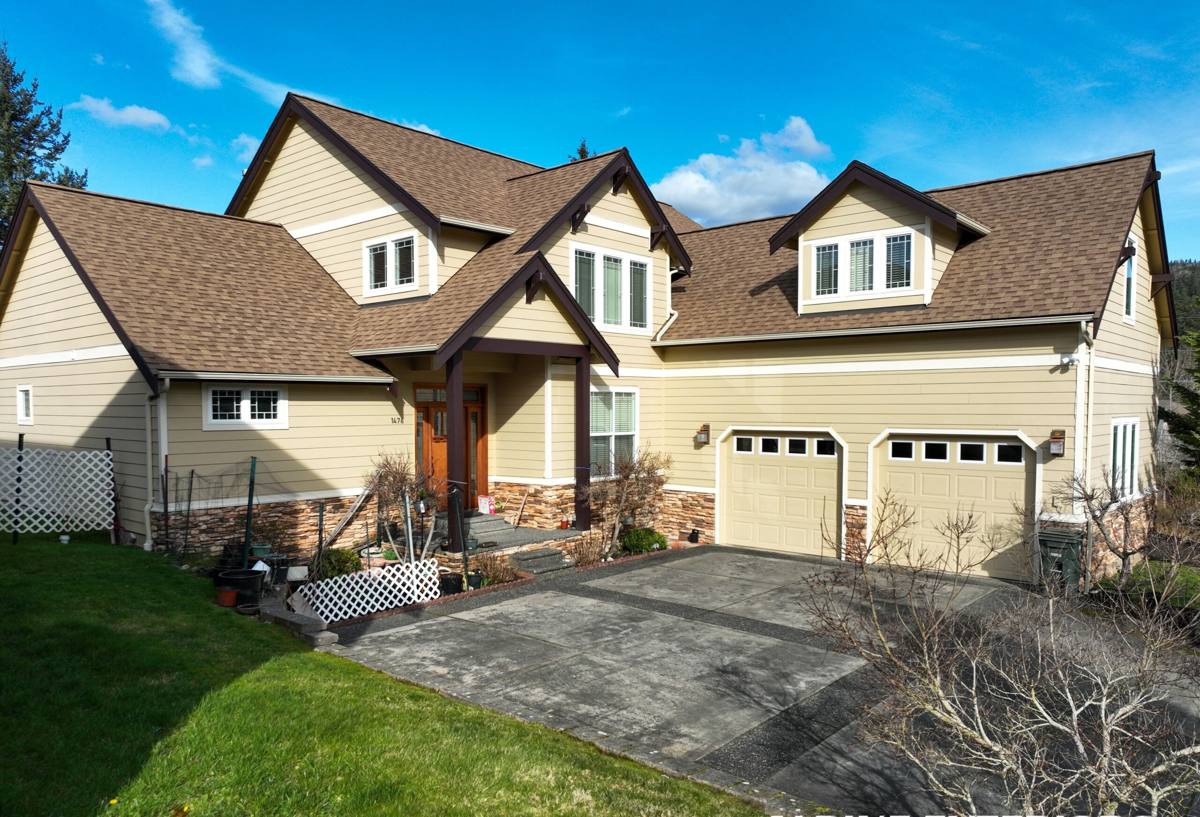
What Bow's Climate Actually Does to a New Home's Windows
Salt Air
Airborne salt from the Sound and the bay settles on everything, including window hardware and exposed fasteners. Over time it accelerates corrosion on lower-grade hinges, cranks, and screws, and it can dull or pit unprotected metal cladding. This is a bigger factor for homes closer to open water, but Bow's proximity to Samish Bay means most new builds in the area get at least some exposure.
Driving Rain
Skagit County storms rarely come straight down — wind off the water pushes rain sideways into wall assemblies, which puts real pressure on every seam around a window opening. A new-construction window depends on correctly lapped flashing and house wrap to shed that water down and out, not into the framing. This is the single biggest point of failure we see in poorly sequenced installs, and it's invisible from the outside until rot shows up years later.
Moss and Sustained Moisture
Shaded, north-facing walls in this part of the county stay damp for long stretches of the year, which is exactly the environment moss and mildew need. Window sills, trim boards, and the caulk lines around them are where it takes hold first. Material choice and drainage detailing at the sill matter more here than in a drier climate.
What a Correct New-Construction Window Install Actually Involves
"New-construction window" refers to a window with a nailing flange, designed to be set into a rough opening before siding goes on — as opposed to a replacement window, which is sized to fit inside an existing frame. The install itself is a sequence, not a single step, and skipping or reordering any part of it undermines the whole assembly:
- Rough opening is checked for square, level, and correct dimensions before the window ever arrives on site
- Sill pan flashing is installed first, sloped to drain water outward, not just laid flat
- Window is set, shimmed plumb and square, and fastened through the nailing flange per the manufacturer's schedule
- Flashing tape is applied at the jambs and head in the correct shingle-lap order — head flashing always laps over the house wrap above it, never under
- House wrap is integrated back over the flange so water is directed down and out over the siding below, not behind it
- Interior and exterior sealant is applied at the right joints only — sealing every seam solid can trap moisture instead of letting it drain
Any one of these steps done out of order — house wrap taped under the flange instead of over it, a sill pan skipped to save time — can look fine on install day and still fail years later. That's the risk with new construction: mistakes get buried behind siding and trim before anyone notices.
Choosing the Right Window Material for a Bow New Build
Material choice affects how well a window handles salt air, sustained moisture, and the freeze-thaw swings that show up on the marine side of the county. There's no single "best" option — it depends on budget, exposure, and how the home is oriented.
| Frame Material | Salt Air / Moisture Performance | Maintenance | Typical Fit |
|---|---|---|---|
| Vinyl | Good — won't corrode or rot, though dark colors can fade over time in direct sun | Low — occasional cleaning, no painting | Most budget-conscious new builds |
| Fiberglass | Very good — dimensionally stable, resists warping and corrosion in coastal exposure | Low | Homes with more direct water/wind exposure |
| Wood-clad | Depends heavily on cladding integrity — once the exterior clad layer is breached, moisture can reach the wood core | Higher — cladding seams and sills need periodic inspection | Homes prioritizing interior wood aesthetics |
| Aluminum | Poor in salt air without marine-grade coatings — prone to corrosion and higher conductivity | Moderate | Rarely our recommendation for this climate |
For most new construction in Bow, we steer homeowners toward vinyl or fiberglass for the balance of upfront cost and long-term durability against salt and rain. Wood-clad has real appeal for interior finish work, but we're honest with clients about the added maintenance discipline it requires in a marine climate — it's not that the product is bad, it's that the trade-off needs to match how much upkeep you actually want to do.
Our Process, From Rough Opening to Final Trim
- Plan review. We work from your framer's or architect's rough opening dimensions before windows are ordered, so sizing is confirmed early rather than discovered as a problem on install day.
- Pre-install inspection. Every rough opening is checked for square and correct flashing prep before a window goes in.
- Sill pan and flashing. Sloped sill pans go in first, followed by jamb and head flashing in the correct overlap order.
- Setting the window. Shimmed, squared, and fastened to manufacturer spec — not just tacked in place.
- House wrap integration. Wrap is lapped and taped so the whole wall assembly drains as one system, not window-by-window.
- Interior and exterior finish coordination. We time our work with your siding and interior trim crews so nothing gets covered before it's been checked.
- Final walkthrough. Operation, seals, and sightlines are checked on every unit before we call the job done.
Cost Factors for New-Construction Window Projects
Every new build is different, but the same handful of factors drive most of the cost variation we see on Bow projects:
| Factor | Why It Matters |
|---|---|
| Number and size of openings | More and larger windows mean more material, flashing, and labor hours |
| Frame material | Vinyl is typically the most budget-friendly; fiberglass and wood-clad cost more upfront |
| Glass package | Upgraded low-E coatings and gas fills improve comfort and energy performance but add cost per unit |
| Exposure and elevation | Walls facing prevailing wind and rain off the water may warrant upgraded flashing details |
| Site access and timing | Coordinating install around framing, wrap, and siding crews affects scheduling and efficiency |
We'll always give you a straightforward, itemized estimate rather than a vague lump sum — you should know what you're paying for.
Questions Worth Asking Before You Hire
- Will you coordinate directly with my framer or general contractor on timing and flashing details?
- What's your sill pan and flashing sequence, specifically — can you walk me through it?
- Are your crews familiar with local wind and rain exposure patterns, or just standard installs?
- What window brands and materials do you install, and why do you recommend one over another for my site?
- What's covered under labor warranty versus manufacturer warranty, and for how long?
Why Hiring a Crew That Already Works Bow Matters
Skagit County covers a lot of ground, from drier inland valley to exposed shoreline near Samish Bay, and window details that work fine in one microclimate can underperform in another. A crew that regularly works in and around Bow already understands which walls take the worst of the driving rain, where moss takes hold fastest, and how much flashing overlap is worth the extra time on a coastal-facing elevation. That's not something you get from a general contractor doing their first job in the area — it's built from repetition on homes like yours, in the same weather your new build will actually face.
We also know the practical side of working alongside other trades on an active new-construction site: staying out of the framer's way, timing our install so siding crews aren't waiting on us, and flagging rough-opening issues before they become expensive change orders. That coordination matters as much as the window itself when you're trying to keep a build on schedule.
Get a Straightforward Estimate for Your Bow New Build
If you're framing a new home in Bow and want windows installed the right way the first time, we're happy to take a look at your plans and rough openings and give you a clear, no-pressure estimate. There's a form below — reach out and we'll walk through your project with you.