 Skagit County
 Why Siding Choice Matters More in Mount Vernon
Mount Vernon sits in the Skagit River valley, close enough to Padilla Bay and Skagit Bay that homes here deal with a mix of coastal and valley weather. Salt-tinged air moves in off the water, rain settles into the valley and lingers, and the combination of shade, moisture, and mild temperatures keeps moss and algae active most of the year. Siding on a Mount Vernon home isn't just a design choice — it's the layer standing between that weather and the framing underneath, and in Skagit County it works hard for its living.
Some siding materials tolerate that workload well. Others start showing problems within a few years: swelling at the edges, peeling paint, soft spots, or a green-black film that never fully goes away no matter how often it's washed. We install James Hardie fiber cement siding exclusively, and in a climate like this one, that's not a marketing preference — it's the product we trust to actually hold up.
What Skagit Valley Weather Does to the Wrong Siding
Driving Rain and Standing Moisture
Rain in Skagit County rarely falls straight down for long. Wind off the bay and the valley's own weather patterns push it sideways into wall assemblies, testing every seam, lap, and penetration. Materials that absorb water or trap it behind their surface — engineered wood products, some composite panels — are the ones most likely to swell, delaminate, or rot from the inside out over time.
Salt Air
Mount Vernon isn't beachfront, but it's close enough to tidal water that salt-laden air reaches homes here, especially on the west-facing sides of a property. Salt accelerates corrosion on fasteners and trim, and it degrades some paint and coating systems faster than a purely inland climate would.
The Long Moss Season
Between valley fog, tree cover, and months of damp weather, moss and algae get a long runway to establish themselves on north-facing and shaded walls. Porous or textured surfaces give moss more to grip onto, and once it's established, it holds moisture against the siding surface even longer — a cycle that speeds up whatever damage the rain was already starting.
Why We Install Only James Hardie Here
We made a decision as a company to install James Hardie fiber cement siding and nothing else — not vinyl, not LP SmartSide, not primed spruce or cedar, not other fiber cement brands. That's a narrower lineup than most siding contractors offer, and we're upfront about why: in a climate like Skagit County's, the material matters more than the style, and we don't want to sell a homeowner something we wouldn't put on our own house.
Fiber cement is non-combustible, which matters given wildfire smoke seasons are now a regular part of Pacific Northwest summers. It doesn't absorb water the way wood-based products do, so it doesn't swell, cup, or invite rot at the edges. James Hardie's ColorPlus factory-applied finish is baked on under controlled conditions rather than field-painted, which gives it more consistent coverage and better resistance to fading and moss staining than most site-applied paint jobs. And Hardie backs it with a strong, transferable limited warranty — worth something to a homeowner who may sell the house in ten or fifteen years.
None of this means other products are junk. Vinyl is inexpensive and low-maintenance in the right setting. Cedar has real appeal for homeowners who want a natural look and are willing to keep up with it. LP SmartSide and other engineered wood products have their place. But we've seen enough of what this specific climate does to those materials over a full lifecycle that we chose to specialize rather than offer everything. Specializing means our crews install one system, correctly, over and over, instead of splitting attention across five different product lines.
Why We Don't Install the Alternatives Here
- Vinyl siding: Lightweight and budget-friendly, but it can warp in temperature swings, fade unevenly over time, and offers less impact resistance than fiber cement.
- LP SmartSide and other engineered wood: Treated to resist moisture, but any breach in the coating or a poorly sealed cut edge gives water a path in, and wood-based cores are more vulnerable to that than fiber cement.
- Primed spruce or cedar: Beautiful natural material, but it demands ongoing painting, caulking, and moisture vigilance — a real commitment in a climate that stays damp as long as this one does.
- Other fiber cement brands: Some competing products exist, but we've standardized on James Hardie for its factory finish quality, climate-engineered formulations, and the depth of its installation network and warranty support.
The James Hardie Product Lines That Fit This Area
James Hardie engineers its siding by climate zone. Western Washington, including Skagit County, falls into the HZ5 zone — formulated for regions with sustained moisture exposure and freeze-thaw cycling, as opposed to the HZ10 formulation built for hot, humid southern climates. That distinction matters: it's part of why we don't treat "fiber cement" as a single interchangeable product and instead specify the version actually engineered for this weather.
| Product Line | Best Suited For | Notes for Mount Vernon Homes |
|---|---|---|
| HardiePlank Lap Siding | Most single-family homes | The standard workhorse; wide color and texture range through ColorPlus |
| HardiePanel Vertical Siding | Modern or mixed-material facades | Pairs well with lap siding for accent walls and gables |
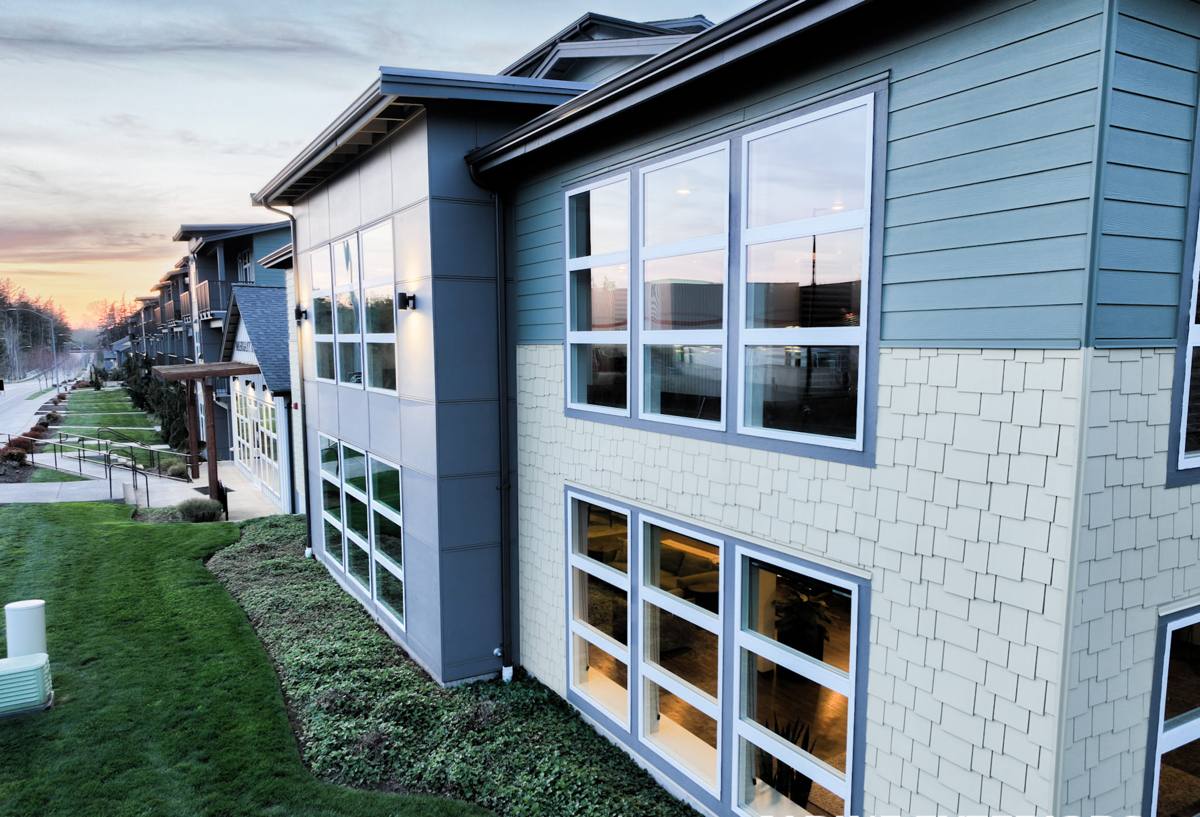
| HardieShingle | Craftsman or cottage-style homes | Gives a shingle look without the maintenance of real cedar shakes |
| HardieTrim | Corners, fascia, window and door surrounds | Matched fiber cement trim resists the same moisture and moss issues as the field siding |
What a Correct Installation Involves
Fiber cement siding is only as good as the assembly it's installed into. A large share of the siding failures we see on inspection weren't caused by the material — they were caused by shortcuts in the installation. In a valley climate with this much rain and moisture cycling, the details behind the siding matter as much as the siding itself.
Key Steps We Don't Skip
- Weather-resistant barrier installed correctly, with proper lapping and sealed penetrations, before any siding goes up
- Rainscreen or furring where the wall assembly calls for it, to let moisture drain and the wall breathe rather than trapping water against the sheathing
- Proper flashing at every window, door, and roof intersection — the places where most water intrusion actually starts
- Correct fastener type, spacing, and placement per James Hardie's published installation specifications
- Factory-cut edges used wherever possible, with any field-cut edges properly sealed and primed
- Manufacturer-specified clearances from grade, decks, and roof lines to keep siding out of standing water and splash-back zones
Skip any one of these steps and you can end up with a wall that looks right for a year or two before problems show up — usually right around the seams and penetrations that were rushed.
Our Process, Start to Finish
1. On-Site Assessment
We walk the property, look at current siding condition, check for moisture damage or rot already in progress, and evaluate sun exposure, shade, and wind-driven rain exposure on each side of the house — details that differ from one Mount Vernon lot to the next depending on tree cover and orientation.
2. Product and Color Selection
We help homeowners choose the right Hardie product line, texture, and ColorPlus finish for the home's style and the specific conditions of that elevation.
3. Detailed Estimate
A clear, itemized estimate covering materials, tear-off if needed, and installation — no vague allowances.
4. Installation
Our crews install to James Hardie's published specifications, including the weather barrier, flashing, and fastening details outlined above — not a generic siding install adapted on the fly.
5. Final Walkthrough
We review the finished work with the homeowner, confirm everything meets our standard, and make sure warranty documentation is in order.
What Affects the Cost of a Siding Project
| Factor | Why It Matters |
|---|---|
| Home size and wall complexity | More corners, dormers, and roof lines mean more cutting, flashing, and labor time |
| Tear-off vs. new construction | Removing and disposing of existing siding adds cost versus installing over new sheathing |
| Existing moisture or rot damage | Damaged sheathing or framing found during tear-off needs repair before new siding goes on |
| Product line and texture | Lap, panel, and shingle profiles carry different material costs |
| Trim and accent work | Matched HardieTrim on corners, fascia, and window surrounds adds to the scope but improves long-term performance |
We don't quote ballpark numbers without seeing the house — too much depends on current condition and wall complexity — but every estimate we provide is itemized so homeowners can see exactly what they're paying for.
Caring for James Hardie Siding in This Climate
James Hardie siding is genuinely low-maintenance compared to wood or engineered alternatives, but "low-maintenance" isn't "no-maintenance," especially in a climate that supports moss growth this well.
- Rinse the siding with a garden hose once or twice a year to clear pollen, dust, and early moss growth before it takes hold
- Keep gutters clean and downspouts directed away from the wall to reduce splash-back and sheet flow across the siding
- Trim back vegetation and tree limbs that shade siding and keep it damp longer than it needs to be
- Re-caulk joints and trim as needed over the years — caulk wears out well before the siding itself does
- Address any impact damage or exposed edges promptly rather than letting moisture find a way in
Why Local Experience Matters
A crew that installs siding across a wide range of climates has to generalize. A crew that works Skagit County homes regularly knows which walls take the worst of the wind-driven rain, which shaded north sides need extra attention to moss, and how the valley's humidity behaves differently than it does twenty miles inland or up in the foothills. That local pattern recognition shows up in the details — flashing choices, clearance decisions, where we push back on a design element that would trap moisture in this specific setting.
If your Mount Vernon home needs new siding, or you're comparing materials before you commit to a full replacement, we're happy to take a look and talk through what James Hardie would involve for your specific property. Reach out for a free, no-pressure estimate using the form below.