 Skagit County
 Bow Sits in One of Skagit County's Toughest Spots for Siding
Bow doesn't get talked about as much as the bigger towns in Skagit County, but homes here take a real beating year-round. The combination of proximity to salt water, wide-open exposure to weather moving in off the water, and the shaded, damp pockets typical of this part of the county means siding here ages differently than it does twenty miles inland. We've replaced siding on enough homes in and around Bow to know what actually fails first, and it's rarely the parts of the house people expect.
Three things drive most of the siding problems we see in this area: salt-laden air that accelerates corrosion on fasteners and trim, driving rain that gets pushed sideways into wall assemblies during storms, and a moss season that runs longer here than in drier parts of the state. Any siding replacement done right in Bow has to be planned around all three, not just the material on the surface.
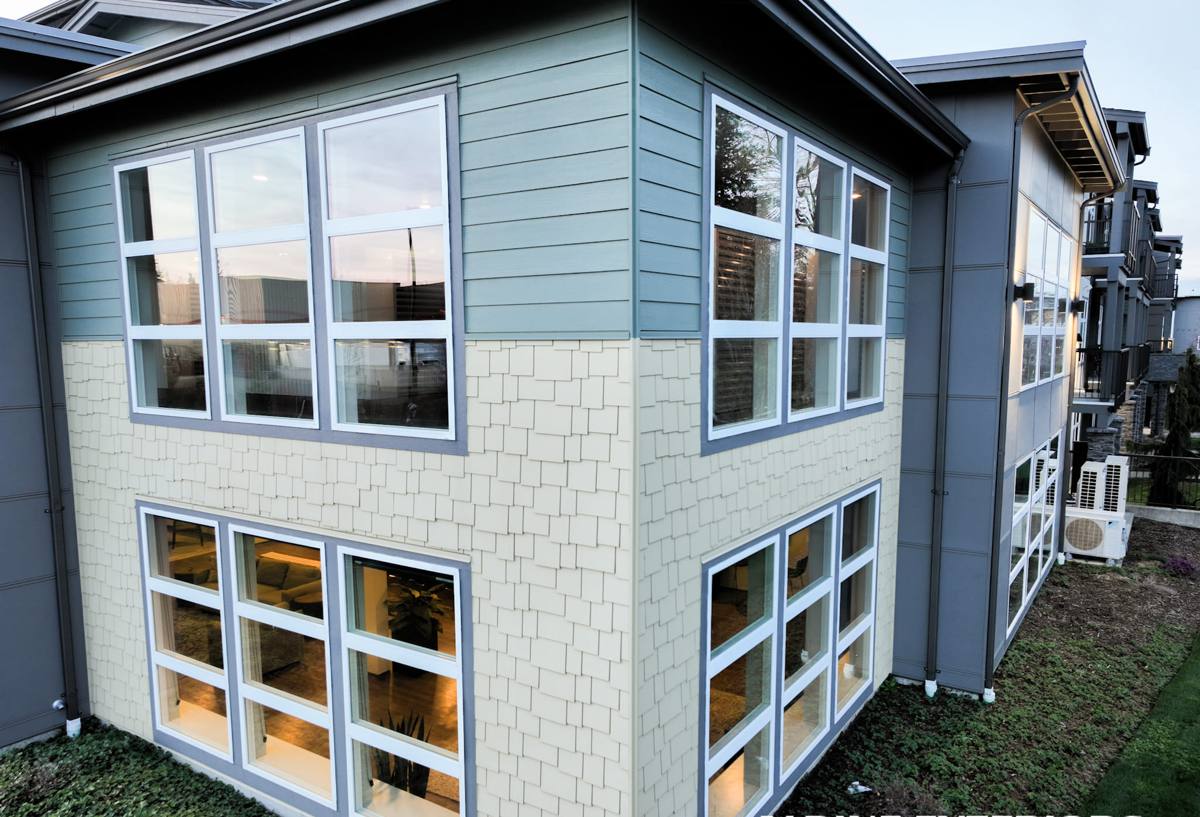
What Salt Air, Driving Rain, and Moss Actually Do to Siding
Salt Air
Even a few miles from open water, airborne salt settles on exterior surfaces and accelerates corrosion of exposed metal — nails, screws, flashing edges, and trim fasteners. On siding materials that rely on paint film alone for protection, or on products with lower-grade fastening hardware, this shows up as rust streaking, fastener pop, and premature finish failure years before the siding itself would otherwise need replacing.
Driving Rain
Storms moving through this part of Skagit County don't just drop rain straight down — wind pushes it sideways into wall surfaces, seams, and butt joints. Siding systems that depend on caulk and paint to stay watertight are the first to let moisture behind the wall. Once water gets past the siding and into the sheathing, it doesn't dry out quickly in our climate, and that's when rot starts.
Moss Season
Shaded north walls, tree cover, and the persistent damp common to this area give moss and algae a long window to establish themselves — often eight months or more out of the year. Moss holds moisture directly against the siding surface, which is hard on any material but especially damaging to wood-based products that can absorb and swell.
How Common Siding Materials Hold Up in This Environment
Not every siding product handles Bow's combination of salt, rain, and moss the same way. Here's an honest comparison of how the materials homeowners typically ask us about perform in this specific climate:
| Material | Salt Air Exposure | Driving Rain / Moisture | Moss & Algae |
|---|---|---|---|
| Vinyl siding | Doesn't corrode, but can chalk and fade; seams can loosen over time | Prone to water intrusion at seams and penetrations | Traps moisture behind panels where moss/mildew can grow unseen |
| Primed spruce / cedar | Fasteners and exposed grain vulnerable to salt-accelerated wear | Absorbs moisture, prone to cupping, splitting, and rot | Highly susceptible — organic material feeds growth |
| LP SmartSide (engineered wood) | Coating helps, but cut edges and fastener heads remain exposure points | Edge-swell risk if water reaches the wood strand core | Moderate risk if moisture holds against the surface |
| James Hardie fiber cement | Non-combustible, fiber-cement core does not corrode or feed rust the way wood substrates can | Engineered HZ product lines are built for wet climates; factory finish resists water intrusion | Dense fiber-cement surface resists moisture absorption; ColorPlus finish holds up under repeated wetting |
This is why we install exclusively James Hardie fiber cement siding. It's not the only siding product on the market, but it's the one that consistently holds up to the specific stresses Bow homes face, and we'd rather stand behind one system we trust completely than install several we have reservations about.
Signs a Bow Home Needs Replacement, Not Just Repair
Not every siding issue means a full tear-off. But there are signs that patching is just delaying a bigger problem:
- Soft or spongy spots when you press on the siding, especially near the bottom courses or around windows
- Persistent moss or algae staining that comes back within a season of cleaning
- Paint that's bubbling, peeling, or won't hold a new coat
- Visible gaps, warping, or cupping in individual boards or panels
- Rust streaks running down from nail heads or trim fasteners
- A musty smell or visible staining on interior walls that back up to exterior siding
- Siding that's original to a home built more than 20-25 years ago, particularly if it's wood-based
If you're seeing two or more of these, it's worth having someone look at the wall assembly, not just the surface. Surface-level repairs on a wall that's already compromised underneath just hide the problem for another season or two.
What a Correct Siding Replacement Involves Here
Replacing siding in a climate like Bow's is about more than swapping old boards for new ones. The work that happens before the new siding goes up matters more than the siding itself:
Tear-Off and Inspection
Removing the old siding is when we find out what's actually happening behind it — rot, compromised sheathing, or water damage that wasn't visible from outside. Any damaged material gets addressed before anything new goes on; covering up a wet wall with new siding just buys time before the same problem resurfaces.
Water-Resistive Barrier and Flashing
Given how much wind-driven rain this area sees, the house wrap and flashing details around windows, doors, and roof-to-wall transitions are where most future leaks originate if they're done wrong. We pay close attention to overlaps, seams, and drainage paths so water that does get behind the cladding has somewhere to go instead of sitting against the sheathing.
Rainscreen and Ventilation
A gap between the siding and the water-resistive barrier lets any moisture that gets through dry out instead of staying trapped — important in a climate where things simply don't dry as fast as they do in drier regions. This detail is often skipped on budget installs, and it's one of the main reasons siding fails early in wet coastal climates.
Fastening and Finish
James Hardie siding has specific fastening requirements — nail placement, spacing, and depth all affect long-term performance and warranty coverage. Installed off-spec, even the best siding product will underperform. We install to Hardie's published specifications, not a shortcut version of them.
Our Process for Bow Siding Replacement Projects
- On-site assessment: We walk the exterior, check for soft spots and moisture signs, and talk through what we're seeing with the homeowner.
- Written estimate: A clear scope and price range based on square footage, trim complexity, and what the tear-off reveals.
- Material selection: Choosing the right James Hardie product line and ColorPlus finish for the home's exposure and style.
- Tear-off and prep: Full removal of old siding, sheathing repair as needed, and correct water-resistive barrier installation.
- Installation: Fiber cement siding installed to manufacturer spec, with attention to flashing, fastening, and drainage details.
- Final walkthrough: We go over the finished work with the homeowner before calling the job done.
What Affects the Cost of a Siding Replacement in Bow
Every home is different, but a few factors consistently move the price up or down more than anything else:
| Cost Factor | Why It Matters |
|---|---|
| Extent of hidden damage found at tear-off | Rotted sheathing or framing has to be repaired before new siding goes on — this is the biggest variable |
| Home size and wall complexity | More corners, dormers, and trim details mean more labor and material cuts |
| Siding profile and finish choice | Lap width, texture, and ColorPlus finish selection affect material cost |
| Existing siding type | Some materials are more labor-intensive to remove and dispose of than others |
| Site access | Tight lots, slopes, or landscaping close to the house can add labor time |
We give a written, itemized estimate before any work starts, so there are no surprises once the tear-off begins — and if we find something unexpected once the old siding is off, we'll show you before we proceed, not after.
Why a Crew That Already Works Skagit County Matters
Siding that's engineered for a general climate and siding that's installed by people who understand this specific one are two different things. A crew that works Skagit County regularly already knows where moss builds up fastest, which wall orientations take the worst of the driving rain, and how much drying time this region actually gets between storms. That knowledge shapes decisions on every job — where to add extra flashing attention, how to detail a rainscreen gap, which trim details need more sealant redundancy.
It also means someone is close by if a warranty question or a minor issue comes up after the job is finished, instead of chasing down a crew that did one job in the area and moved on.
Caring for New Hardie Siding in a Salt Air, High-Moss Climate
James Hardie siding is low-maintenance compared to wood or vinyl, but "low-maintenance" doesn't mean "no maintenance" in an environment like Bow's. A little routine care goes a long way:
- Rinse siding down once or twice a year to clear salt residue and organic buildup before it takes hold
- Trim back vegetation and tree branches that keep walls shaded and damp
- Check caulking around windows, doors, and trim annually and re-seal if it's cracking
- Keep gutters clear so overflow isn't running down the siding face
- Address any moss growth early with a gentle wash rather than letting it establish
- Watch for any signs of impact damage after storms and have it addressed promptly
Keeping up with these basics is what lets Hardie siding reach its full lifespan, especially in a climate that doesn't give siding much of a break.
Ready to Talk About Your Siding?
If your Bow home is showing signs of wear, or you're just tired of fighting moss and moisture every year, we're happy to take a look and talk through what's actually going on with your siding — no pressure, no obligation. Fill out the form below for a free estimate, and we'll walk the exterior with you and give you a straight answer about what your home needs.